Grease Trap Regulations Sacramento
What Every Food-Service Business Needs to Know to Stay Compliant
For restaurants, commercial kitchens, and food-service businesses, grease traps are not optional equipment. They are a legal requirement tied directly to public health, environmental protection, and sewer system integrity. Understanding grease trap regulations Sacramento businesses must follow is essential for avoiding fines, failed inspections, emergency shutdowns, and costly repairs.
Grease traps are designed to capture fats, oils, and grease, commonly called FOG, before they enter municipal sewer lines. When FOG flows unchecked into the sewer system, it hardens inside pipes, causes blockages, and leads to overflows that contaminate streets, waterways, and properties. These incidents are expensive for cities to clean up and dangerous for public health.
Because of these risks, Sacramento enforces detailed grease trap regulations that place responsibility squarely on food-service businesses. Compliance is not just about avoiding penalties. It is about protecting your operations, your reputation, and the surrounding community.
This guide explains grease trap regulations in Sacramento in plain language. You will learn who must comply, what the rules require, how inspections work, and what steps businesses can take to stay compliant year-round without unnecessary stress.
Why Grease Trap Regulations Matter for Sacramento Businesses
Grease trap regulations exist to prevent damage before it happens. Sacramento’s wastewater infrastructure serves thousands of businesses and residents. When grease-related blockages occur, the consequences extend far beyond a single kitchen.
Uncontrolled grease buildup can lead to:
- Sewer backups into businesses and neighboring properties
- Foul odors and unsanitary conditions
- Environmental contamination of storm drains and waterways
- Costly emergency response and cleanup
- Health code violations and business closures
Sacramento’s local grease trap laws are designed to reduce these risks by requiring businesses to install, maintain, and document proper grease control systems. When businesses follow the rules, sewer systems function properly, inspections go smoothly, and operations remain uninterrupted.
Understanding Grease Trap Requirements in Sacramento
Grease trap regulations Sacramento businesses must follow apply to any operation that produces FOG as part of daily activities. This includes, but is not limited to:
- Restaurants and cafes
- Commercial kitchens and commissaries
- Bakeries and food preparation facilities
- Hotels and hospitals with food service
- Food trucks and mobile food vendors
- Schools and institutional kitchens
The exact requirements can vary depending on kitchen size, menu, and wastewater output. However, most grease trap compliance rules focus on the same core areas:
- Proper installation and sizing
- Routine cleaning and pumping
- Safe grease waste disposal
- Accurate recordkeeping
- Passing inspections consistently
Businesses are responsible for ensuring their grease traps function correctly at all times. Claiming ignorance or relying on irregular maintenance is not a valid defense during inspections.
Key Grease Trap Regulations Businesses Must Follow
Proper Grease Trap Installation
Sacramento requires food-service businesses to install grease traps or grease interceptors that are properly sized for their operation. An undersized unit fills too quickly and fails to separate grease effectively, leading to backups and violations.
Why this matters
Proper sizing ensures grease traps can handle daily kitchen output without allowing FOG to escape into sewer lines.
What inspectors look for
Inspectors evaluate whether the trap size matches kitchen volume, equipment, and menu type. Outdated or improperly installed systems are common causes of compliance failures.
Best practice
Have a professional evaluate your system if your menu or volume has changed. Installation decisions should be based on actual usage, not assumptions.
Routine Cleaning and Pumping Requirements
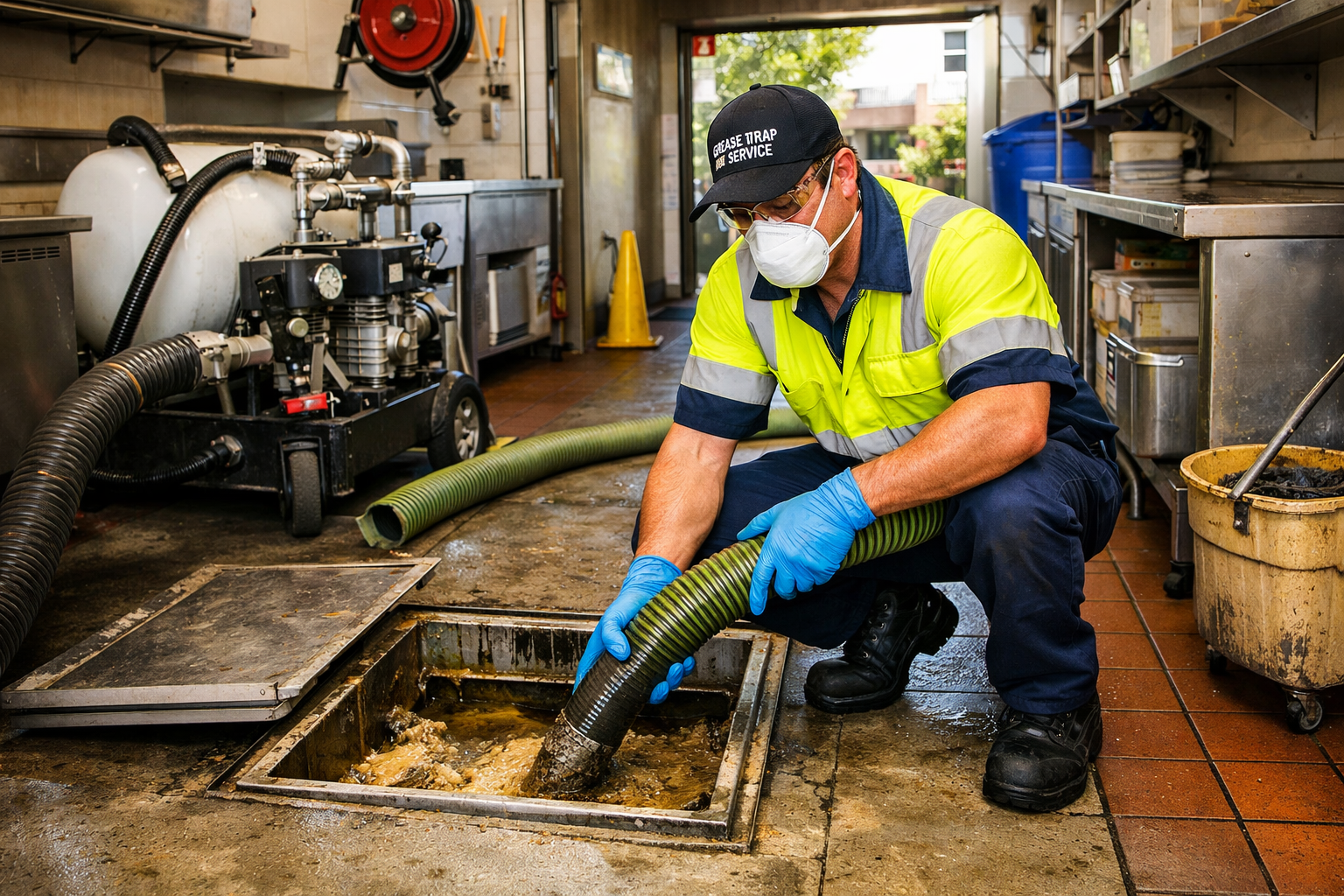
One of the most strictly enforced grease pumping requirements in Sacramento is regular cleaning. Most businesses are required to clean grease traps on a schedule ranging from every 30 to 90 days, depending on usage.
Why this matters
Grease accumulates continuously. If cleaning is delayed, grease hardens, reduces capacity, and causes backups.
What inspectors look for
Inspectors review service records to confirm cleaning frequency matches regulatory expectations and actual kitchen activity.
Best practice
Schedule consistent grease trap cleaning based on volume rather than waiting for problems to appear.
Grease Waste Disposal Regulations
Captured grease must be disposed of at approved facilities. Dumping grease into drains, trash bins, or unauthorized locations violates grease waste disposal regulations.
Why this matters
Improper disposal simply moves the problem elsewhere, often causing sewer blockages downstream.
What inspectors look for
Inspectors may request proof that grease waste is removed and disposed of by licensed providers following approved methods.
Best practice
Always use professional grease trap pumping services that document disposal properly.
Recordkeeping and Documentation
Accurate records are a core part of grease trap compliance. Sacramento businesses are required to maintain service logs that show:
- Cleaning and pumping dates
- Service provider information
- Disposal confirmation
- Inspection notes or recommendations
Why this matters
Documentation proves compliance. Without records, even a well-maintained grease trap can result in citations.
What inspectors look for
Inspectors often request records during scheduled or surprise inspections. Missing or incomplete records are a common reason for violations.
Best practice
Keep service records organized and easily accessible on-site. Digital copies backed up securely are also recommended.
Grease Trap Inspection Requirements
Sacramento conducts routine and complaint-based inspections to ensure businesses comply with local grease trap laws. Inspections may involve visual checks, record reviews, and assessment of grease trap condition.
Why this matters
Failed inspections can lead to citations, fines, required corrective action, or temporary shutdowns.
What inspectors look for
Inspectors assess grease levels, maintenance frequency, disposal practices, and documentation accuracy.
Best practice
Stay inspection-ready by following maintenance schedules and reviewing compliance requirements regularly. Resources like grease trap inspection guidance help businesses prepare.
How Grease Trap Regulations Affect Real Businesses
Understanding regulations is easier when you see how they apply in real-world situations.
A busy Sacramento restaurant that delays cleaning may pass daily operations without obvious issues, until a routine inspection reveals excessive grease levels. The result can be immediate citations, mandatory emergency pumping, and lost revenue during downtime.
A food truck operator may assume small volume means fewer requirements, only to discover that grease trap regulations apply equally to mobile operations. Without proper records, inspections can lead to penalties even if the kitchen appears clean.
In contrast, businesses that follow consistent maintenance schedules, train staff on FOG best practices, and keep documentation organized typically pass inspections smoothly. Compliance becomes routine rather than stressful.
Best Practices for Staying Compliant Year-Round
Grease trap compliance does not need to be complicated. These best practices help Sacramento businesses stay ahead of regulations.
Follow a Consistent Cleaning Schedule
Consistency matters more than frequency guesses. Cleaning schedules should reflect actual kitchen output and local requirements.
Train Staff on FOG Awareness
Staff behavior directly impacts grease accumulation. Training employees on scraping plates, wiping cookware, and proper grease disposal reduces the burden on grease traps. Programs like FOG best practices help standardize habits.
Work With Licensed Professionals
Professional grease trap specialists understand local regulations, disposal rules, and inspection standards. This reduces risk and saves time.
Keep Records Organized
Make documentation part of normal operations. Organized records simplify inspections and demonstrate accountability.
Review Compliance Regularly
Menus change, volume increases, and regulations evolve. Periodic reviews ensure your grease trap system still meets requirements.
Why Professional Grease Trap Service Makes Compliance Easier
Grease trap regulations are detailed, and enforcement in Sacramento is strict. Professional service providers do more than remove grease. They help businesses stay compliant by identifying issues early, maintaining proper schedules, and providing accurate documentation.
Local specialists understand Sacramento-specific requirements and inspection expectations. Businesses that work with experienced providers avoid emergency backups, failed inspections, and last-minute scrambling.
For businesses navigating grease trap regulations Sacramento enforces, working with a trusted provider like Sacramento Grease Trap provides peace of mind. Their local expertise supports compliance, reduces risk, and allows business owners to focus on daily operations rather than regulatory concerns.
Common Compliance Mistakes to Avoid
Even well-intentioned businesses can make mistakes that lead to violations.
- Relying on additives instead of cleaning
- Skipping service during slow seasons
- Assuming small kitchens are exempt
- Failing to update records consistently
- Waiting until inspections to address issues
Avoiding these mistakes is far less expensive than responding to fines, shutdowns, or emergency cleanups.
Final Thoughts on Grease Trap Regulations in Sacramento
Grease trap regulations Sacramento businesses must follow exist to protect public infrastructure, the environment, and your operation. While compliance may feel complex at first, it becomes manageable with the right systems in place.
By understanding installation requirements, following cleaning schedules, disposing of grease properly, and maintaining accurate records, businesses can stay compliant year-round. Proactive maintenance costs less, reduces stress, and protects your reputation far better than reactive fixes.
If you are unsure whether your current practices meet local requirements, now is the right time to review your system and schedule professional service. Compliance today prevents costly problems tomorrow.
Frequently Asked Questions About Grease Trap Regulations
Who is required to have a grease trap in Sacramento?
Any business that produces fats, oils, or grease as part of food preparation must comply with grease trap regulations.
How often must grease traps be cleaned?
Most businesses require cleaning every 30 to 90 days, depending on usage and trap size.
What happens if I fail a grease trap inspection?
You may receive citations, fines, mandatory corrective action, or temporary closure until compliance is restored.
Can employees clean grease traps themselves?
In most cases, regulations require licensed professional service and proper disposal documentation.
Do food trucks need to follow grease trap regulations?
Yes. Mobile food operations are also subject to FOG control and grease trap compliance requirements.

Let Us Simplify Your Grease Trap Maintenance.
Proper grease trap maintenance will reduce costly repairs in the future.
.avif)