Grease Trap Inspection: What Inspectors Look For
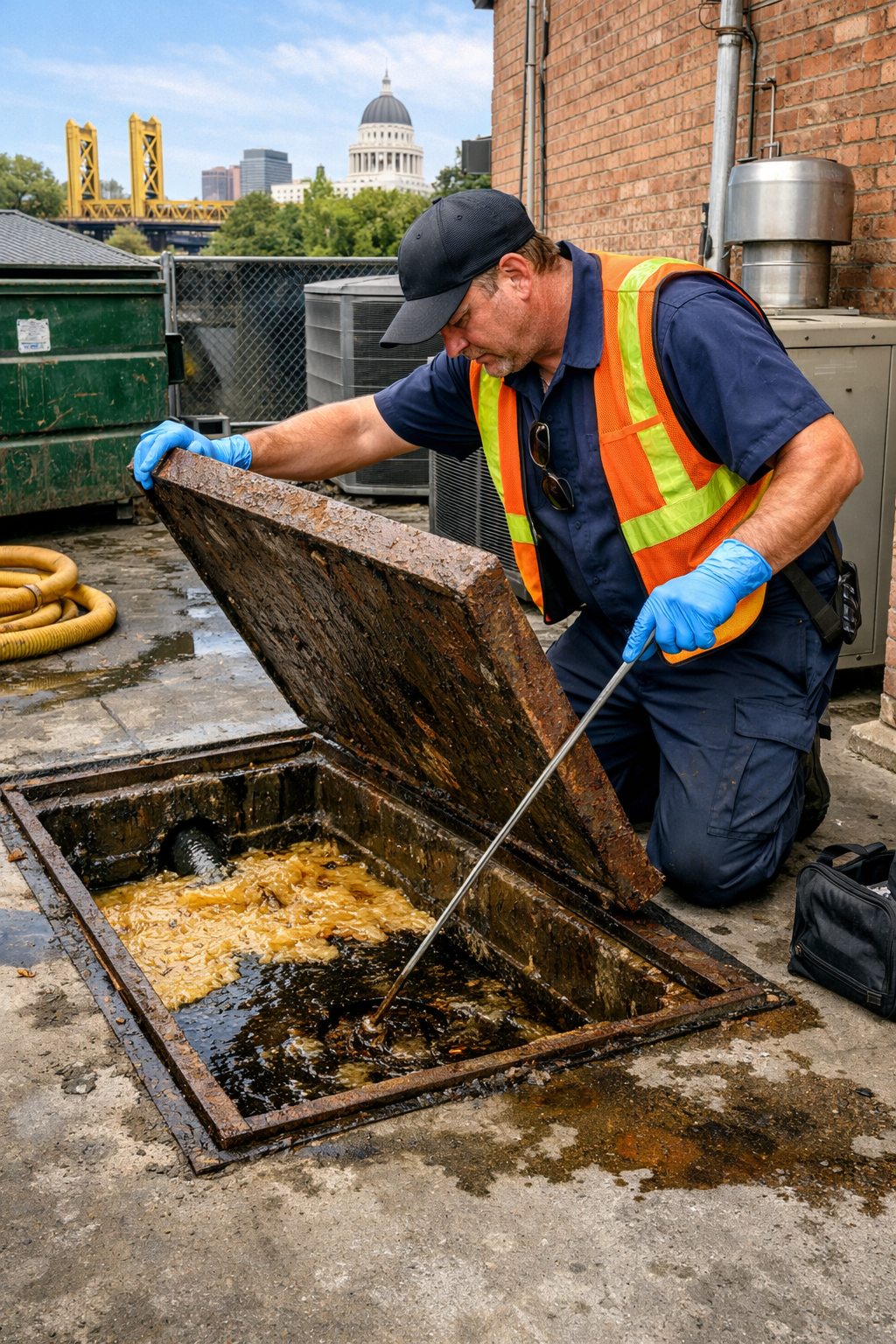
If you operate a restaurant, food truck, or commercial kitchen in Sacramento, one inspection can have an outsized impact on your business operations: your grease trap inspection Sacramento regulators perform. These inspections often feel routine until an inspector opens the lid and begins documenting grease levels, condition, and service history.
Grease trap inspections exist to protect the public sewer system from fats, oils, and grease, commonly called FOG. When grease traps are poorly maintained, FOG can escape into sewer lines, harden over time, and cause backups, environmental damage, and costly repairs. For business owners, that can mean failed inspections, fines, emergency commercial drain cleaning, or even temporary shutdowns.
This guide explains exactly what inspectors look for during a grease trap inspection in Sacramento, why each checkpoint matters, and how to stay compliant with local regulations. Whether you are preparing for a routine visit or trying to avoid repeat violations, understanding the inspection process puts you in control.
Understanding Grease Trap Inspections in Sacramento
A grease trap inspection is a formal evaluation of your grease control system to confirm it is functioning correctly and meeting local health and sewer regulations. In Sacramento, inspections are typically conducted by county health officials or environmental compliance officers, depending on the situation.
These inspections are preventative by design. They aim to stop grease-related problems before they escalate into sewer backups or environmental violations that affect entire neighborhoods.
During a grease trap inspection Sacramento officials are evaluating whether your system:
- Is accessible and properly installed
- Is being serviced at the correct frequency
- Meets local health and plumbing codes
- Effectively prevents grease from entering the sewer system
Many operators assume inspections only happen after a complaint or blockage. In reality, routine inspections are common, and inspectors expect systems to be inspection-ready at all times.
What Inspectors Look For During a Grease Trap Inspection
Grease Trap Accessibility and Location
Inspectors begin with accessibility. Your grease trap or interceptor must be easy to locate and open without moving heavy equipment, dismantling fixtures, or digging. If inspectors cannot safely access the unit, that alone can trigger a violation.
Accessibility matters because routine servicing and inspections must be efficient. Traps buried without risers, blocked by storage, or sealed incorrectly raise immediate concerns. Inspectors also confirm the trap is installed in the correct location based on your kitchen’s plumbing layout.
Practical tip: Installing risers and clearly marking access points reduces the risk of failing an inspection due to access issues alone.
Grease and Solids Accumulation Levels
One of the most critical checkpoints is how full the grease trap is. Inspectors commonly apply the 25 percent rule, meaning fats, oils, grease, and settled solids should not exceed 25 percent of the trap’s total capacity.
If buildup exceeds this threshold, it indicates missed or insufficient service. Inspectors may assess grease layers visually or reference recent grease trap cleaning Sacramento service records.
Excess accumulation signals that grease may be bypassing the trap and entering the sewer system, a serious compliance concern that often leads to required corrective action.
Service Records and Maintenance Documentation
Inspectors do not rely on visual checks alone. They expect documentation that proves consistent maintenance. You may be asked to provide:
- Pumping and cleaning invoices
- Dates of recent service
- Service frequency records
Missing or incomplete documentation can result in warnings or citations even if the trap appears relatively clean. Sacramento inspectors expect records to match mandated service schedules based on kitchen size and usage.
Keeping organized records demonstrates compliance and makes inspections faster and less stressful.
Structural Condition of the Grease Trap
Inspectors closely examine the physical condition of the trap or interceptor. Cracks, corrosion, broken lids, missing baffles, or damaged seals are all red flags.
Structural issues reduce the trap’s effectiveness and may allow grease or wastewater to bypass the system entirely. Inspectors also look for leaks that could contaminate surrounding soil or create sanitation risks.
Routine inspections and timely commercial drain maintenance help catch minor issues before they require full replacement.
Inlet, Outlet, and Baffle Function
Grease traps rely on internal components to slow water flow and separate grease effectively. Inspectors verify that:
- Inlet and outlet pipes are unobstructed
- Baffles are intact and properly positioned
- Flow direction matches design specifications
Missing or damaged baffles are a common problem, especially in older systems. Without proper internal separation, grease passes straight through, making the trap ineffective.
Signs of FOG Entering Sewer Lines
Inspectors look beyond the trap itself. Slow drains, persistent odors, backups, or grease residue in nearby plumbing suggest FOG is escaping the system.
These signs often lead to recommendations for commercial drain and sewer cleaning or increased service frequency. In Sacramento, evidence of grease entering public sewer systems can result in escalating enforcement actions.
Compliance With Sacramento Regulations
Sacramento enforces grease management standards that go beyond basic plumbing functionality. Inspectors assess whether your system complies with:
- Local health department codes
- Municipal sewer use ordinances
- California environmental regulations
Non-compliance may require corrective steps such as more frequent service, equipment upgrades, or formal grease management plans.
Real-World Grease Trap Inspection Scenarios
In one common scenario, a mid-sized Sacramento restaurant failed an inspection despite recent pumping. The issue was not service quality but frequency. Increasing scheduled grease trap pumping resolved the violations.
Another facility passed the visual inspection but failed due to missing documentation. Inspectors issued a warning because service records were incomplete. Proper record-keeping prevented future issues.
In a third case, recurring backups led inspectors to discover damaged baffles. Grease was bypassing the system entirely, requiring internal repairs and commercial kitchen drain cleaning.
These examples show that inspections evaluate the system as a whole, not just surface cleanliness.
Best Practices to Pass Grease Trap Inspections
- Schedule regular service before inspections occur
- Keep all service records organized and accessible
- Train staff on FOG best practices such as scraping and dry wiping
- Perform visual checks between professional services
- Work with local specialists familiar with Sacramento regulations
Following these practices reduces surprise violations and keeps operations running smoothly.
Why Local Expertise Matters in Sacramento
Grease regulations vary by region, and Sacramento has specific expectations for inspection readiness. Working with an experienced local provider like Sacramento Grease Trap helps ensure your system meets both technical and regulatory requirements.
Local specialists understand inspection patterns, documentation standards, and when additional services such as commercial plumbing Sacramento support or flat rate drain cleaning may be necessary to stay compliant.
You can explore essential services such as grease trap cleaning, grease trap pumping, and operational guidance on FOG best practices. For a deeper look at compliance expectations, their guide on grease interceptor cleaning standards for 2025 is especially helpful.
Final Thoughts on Grease Trap Inspection in Sacramento
A grease trap inspection Sacramento businesses face is not just a regulatory hurdle. It is a safeguard for your plumbing system, your operation, and the surrounding community. Inspectors assess accessibility, grease levels, documentation, structural integrity, and overall compliance to ensure grease control systems function as intended.
By understanding what inspectors look for and addressing issues proactively, you can avoid fines, prevent emergency commercial drain services, and keep your kitchen running without interruption. Consistent maintenance, accurate records, and local expertise are the difference between a smooth inspection and a costly one.
Frequently Asked Questions About Grease Trap Inspections
How often are grease trap inspections required in Sacramento?
Frequency depends on kitchen size, usage, and local regulations. Many facilities are inspected annually or in response to service records or complaints.
What happens if I fail a grease trap inspection?
Failures may result in warnings, fines, mandatory corrective actions, or follow-up inspections until compliance is achieved.
Can I clean my grease trap myself before an inspection?
Small under-sink units may allow limited self-maintenance, but most commercial systems require professional service and documented records.
What documentation should I keep for inspections?
Maintain invoices, pumping schedules, maintenance logs, and any compliance notices.
Do grease trap inspections differ from interceptor inspections?
Yes. Interceptors are larger systems with additional requirements, but inspectors evaluate similar factors such as capacity, condition, and compliance.

Let Us Simplify Your Grease Trap Maintenance.
Proper grease trap maintenance will reduce costly repairs in the future.
.avif)