Grease Interceptor Cleaning: Step-by-Step Standards for 2025
Grease interceptor cleaning has evolved, and in 2025, the expectations for commercial kitchens in Sacramento are higher than ever. Health departments and wastewater authorities are no longer satisfied with basic pump-outs. They now expect thorough cleanings, consistent maintenance schedules, and clear documentation showing that interceptors are functioning as designed.
For restaurant owners, property managers, and facility operators, this shift can feel overwhelming. Many kitchens still rely on outdated service methods that do not meet today’s compliance standards. When inspections tighten, those shortcuts can lead to violations, emergency shutdowns, or costly plumbing failures during peak business hours.
The good news is that modern grease interceptor cleaning does not have to be complicated. When done correctly, it protects your plumbing, reduces long-term costs, and keeps your operation inspection-ready. This guide explains current cleaning standards for 2025, what inspectors look for, and how to tell the difference between compliant service and risky shortcuts.
Why Updated Grease Interceptor Cleaning Standards Matter
Grease interceptors are designed to capture fats, oils, and grease before they enter municipal sewer systems. When properly maintained, they protect both your business and the city’s infrastructure. When neglected or partially cleaned, they quickly become a liability.
In Sacramento, enforcement has increased as sewer systems age and environmental regulations tighten. Inspectors now look beyond whether an interceptor was pumped. They want to see that it was fully cleaned and restored to working capacity.
Proper grease interceptor cleaning helps:
- Maintain full capacity between service intervals
- Prevent grease from bypassing into sewer lines
- Reduce emergency pump-outs and plumbing failures
- Support consistent inspection pass rates
Kitchens that follow modern standards experience fewer disruptions and more predictable operating costs.
How Does a Grease Trap Work?
Understanding how a grease trap works helps explain why proper cleaning matters. As wastewater flows through the interceptor, it slows down. Grease floats to the top, solids settle at the bottom, and relatively clean water exits to the sewer.
Over time, grease and solids build up. If they are not fully removed, the interceptor loses capacity. Once it reaches about 25 percent grease and solids, it is considered out of compliance and far more likely to allow grease through the system.
That is why modern standards focus on complete cleaning, not just pumping liquids.
Step-by-Step Grease Interceptor Cleaning Process for 2025
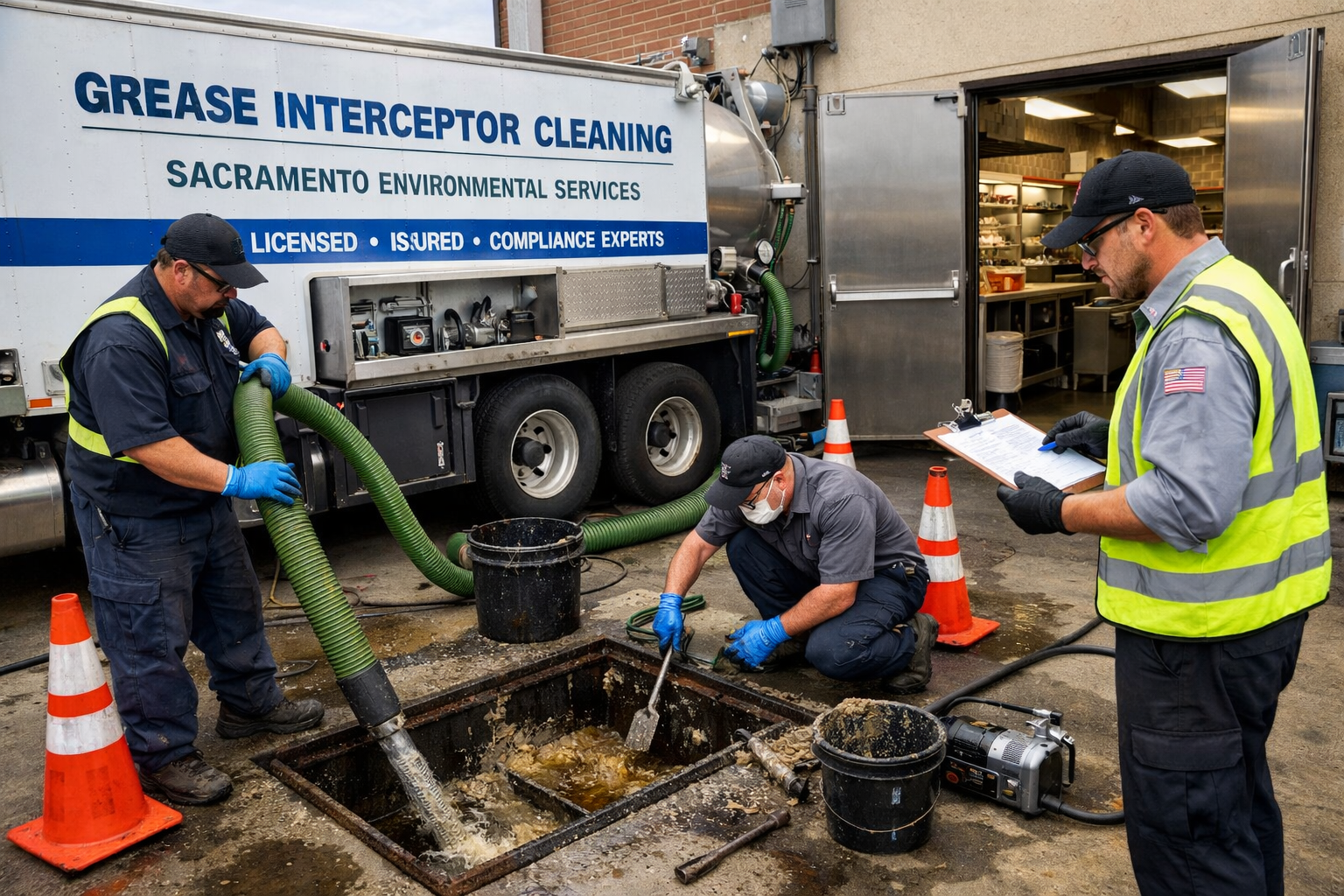
Modern commercial grease trap cleaning follows a structured process designed to meet both performance and compliance expectations.
Step 1: Pre-Service Inspection
Before pumping begins, technicians should inspect access points, lids, baffles, and visible components. This identifies damaged or missing parts that could affect performance.
Step 2: Complete Pump-Out
All contents must be removed. This includes liquids, floating grease, and settled solids. Partial pump-outs no longer meet 2025 standards because leftover grease quickly reduces capacity.
This step is often paired with professional grease trap pumping to ensure nothing is left behind.
Step 3: Interior Scraping and Cleaning
After pumping, technicians must scrape interior walls, baffles, and floors. Hardened grease sticks to surfaces and cannot be removed by pumping alone. Scraping restores full volume and slows re-accumulation.
If scraping is not documented, the cleaning likely did not meet current standards.
Step 4: Component Check and Reset
Baffles, tees, and flow-control devices should be checked and properly repositioned. Misaligned components allow grease to pass through even after cleaning.
Step 5: Grease Waste Removal and Documentation
All grease waste removal must be handled at approved facilities. Service reports should clearly show volumes removed, cleaning methods, and disposal confirmation. This documentation is critical during inspections.
A thorough grease trap cleaning service includes every step above.
How Often Should Grease Traps Be Cleaned?
One of the most common questions is how often should grease traps be cleaned. The answer depends on kitchen volume, menu type, and interceptor size.
In many Sacramento kitchens:
- High-volume restaurants require service every 30 days
- Moderate-volume kitchens often need service every 60 days
- Lower-volume facilities may qualify for 90-day intervals
The key rule is the 25 percent capacity guideline. If grease and solids exceed this level, the interceptor is out of compliance regardless of the calendar.
Consistent grease trap maintenance based on actual usage is far more effective than fixed schedules alone.
Real-World Applications in Sacramento Kitchens
High-Volume Restaurants
Busy restaurants generate grease quickly, especially during peak service. Full cleanings reduce emergency calls and prevent capacity loss between scheduled visits.
Multi-Tenant Commercial Buildings
Shared interceptors require strict adherence to standards. Proper cleaning and documentation protect property owners and tenants during inspections.
Schools and Institutional Kitchens
Institutional kitchens benefit from predictable schedules and thorough documentation, reducing administrative stress and compliance risk.
Each scenario shows why standardized restaurant grease trap cleaning is now operationally essential.
Common Grease Interceptor Cleaning Mistakes to Avoid
Even in 2025, many kitchens run into problems due to avoidable mistakes.
- Accepting partial pump-outs that leave grease behind
- Skipping interior scraping and component checks
- Extending service intervals too long
- Failing to keep clear service documentation
Avoiding these errors keeps your system compliant and your kitchen running smoothly.
Supporting Long-Term Compliance
Cleaning works best when paired with good kitchen practices. Following F.O.G. best practices helps reduce grease entering the interceptor, extending time between cleanings, and lowering overall costs.
Understanding system design also helps operators make informed decisions. This overview of grease trap design basics for restaurants explains how layout and sizing affect performance.
Set the Standard for Grease Interceptor Cleaning in 2025
Grease interceptor cleaning in 2025 is about consistency, completeness, and compliance. Shortcuts may save time today, but they increase risk tomorrow. By following modern standards that include full pump-outs, interior scraping, component checks, and proper documentation, Sacramento kitchens can avoid costly disruptions and inspection failures.
If you are unsure whether your current service meets these expectations, now is the time to reassess. Working with a provider that understands modern requirements protects your plumbing, your budget, and your operation.
Grease Interceptor Cleaning FAQs
Is pumping alone considered proper grease interceptor cleaning?
No. Current standards require full removal of contents plus interior scraping and component inspection.
How often should grease interceptor cleaning be done?
Most kitchens require service every 30 to 90 days, depending on grease output and usage.
What documentation should I receive after service?
You should receive a report showing the date, volume removed, cleaning method, component condition, and proof of proper disposal.
Can poor cleaning cause violations?
Yes. Incomplete cleaning can lead to grease bypass, sewer backups, and failed inspections.
Do standards differ for restaurants and institutions?
The process is similar, but service frequency and expectations vary based on volume and use patterns.

Let Us Simplify Your Grease Trap Maintenance.
Proper grease trap maintenance will reduce costly repairs in the future.
.avif)