Grease Trap Design Basics for Restaurants in Sacramento
Every restaurant owner in Sacramento knows that a successful kitchen isn’t just about great food, it’s also about proper wastewater management. A well-planned grease trap design protects your plumbing, prevents costly sewer backups, and helps ensure compliance with local health and environmental regulations. Yet for many restaurateurs, grease trap requirements and sizing calculations can feel confusing and overly technical.
You may be asking yourself:
- What size grease trap do I need for my restaurant?
- How does a grease trap work within a commercial kitchen system?
- What rules must Sacramento restaurants follow before installation?
This guide breaks down grease trap design into clear, practical guidance tailored specifically for Sacramento restaurants. By the end, you’ll understand how to design the right grease trap system for your kitchen, helping you avoid fines, reduce maintenance issues, and keep operations running smoothly.
Why Grease Trap Design Matters for Restaurants
Grease trap design is not a generic plumbing decision. It’s a core part of your restaurant’s infrastructure that directly affects compliance, maintenance costs, and kitchen efficiency.
A properly designed grease trap system:
- Captures fats, oils, and grease (FOG) before they enter sewer lines
- Reduces clogs, backups, and emergency plumbing calls
- Helps restaurants pass health inspections
- Extends the life of downstream plumbing and sewer connections
In Sacramento, wastewater agencies and health departments require restaurants to control FOG discharge to protect public sewer systems. Poor grease trap design, whether from incorrect sizing, bad placement, or limited access, often leads to violations and expensive corrective work.
Core Grease Trap Design Elements Every Restaurant Must Know
1. Determine Expected Wastewater Flow Rate
The foundation of good grease trap design is understanding how much wastewater your kitchen produces.
Flow rate determines how quickly grease enters the trap and whether there’s enough time for separation to occur. If flow exceeds design limits, grease will bypass the trap entirely.
How to estimate flow rate:
- Identify all fixtures draining into the grease trap (prep sinks, dishwashers, floor drains)
- Use fixture ratings or standard flow values
- Account for peak service periods
- Apply a safety factor for busy operations
Design tip: Slightly oversizing for peak demand often improves performance and reduces maintenance issues.
2. Size the Grease Trap Correctly
One of the most common mistakes in restaurant grease trap installation is improper sizing.
- Undersized traps clog quickly and allow grease into sewer lines
- Oversized traps may not retain grease effectively and take up unnecessary space
Grease trap sizing is based on peak flow rate and retention time, typically 30 to 60 minutes to allow fats to cool, rise, and separate.
Many restaurateurs use a grease trap sizing calculator, but local codes always take priority. Sacramento wastewater regulations may specify minimum capacities depending on kitchen type and size.
3. Choose the Right Grease Trap Location
Placement plays a major role in how well a grease trap performs and how easily it can be serviced.
Best location practices include:
- Installing the trap as close as possible to kitchen fixtures
- Favoring above-ground indoor placement when feasible
- Avoiding locations exposed to excessive heat or vibration
Installation considerations:
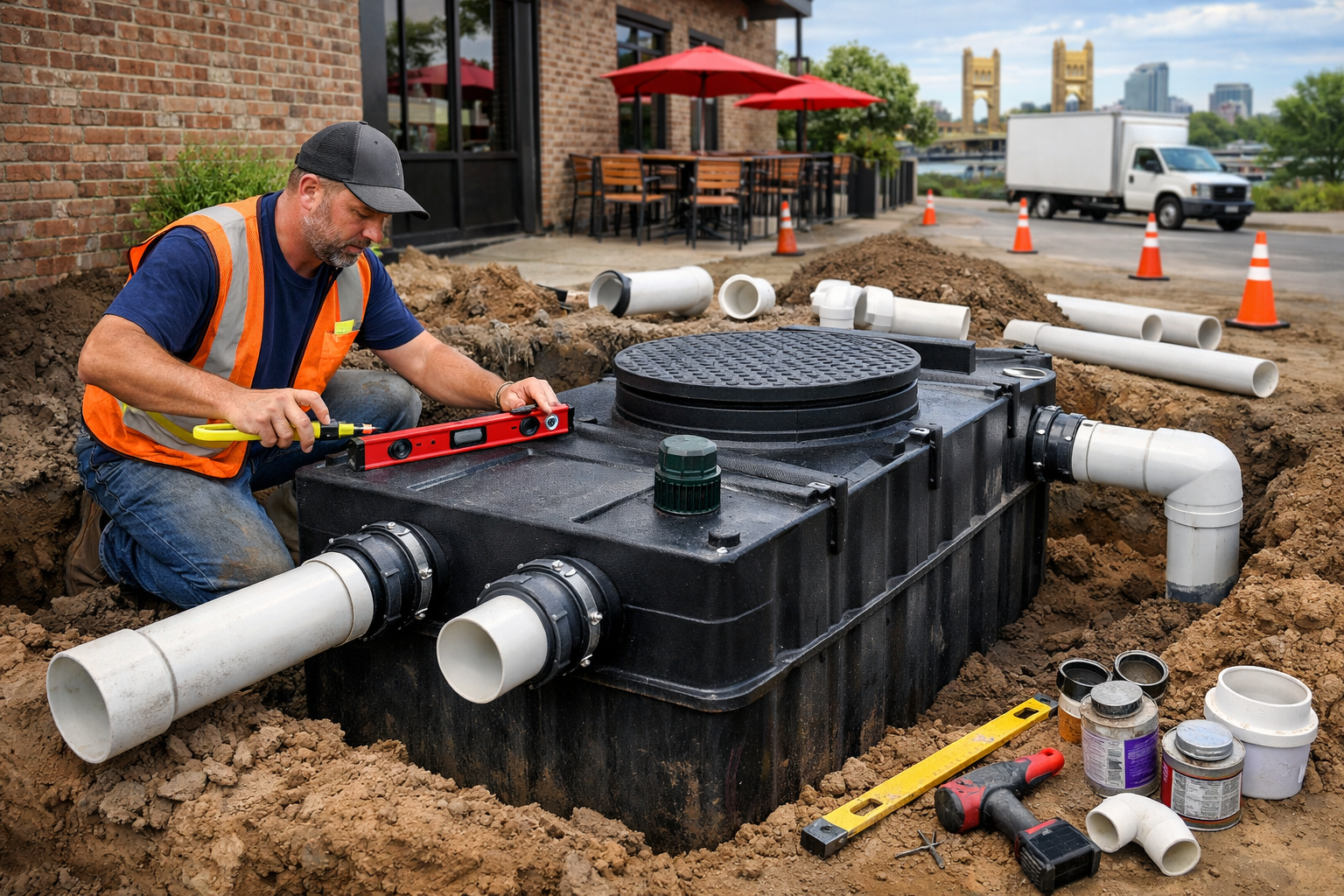
- Ensure enough clearance for lid removal
- Provide level, stable surfaces
- Protect outdoor installations from flooding
Good placement supports efficient kitchen workflows and simplifies routine service.
4. Match Grease Trap Type to Kitchen Needs
Not all grease traps are the same. The right choice depends on flow volume, space, and maintenance strategy.
Common grease trap types:
- Hydromechanical grease traps (HGTs): Compact indoor units for light to moderate flow
- Gravity grease interceptors (GGIs): Large outdoor tanks for high-volume kitchens
- Automatic grease removal units (AGRUs): Mechanized systems that continuously remove grease
Choosing between a grease interceptor vs grease trap often comes down to kitchen size, wastewater volume, and local requirements. Consulting with a licensed professional helps avoid costly missteps.
5. Design for Easy Maintenance Access
Even the best grease trap design fails if maintenance is difficult.
Smart design includes:
- Clear access for scheduled pump-outs
- Proper venting to reduce odors
- Removable baffles or screens
Restaurants that schedule routine grease trap cleaning and grease trap pumping experience fewer compliance issues and longer equipment life.
6. Account for Temperature and Cooling
Grease separation only works when fats cool and solidify. If wastewater enters the trap too hot, grease remains suspended.
Design considerations:
- Avoid placing traps near ovens or dishwashers
- Limit excessive turbulence upstream
- Insulate piping if hot water travels long distances
These small details significantly improve grease capture efficiency.
How Grease Trap Design Works in Real Sacramento Restaurants
Use Case 1: Small Full-Service Restaurant
A 60-seat restaurant uses an indoor hydromechanical grease trap under the three-compartment sink. The system prioritizes accessibility and moderate flow handling. Monthly service and staff training help reduce FOG load.
Use Case 2: High-Volume Commercial Kitchen
A banquet facility installs a large outdoor gravity interceptor designed for heavy dishwasher flow. The trap is located in a protected pit with clear access for vacuum trucks, ensuring efficient restaurant grease trap installation and maintenance.
Both examples highlight how grease trap design varies by operation while following the same core principles.
Best Practices and Common Grease Trap Design Tips
- Group kitchen fixtures to minimize long drain runs
- Confirm Sacramento regulations early to avoid redesigns
- Plan capacity for future menu or seating expansion
- Keep design drawings and sizing calculations on file
- Train staff using proven FOG best practices
Good design combined with good habits produces the best long-term results.
Grease Trap Design and Public Health Considerations
Proper grease trap design isn’t just about plumbing—it’s about public health and environmental protection. Excess FOG contributes to sewer overflows that contaminate waterways and create sanitation risks.
National public health initiatives, including guidance from HealthyPeople.gov, emphasize infrastructure practices that reduce environmental contamination and support community health. Effective grease trap systems play a role in achieving those goals at the local level.
Conclusion: Smart Grease Trap Design Helps Restaurants Thrive
Effective grease trap design is essential for restaurant success in Sacramento. By understanding flow rates, sizing, trap types, placement, and maintenance access, you reduce clogs, avoid fines, and protect your kitchen operations.
Start with accurate calculations, verify local requirements, and design with long-term maintenance in mind. When your grease trap system works properly, your staff spends less time dealing with plumbing problems and more time serving customers.
If you’re planning a new system or upgrading an existing one, reviewing a professional grease trap installation guide is a smart next step.
Frequently Asked Questions About Grease Trap Design
What size grease trap do I need for my restaurant?
The correct size depends on peak wastewater flow and retention time. Local Sacramento codes set minimum requirements that must be followed.
How often should grease traps be cleaned?
Cleaning frequency varies by usage. High-volume kitchens may need weekly service, while smaller restaurants may require monthly cleaning.
Do Sacramento restaurants need permits for grease traps?
Yes. Commercial grease trap installation typically requires permits and inspections to ensure compliance.
Can I install a grease trap myself?
Most installations require licensed professionals and approved designs. DIY installation often leads to compliance issues.
What’s the difference between a grease trap and grease interceptor?
Grease traps are usually smaller indoor units, while interceptors are larger outdoor systems designed for higher flow rates.

Let Us Simplify Your Grease Trap Maintenance.
Proper grease trap maintenance will reduce costly repairs in the future.
.avif)