Grease Pumping Service: How to Compare Providers and Service Levels
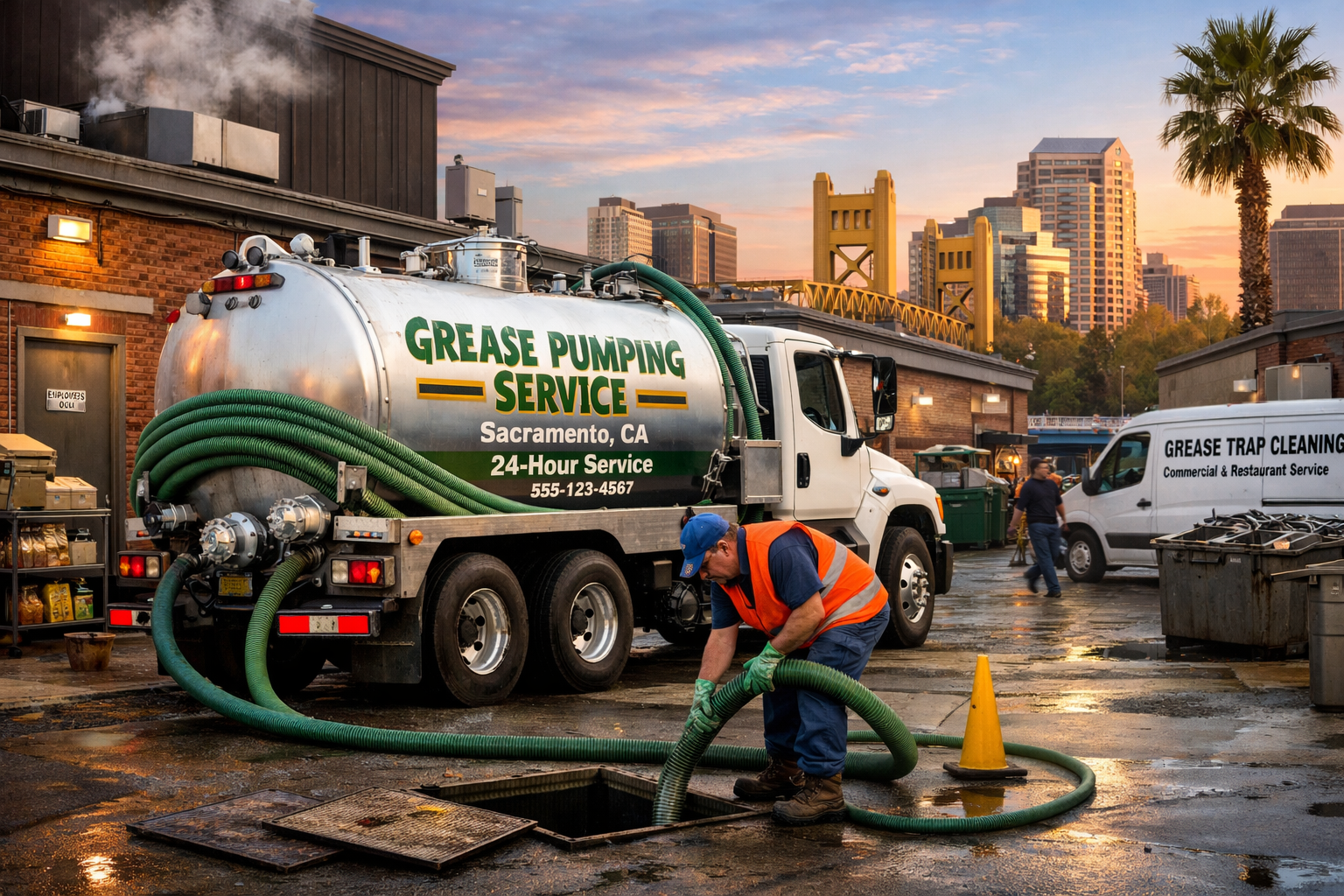
Choosing the right grease pumping service is not just another vendor decision. It directly affects your kitchen uptime, inspection results, plumbing health, and long-term operating costs. For restaurants, commercial kitchens, and food service facilities in Sacramento, grease buildup can escalate quickly from a routine maintenance issue into a shutdown-level emergency.
Many operators search for grease trap pumping near me and select the first available provider, only to discover later that not all grease trap services are created equal. Some companies simply pump and leave, while others take a preventative, compliance-focused approach that helps businesses avoid backups, fines, and emergency calls.
In this guide, you will learn how to compare grease pumping service providers based on service quality, reliability, compliance knowledge, and long-term value. We will explain what professional service should include, how to avoid common mistakes, and how Sacramento businesses can make informed, stress-free decisions.
What a Professional Grease Pumping Service Includes
A true grease pumping service involves more than removing liquid from a grease trap. High-quality service focuses on restoring the trap to proper working condition and documenting the process for compliance purposes.
Professional grease pumping includes full evacuation of fats, oils, grease, and settled solids. The technician scrapes interior walls, clears baffles, and inspects the trap for signs of damage or improper flow. This differs significantly from partial pumping, where only surface grease is removed and solids are left behind.
Thorough grease trap pumping slows down re-accumulation, reduces odors, and lowers the risk of blockages. It also supports regulatory compliance, since Sacramento-area inspections often require proof of proper grease trap maintenance.
Businesses that rely on comprehensive grease trap pumping experience fewer emergencies and lower long-term maintenance costs.
Grease Pumping Service vs Grease Trap Cleaning Service
While the terms are often used interchangeably, grease pumping service and grease trap cleaning service are not always the same in practice.
Grease pumping refers to the removal of waste from the trap or interceptor. Grease trap cleaning goes a step further by ensuring all components are cleared, scraped, and inspected. A complete grease trap cleaning service ensures the trap functions as designed and meets inspection standards.
Commercial grease trap cleaning is especially important for high-volume kitchens, where grease accumulation occurs rapidly and partial service leads to frequent backups.
How to Evaluate Grease Pumping Service Providers
When comparing grease pumping service providers, price alone is not a reliable indicator of value. Service consistency, transparency, and compliance support matter more over time.
Full Pump-Out Standards
Ask whether the provider performs full pump-outs every visit. Partial pumping may cost less initially but increases the frequency of service calls and the risk of emergency grease trap pumping later.
Local Compliance Knowledge
Sacramento has specific wastewater and health code requirements. Providers familiar with local enforcement understand inspection cycles, reporting expectations, and documentation standards.
Scheduling Reliability
Missed or delayed service appointments create compliance gaps. A dependable grease pumping service honors schedules and offers flexibility for emergencies.
Disposal and Environmental Responsibility
Grease must be transported and disposed of at approved facilities. Improper disposal exposes businesses to liability and regulatory penalties.
Reporting and Documentation
Detailed service reports protect businesses during inspections. Providers should supply records showing service date, volume removed, and condition of the trap.
Service Level Differences That Impact Long-Term Costs
Not all grease pumping service levels deliver the same results.
Basic grease trap service focuses only on waste removal. Preventative service includes inspections, early warnings, and maintenance recommendations.
Reactive providers respond only when called. Proactive providers establish service schedules based on kitchen volume, menu type, and trap size, reducing emergency grease trap pumping needs.
Minimal reporting leaves businesses vulnerable during audits. Compliance-focused providers deliver inspection-ready documentation every visit.
Understanding these differences helps businesses avoid choosing grease trap services near me based solely on convenience.
Real-World Use Cases for Sacramento Businesses
A high-volume restaurant schedules restaurant grease trap cleaning services every four weeks. With consistent full pump-outs and inspection reports, the restaurant avoids shutdowns and passes inspections without issue.
A multi-location food operator standardizes grease interceptor pumping service across all locations. Centralized documentation simplifies compliance and reduces administrative burden.
A school or healthcare kitchen relies on preventative grease trap service to ensure uninterrupted food operations and strict sanitation compliance.
These examples show how service quality directly affects operations.
Understanding Grease Trap Cleaning Cost
Grease trap cleaning cost varies based on trap size, usage volume, and service frequency. While lower prices may seem attractive, they often reflect partial service or lack of documentation.
Businesses that invest in consistent, thorough grease pumping service typically save money by avoiding emergency plumbing repairs, fines, and lost revenue from downtime.
Educating staff on grease handling also reduces service frequency. Following F O G best practices helps slow buildup and extend the time between pump-outs.
Questions to Ask Before Hiring a Provider
Before signing a service agreement, businesses should ask detailed questions. A helpful resource is questions to ask a grease trap cleaning company, which outlines critical points to clarify.
Confirm full pump-out procedures, documentation standards, emergency response times, and disposal practices. These answers reveal whether a provider focuses on long-term partnership or short-term transactions.
Choosing the Right Grease Pumping Partner
A reliable grease pumping service is not just a vendor. It is a compliance partner that helps protect your kitchen, staff, and customers.
Businesses throughout Sacramento rely on Sacramento Grease Trap for dependable scheduling, compliance-ready reporting, and preventative service tailored to local regulations.
Prioritizing experience, transparency, and service quality ensures your operation remains inspection-ready and avoids costly disruptions.
Final Thoughts on Grease Pumping Services
Comparing grease pumping service providers requires looking beyond pricing and availability. Service scope, compliance knowledge, documentation, and preventative practices determine long-term success.
By choosing a provider that emphasizes full service, proactive scheduling, and regulatory support, Sacramento businesses reduce risk, control costs, and maintain smooth operations year-round.
Frequently Asked Questions About Grease Pumping Service
How often should grease pumping service be scheduled?
Most commercial kitchens require service every one to three months, depending on usage and trap size.
Is grease pumping required by Sacramento regulations?
Yes. Food service businesses must maintain grease traps and provide service documentation during inspections.
What happens if grease pumping is skipped?
Skipping service increases the risk of backups, odors, failed inspections, and plumbing damage.
Does grease pumping include inspection?
High-quality providers inspect baffles, lids, and flow components during service.
Can grease pumping be scheduled outside business hours?
Many providers offer early-morning or after-hours service to minimize kitchen disruption.

Let Us Simplify Your Grease Trap Maintenance.
Proper grease trap maintenance will reduce costly repairs in the future.
.avif)