Grease Interceptor Pumping for Businesses in Sacramento: Compliance-Ready Procedures
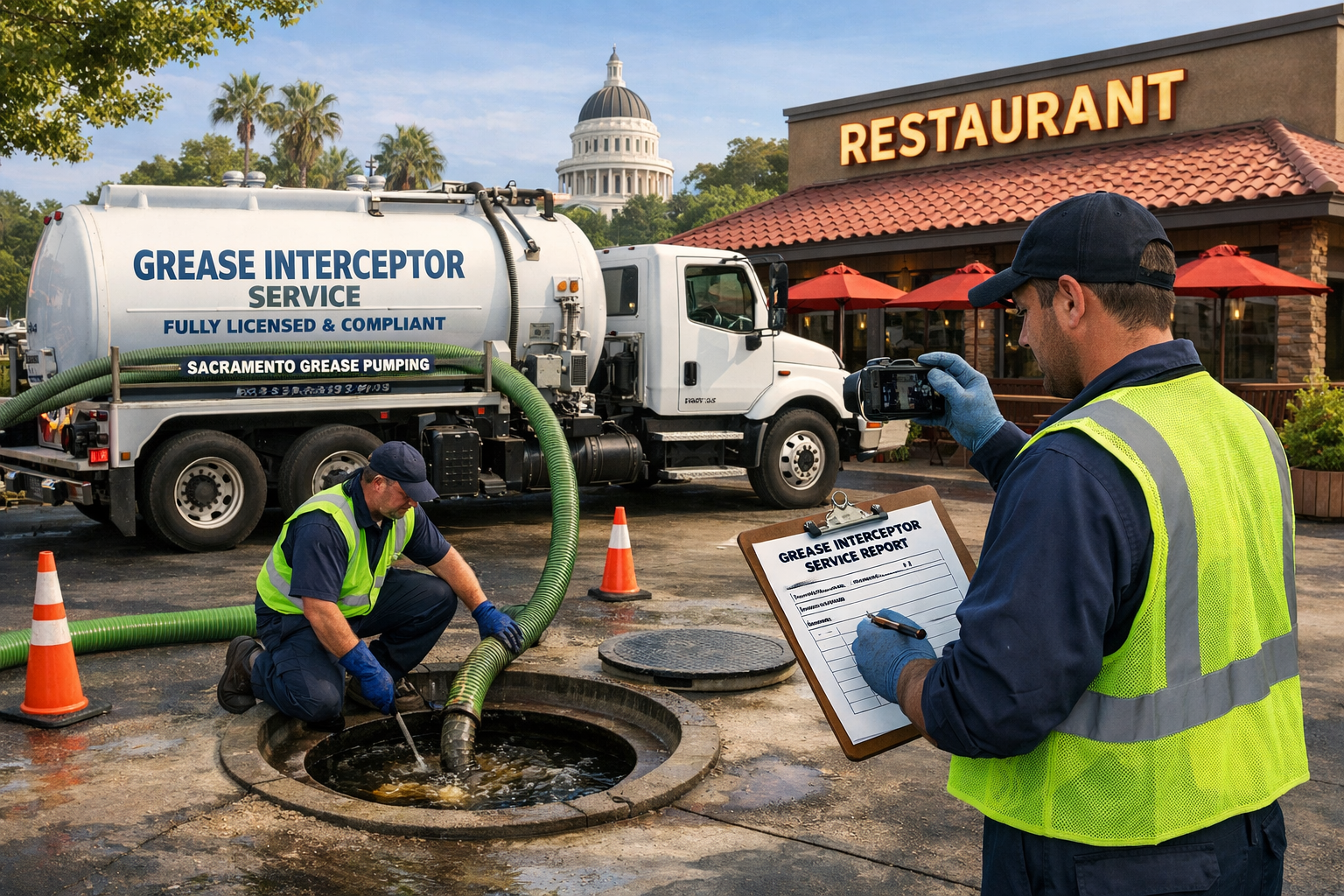
For restaurants, commercial kitchens, and foodservice facilities, grease interceptors are not optional equipment. They are a regulatory requirement designed to protect municipal sewer systems from fats, oils, and grease. When these systems are not properly maintained, the result can be sewer backups, environmental damage, and serious compliance violations. That is why grease interceptor pumping for businesses in Sacramento is closely regulated and routinely enforced.
Most violations do not happen because business owners ignore the rules. They happen because procedures are unclear, service is inconsistent, or documentation is missing. Missed pump-outs, partial cleaning, or improper disposal can quickly lead to fines, failed inspections, or temporary shutdowns.
This guide explains how compliance-ready grease interceptor pumping works in Sacramento. You will learn how interceptors differ from grease traps, what regulators expect, and how structured pumping procedures protect your operation, plumbing system, and reputation.
Understanding Grease Interceptors vs Grease Traps
Before discussing pumping procedures, it is important to understand the difference between a grease interceptor vs grease trap. These terms are often used interchangeably, but they serve different roles.
A grease trap is typically a smaller unit installed inside or near a kitchen. It captures grease from individual fixtures and requires frequent grease trap pumping due to limited capacity.
A grease interceptor is a larger, underground system designed for higher-volume operations. It handles wastewater from multiple fixtures and requires scheduled grease interceptor pumping to remain compliant.
Understanding the grease trap vs interceptor distinction helps businesses choose the correct service plan and avoid underestimating pumping needs.
Sacramento Grease Interceptor Compliance Requirements
Sacramento-area regulations require foodservice businesses to prevent grease from entering public sewer lines. Compliance generally includes the following obligations:
- Regular grease interceptor pumping at required intervals
- Complete removal of grease, solids, and wastewater
- Inspection of interceptor components
- Proper disposal at approved facilities
- Accurate service documentation
Local enforcement agencies may request records during routine inspections, after complaints, or following sewer incidents. Having a documented, repeatable pumping procedure keeps businesses inspection-ready year-round.
Compliance-Ready Grease Interceptor Pumping Procedures
Step One: Assess Interceptor Capacity and Usage
Compliance begins with understanding interceptor size and kitchen output. High-volume kitchens and grease-heavy menus require more frequent grease interceptor pumping. Assessing capacity ensures service occurs before grease reaches critical levels.
Step Two: Establish a Routine Pumping Schedule
Most Sacramento businesses require pumping every 30 to 90 days, depending on volume. Establishing a recurring schedule prevents missed service and reduces the need for emergency grease pumping service.
Businesses that rely on consistent grease trap pumping experience fewer compliance issues and operational disruptions.
Step Three: Perform Complete Waste Removal
Partial pumping is not compliant. Regulations require full removal of fats, oils, grease, solids, and wastewater. Thorough pumping restores interceptor capacity and prevents grease from bypassing the system.
Step Four: Inspect Components During Service
Each service visit should include inspection of baffles, lids, flow controls, and interceptor walls. Early detection of wear or damage prevents system failure and costly repairs.
When issues are identified, timely professional intervention is critical. Businesses benefit from understanding when to call a professional for grease trap repair to avoid escalating problems.
Step Five: Document Service and Disposal
Accurate records are essential for compliance. Documentation should include service date, volume removed, disposal method, and technician details. These records demonstrate compliance during inspections and audits.
Each step supports a defensible grease management process.
How Compliance-Ready Pumping Protects Your Business
Structured grease interceptor pumping delivers benefits beyond avoiding fines.
- Restaurant operations benefit from fewer backups and uninterrupted service hours.
- Health inspections proceed more smoothly with clean, odor-free systems.
- Plumbing systems last longer with reduced grease-related corrosion and blockages.
- Operations become predictable with scheduled service instead of emergencies.
Compliance supports both regulatory standing and operational stability.
Common Compliance Mistakes Businesses Make
Even experienced operators can fall into avoidable traps.
- Waiting for backups before scheduling service
- Using partial grease trap servicing instead of full pump-outs
- Failing to retain service records
- Ignoring early signs of interceptor damage
Avoiding these mistakes protects your business from violations and downtime.
Supporting Compliance Through Preventative Practices
Proper pumping works best when paired with staff training. Implementing F O G best practices reduces grease entering the interceptor and extends the time between pump-outs.
Combining education with routine grease trap cleaning strengthens overall compliance and lowers long-term service costs.
Choosing the Right Grease Interceptor Pumping Partner
Not all grease trap services deliver the same level of compliance support. Businesses searching for grease trap service near me or restaurant grease trap cleaning services near me should prioritize experience, documentation, and local regulatory knowledge over lowest price.
Sacramento businesses rely on Sacramento Grease Trap for structured pumping schedules, compliance-ready reporting, and dependable waste interceptor pump out solutions designed to meet local requirements.
Final Thoughts on Grease Interceptor Pumping in Sacramento
Grease interceptor pumping for businesses in Sacramento is a regulatory requirement that directly impacts operations, compliance, and long-term infrastructure health. A reactive approach increases risk, while a structured, compliance-ready process protects your business.
By understanding interceptor requirements, following defined pumping procedures, and partnering with experienced professionals, Sacramento businesses stay inspection-ready and avoid costly disruptions.
Frequently Asked Questions About Grease Interceptor Pumping
How often should grease interceptors be pumped in Sacramento?
Most businesses require pumping every 30 to 90 days, depending on volume and interceptor size.
Is partial pumping compliant?
No. Regulations require complete removal of grease, solids, and wastewater.
Do inspectors require service documentation?
Yes. Accurate records are commonly requested during inspections and audits.
What happens if pumping is delayed?
Delayed service can lead to sewer backups, odors, health violations, and fines.
Can pumping frequency change over time?
Yes. Changes in menu, volume, or equipment may require schedule adjustments.

Let Us Simplify Your Grease Trap Maintenance.
Proper grease trap maintenance will reduce costly repairs in the future.
.avif)