What does a professional grease trap service include?
Have you ever noticed your kitchen drains slowing down just as the dinner rush hits, or caught a faint, unpleasant odor wafting from the floorboards? It’s a nightmare scenario for any food service manager: a backed-up system that threatens to shut down operations right when you're at your busiest.
The reality is that commercial grease trap cleaning is often "out of sight, out of mind" until it becomes a costly emergency. Over time, Fats, Oils, and Grease (FOG) build up, hardening into blockages that lead to foul smells, health code violations, and expensive plumbing repairs. Relying on inconsistent or DIY skimming simply isn't enough to protect your business from the logistical and financial headaches of a system failure.
In this guide, we’ll break down exactly what a professional grease trap service includes so you can ensure your establishment stays compliant and odor-free. From deep pumping to detailed inspections, you’ll discover how the right maintenance plan saves you money and stress.
Let’s dive into what you should expect from a top-tier service provider.
Why Professional Grease Trap Cleaning Near Me Matters
A grease trap cleaning service is more than just a routine chore; it is a specialized sanitation process where a licensed technician removes the accumulated Fats, Oils, Grease, and Solids (FOGS) from your interceptor system.
While the concept sounds simple, it involves a comprehensive approach that includes a total pump-out, scraping of the internal walls, and a thorough grease trap inspection to ensure every component is functioning as intended.
Understanding this process is vital because your grease trap acts as the frontline defense for your plumbing and the city’s sewer main. When you invest in a professional grease trap service company, you aren't just paying for waste removal—you are investing in the longevity of your infrastructure.
Without a consistent grease trap maintenance service, your business risks catastrophic pipe bursts, hefty municipal fines, and the loss of customers due to unsanitary conditions.
By prioritizing regular maintenance, your kitchen gains several critical advantages:
- Total Compliance: Stay ahead of local health and environmental regulations to avoid costly "stop-work" orders.
- Cost Avoidance: Prevent emergency plumbing backups that typically cost three times more than scheduled maintenance.
- Odor Control: Eliminate the buildup of decaying organic matter that produces "rotten egg" smells.
- Environmental Protection: Ensure that harmful fats are diverted from local waterways and processed responsibly.
A common misconception is that adding hot water or specialized enzymes to your drains replaces the need for a full pump-out. In reality, these methods often just push the grease further down the line, leading to even bigger problems in the main sewer. True peace of mind only comes from a grease trap service checklist executed by experts.
The Professional Grease Trap Service Checklist: What to Expect
When you schedule a grease trap cleaning service, you aren't just paying for someone to haul away waste. A professional service is a multi-step technical process designed to protect your plumbing and keep your business in compliance with local Sacramento health regulations. To ensure you are getting the most out of your grease trap service company, it helps to know exactly what happens during a visit.
Follow this step-by-step breakdown of a standard, high-quality commercial grease trap cleaning procedure.
Step 1: Initial Inspection and Flow Analysis
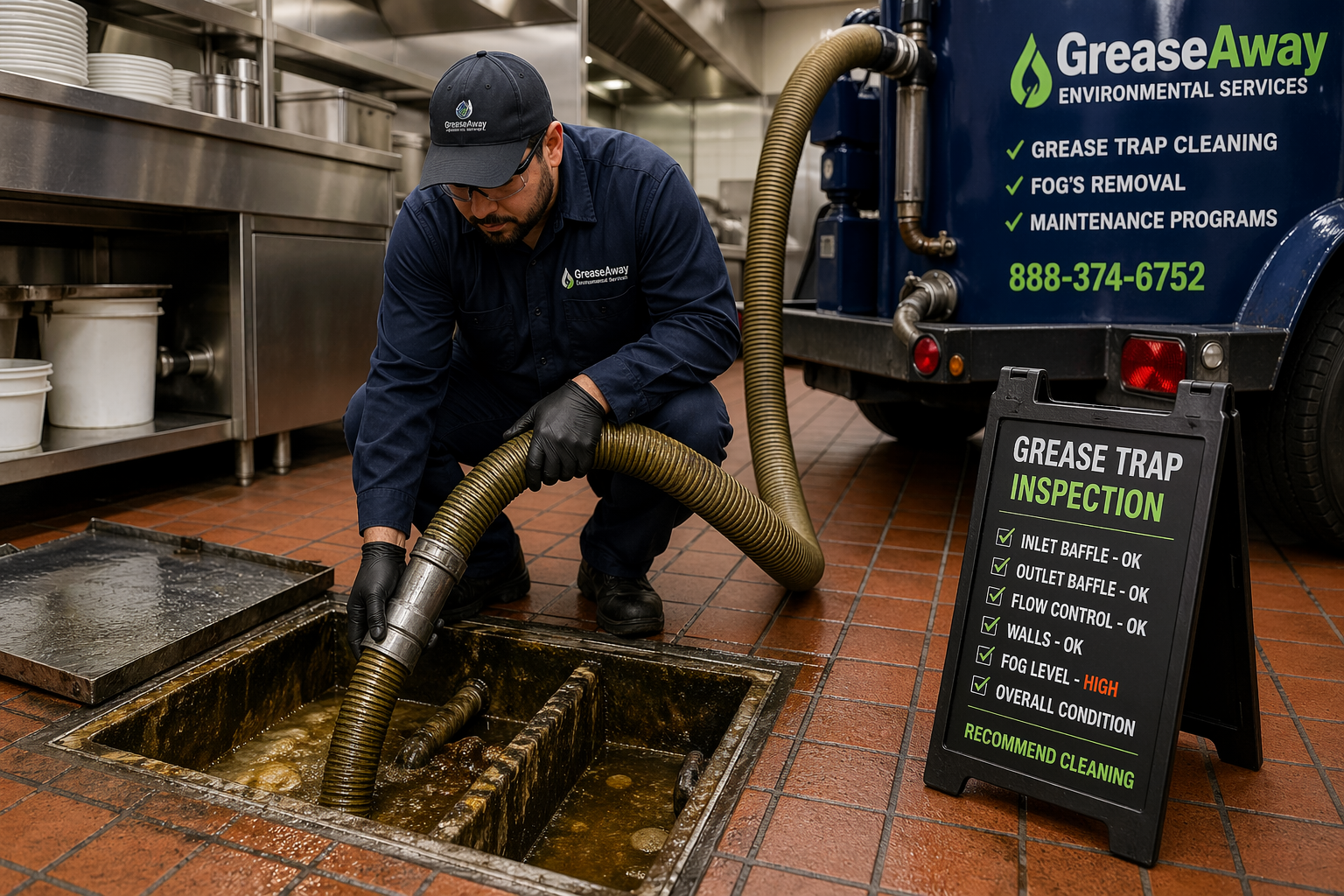
Before any pumping begins, the technician performs a preliminary grease trap inspection. This allows them to assess the current levels of FOGS (Fats, Oils, Grease, and Solids) and identify any immediate red flags.
The technician will check the integrity of the baffles and the condition of the lid seals. Understanding the current state of the trap helps the service provider determine if your current grease trap maintenance service frequency is adequate or if adjustments are needed based on your kitchen's output.
Step 2: Complete Grease Trap Pumping
The core of the visit is the grease trap pumping service. Using a specialized vacuum truck and heavy-duty hoses, the technician removes the entire contents of the interceptor—not just the floating grease.
It is a common mistake for some budget providers to only "skim" the top layer of grease, leaving the heavy food solids at the bottom and the greywater in the middle. A professional service ensures the tank is completely emptied. This prevents the old, acidic wastewater from corroding the tank walls and ensures the trap's full capacity is restored for the next cycle.
Step 3: Thorough Cleaning and Wall Scraping
Once the liquid and solids are removed, the technician will move on to the "detailing" phase of the grease trap cleaning checklist.
The technician uses scrapers and high-pressure water to remove hardened grease buildup from the side walls, baffles, and inlet/outlet pipes. This step is crucial because leftover grease acts as a magnet for new FOGS, causing the trap to fill up faster if not properly cleaned. A clean surface also allows for a much more accurate inspection of the tank's structural integrity.
Step 4: Component Inspection and Testing
With the tank empty and clean, the technician can now perform a detailed grease trap service checklist review of the internal hardware.
They will inspect the baffles (the partitions that slow down water flow) to ensure they aren't cracked or missing. If a baffle is damaged, grease will bypass the trap and go straight into the city sewer, leading to massive fines. The technician will also check the "T-vents" and flow control devices. Finally, they may run water from the kitchen sinks to ensure the flow is smooth and there are no obstructions in the connecting lines.
Step 5: FOG Report Documentation and Disposal
The final step is perhaps the most important for your legal records: the documentation of the service and the responsible disposal of waste.
In many jurisdictions, businesses are required to keep a grease trap maintenance checklist and manifest on-site for health inspectors. Your service provider will provide a manifest that proves the waste was hauled away and disposed of at a licensed facility. This documentation protects you from liability and proves you are following F.O.G. best practices.
Pro Tip: Always ask for a copy of the service manifest before the technician leaves. If a city inspector walks in tomorrow, having that paperwork ready can save you from a "Failure to Maintain" citation.
Why a Full Service is Non-Negotiable
You might be tempted to handle small indoor traps yourself, but grease trap cleaning near me involves more than just a bucket and a shovel. Professional equipment ensures that the highly pungent odors are contained and that the hazardous waste is handled according to environmental laws.
By following this comprehensive process, you extend the life of your plumbing and ensure your kitchen remains a safe, hygienic environment for your staff and customers.
Real-World Benefits of Regular Grease Trap Maintenance
Understanding the technical process is essential, but seeing how a professional grease trap maintenance service functions in the daily operations of a business brings its value into focus. Whether you manage a high-volume steakhouse or a small neighborhood cafe, the application of these services is what keeps your doors open.
- High-Volume Restaurants: A busy downtown bistro experiencing frequent "slow drains" during peak hours implemented a monthly commercial grease trap cleaning schedule. By transitioning from reactive repairs to proactive pumping, they eliminated emergency plumbing call-outs entirely, saving over $2,500 annually in lost revenue and plumbing fees.
- Small Coffee Shops and Bakeries: A local bakery used a quarterly grease trap service checklist to stay compliant with city inspectors. Because their trap was smaller and indoors, the professional service ensured that the specialized vacuum equipment contained all odors, allowing them to maintain a fresh-smelling environment for customers without interrupting service.
- Industrial Kitchens and Schools: Large-scale cafeterias often utilize heavy-duty interceptors that require specific grease trap inspection protocols. Consistent servicing ensured these facilities passed 100% of their municipal environmental audits, avoiding the heavy fines associated with FOGS discharge into the public water system.
These examples prove that regardless of your kitchen's size, a structured maintenance plan is the most effective way to ensure operational continuity and long-term savings.
Pro Tips for Optimizing Your Grease Trap Maintenance
Once you’ve established a routine with a grease trap service company, a few expert strategies can help you extend the life of your plumbing and reduce the frequency of emergency cleanings. These best practices ensure you get the most value out of every professional visit.
- Maintain an Accurate Service Log: Keep a detailed grease trap maintenance checklist in a dedicated binder or digital folder. Not only is this often required by health inspectors, but it also helps you identify patterns—such as your trap filling faster during certain seasons—allowing you to adjust your grease trap pumping service schedule before a backup occurs.
- Implement "Dry Scrapping" Protocols: Train your kitchen staff to scrape all food solids and oils into the trash before dishes hit the sink. This simple habit drastically reduces the amount of FOGS entering your system, which keeps your interceptor cleaner between professional visits and prevents the heavy sludge buildup that causes foul odors.
- Monitor Water Temperatures: Avoid the temptation to use boiling water to "flush" grease down the drain. While it might seem like it’s helping, it actually melts the grease just long enough to push it past the trap and into your main sewer lines, where it cools and creates massive blockages. Stick to standard dishwashing temperatures and let the trap do its job.
- Schedule Inspections During Off-Hours: To minimize the impact on your business, coordinate your commercial grease trap cleaning during low-traffic periods. This ensures the technician has full access to the area and can perform a thorough grease trap inspection without the pressure of a busy kitchen line moving around them.
By applying these expert tips, you’ll not only improve the efficiency of your kitchen but also create a more sustainable and cost-effective waste management system.
Secure Your Kitchen’s Success with Expert Grease Trap Care
A professional grease trap cleaning service is the backbone of a functional, compliant, and sanitary commercial kitchen. By following a rigorous grease trap cleaning checklist, you protect your business from the "out of sight" hazards of FOGS buildup, ensuring your drains flow freely and your facility remains odor-free. You now have the knowledge to distinguish between a simple skim and a high-quality, comprehensive pump-out.
Don’t wait for a slow drain or a foul smell to signal a crisis—proactive maintenance is always more affordable than emergency repairs. Start implementing a consistent grease trap maintenance service today to safeguard your reputation and your bottom line.
Ready to get your system back in peak condition? Contact us today to schedule your professional grease trap cleaning near me and experience the peace of mind that comes with expert service.
Frequently Asked Questions About Grease Trap Services
How often should I schedule a grease trap cleaning service?
Most commercial kitchens require a grease trap pumping service every 1 to 3 months, or once the trap reaches 25% capacity (the "1/4 Rule"). High-volume restaurants may need more frequent visits to prevent blockages and odors. Regular servicing ensures you stay compliant with Sacramento's environmental regulations and prevents costly emergency backups.
Can I perform commercial grease trap cleaning myself?
While small indoor traps can technically be cleaned manually, it is highly discouraged. A professional grease trap service company uses specialized vacuum equipment to remove all solids and acidic wastewater, which are difficult to handle without making a mess. Furthermore, pros provide the required legal disposal manifests that health inspectors demand during audits.
What happens during a professional grease trap inspection?
During an inspection, a technician checks the structural integrity of the tank, ensures the baffles are intact and positioned correctly, and verifies that the lid seals are airtight. This proactive grease trap maintenance service identifies small cracks or hardware failures before they turn into expensive plumbing disasters or municipal fines.
Why is my grease trap still smelling after being cleaned?
If odors persist after a grease trap cleaning service, it may be due to hardened grease left on the walls or a failing gasket on the lid. A comprehensive service includes scraping the side walls and checking the seals. In some cases, the smell may originate from a blocked vent stack or floor drains that require professional hydro-jetting to clear.

Let Us Simplify Your Grease Trap Maintenance.
Proper grease trap maintenance will reduce costly repairs in the future.
.avif)