Local Grease Trap Requirements Explained for Sacramento Businesses
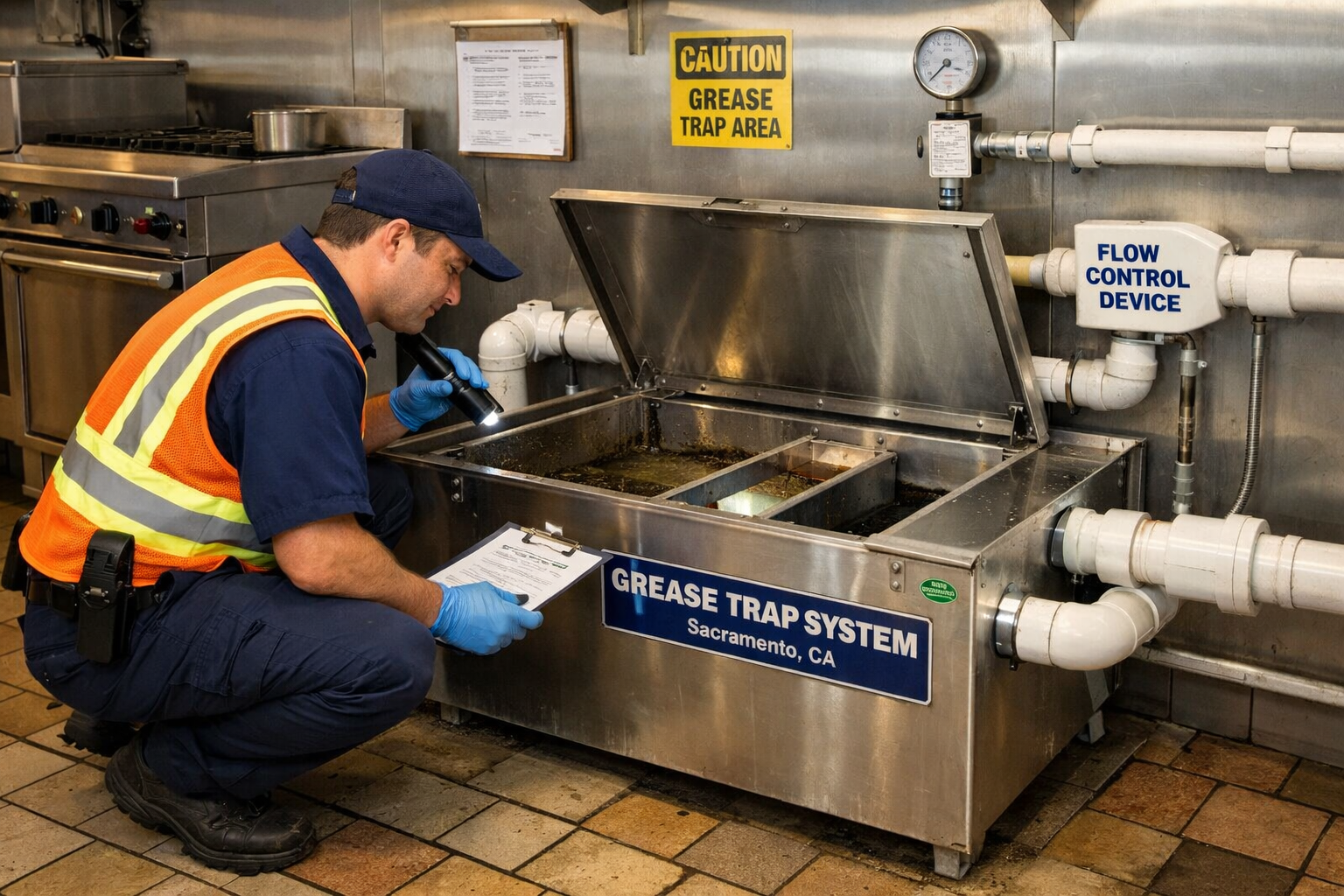
Struggling to understand grease trap requirements in Sacramento, CA? You’re not alone. Local plumbing codes, health department rules, and environmental regulations can feel overwhelming, especially when you’re focused on running a restaurant or commercial kitchen efficiently.
In Sacramento, grease trap requirements determine:
- When a grease trap or interceptor is required
- How it must be sized and installed
- How often it must be cleaned and maintained
- What records your business must keep
Getting these requirements right is critical. Improper grease management can lead to sewer blockages, fines, costly repairs, and in severe cases, temporary business closures. The good news is that once you understand the rules, compliance becomes manageable and predictable.
This guide explains Sacramento grease trap requirements in clear, practical terms, so you can stay compliant, avoid penalties, and protect your business.
What Are Grease Trap Requirements and Why Do They Matter?
A restaurant grease trap (also called a grease interceptor) is designed to capture fats, oils, and grease (FOG) before wastewater enters the public sewer system. Sacramento’s grease trap requirements are based on state plumbing codes and local wastewater regulations intended to protect infrastructure and public health.
Why These Requirements Exist
- Prevent sewer blockages: Grease hardens inside pipes and causes backups
- Protect wastewater treatment plants: Excess FOG disrupts treatment processes
- Avoid fines and shutdowns: Non-compliance can trigger penalties and corrective orders
According to the U.S. Environmental Protection Agency, unmanaged fats, oils, and grease are a leading cause of sanitary sewer overflows nationwide. The EPA outlines proper FOG control practices in its official FOG management guidance on EPA.gov, which forms the foundation for many local regulations, including Sacramento’s.
Key Sacramento Grease Trap Regulations and Standards
Sacramento grease trap requirements apply to most food-service and commercial kitchen operations. While details vary by location and facility size, the core standards are consistent.
When a Grease Trap Is Required
Grease traps are typically required for:
- Restaurants and cafés
- Commercial kitchens
- Food prep facilities
- Any business producing FOG wastewater
If your operation washes cookware, dishes, or food-prep equipment, you almost certainly need a grease trap.
Grease Trap Sizing Requirements
Sizing is one of the most important and most commonly misunderstood requirements.
Sizing depends on:
- Flow rate (gallons per minute)
- Number and type of fixtures
- Volume of grease-producing activity
An undersized unit fills too quickly and allows grease to escape downstream. An oversized unit may not function efficiently and can raise installation costs.
Local inspectors may review calculations during permitting, so correct sizing is essential for approval.
Installation Standards
Sacramento grease trap requirements specify that systems must be:
- Installed in approved locations
- Easily accessible for cleaning and pumping
- Properly vented and protected from backflow
Most grease traps for restaurants must be installed by licensed plumbers familiar with local building and plumbing codes. Improper installation is a common cause of inspection failures.
Inspection and Maintenance Requirements
Installation alone does not satisfy compliance. Ongoing grease trap maintenance is mandatory.
Most Sacramento businesses must:
- Maintain a routine pumping schedule (often every 90 days or sooner)
- Keep maintenance and disposal records on site
- Address problems immediately if inspections reveal issues
Routine professional grease trap cleaning and grease trap pumping are essential to staying compliant.
Reporting and Record-Keeping
Businesses are required to keep documentation showing:
- Dates of cleaning and pumping
- Hauler or service provider information
- Disposal receipts
These records are often requested during health or sanitation inspections. Missing documentation can result in violations, even if the system itself is functioning.
Permits, Compliance, and Enforcement in Sacramento
Understanding grease trap requirements also means understanding the permit and enforcement process.
Permit Requirements
Most grease trap installations require:
- Plumbing permits
- Grease interceptor permits
- Plan reviews for new construction or remodels
Permits are usually obtained through the City of Sacramento or the appropriate county authority.
Compliance Inspections
Local agencies may:
- Conduct scheduled or surprise inspections
- Review maintenance logs
- Inspect grease trap condition and accessibility
Failing an inspection can lead to correction notices, fines, or required system upgrades.
Enforcement Actions
Repeat or serious violations may result in:
- Monetary penalties
- Mandatory corrective work
- Business license consequences
Proactive maintenance and accurate records significantly reduce enforcement risks.
Practical Applications of Grease Trap Requirements
Example 1: Full-Service Restaurant
A busy restaurant installs a properly sized interceptor and schedules quarterly pumping. Staff follow FOG handling guidelines, and digital logs are maintained. Inspections pass smoothly, and plumbing issues are rare.
Example 2: Small Café or Bakery
A small café still requires a grease trap despite limited cooking. The owner installs an accessible unit and contracts regular service. Proper cleaning a grease trap routine prevents odors, backups, and violations.
These examples show that compliance isn’t about size, it’s about consistency.
Cleaning and Maintenance: What the Rules Really Mean
Many owners ask whether they can handle cleaning grease traps themselves.
In most cases:
- Certified haulers are required for grease removal
- Improper disposal is prohibited
- DIY attempts can violate regulations
Understanding how to clean out a grease trap safely is helpful for staff awareness, but compliance usually requires professional service, especially for larger units.
Regular maintenance also reduces emergency issues like drain backups or the need to unclog a garbage disposal caused by excessive grease buildup.
Following established FOG best practices helps minimize grease entering the system in the first place.
Best Practices and Common Mistakes to Avoid
To stay compliant with grease trap requirements:
- Size the trap correctly from the start
- Set and follow a consistent maintenance schedule
- Keep accurate service records
- Work only with licensed professionals
- Never dispose of grease improperly
For additional local guidance, many businesses review Sacramento grease trap best practices to stay current with expectations.
Conclusion: Staying Compliant With Sacramento Grease Trap Requirements
Understanding grease trap requirements in Sacramento is essential for protecting your business, the sewer system, and public health. Compliance requires the right equipment, proper installation, regular cleaning, and thorough documentation.
With a clear plan and professional support, grease trap compliance becomes part of routine operations, not a recurring problem.
Frequently Asked Questions About Sacramento Grease Trap Requirements
What size grease trap do I need in Sacramento?
Sizing depends on flow rate, fixture types, and grease production. A licensed professional can calculate the correct capacity based on local codes.
How often must a grease trap be cleaned?
Many businesses follow a 90-day schedule, but high-volume kitchens may need more frequent service.
Do I need a permit to install a grease trap?
Yes. Most installations require plumbing permits and plan review approval.
Can I clean my own grease trap?
In most cases, certified haulers are required for grease removal and disposal.
What happens if I fail an inspection?
You may receive fines, correction orders, or mandatory upgrades until compliance is restored.

Let Us Simplify Your Grease Trap Maintenance.
Proper grease trap maintenance will reduce costly repairs in the future.
.avif)