Restoring Flow: Why Restaurant Grease Trap Pumping is Essential During Stalls
When your commercial kitchen drains suddenly slow to a crawl, immediate restaurant grease trap pumping is the only definitive solution to clear structural bottlenecks and avert a catastrophic backup.
Ignoring these hidden fluid obstructions risks toxic floor drain overflows, instant health department citations, and foul kitchen odors that drive customers away. For local kitchen operators, operational stalls mean dealing with severe business interruption, thousands of dollars in lost weekend revenue, and ruined plumbing infrastructure.
Staying proactive with your waste system is not merely about city compliance; it directly protects your daily kitchen workflow from sudden, costly shutdowns. By reading this guide, you will master the mechanics of grease collection and learn how specialized restaurant grease trap pumping resolves severe line stalls.
Let's explore how Sacramento Grease Trap Service restores uninterrupted flow to your facility.
The Physics of Filtration: Understanding Commercial Waste Collection
A professional restaurant grease trap pumping service is the physical extraction of accumulated semi-solid animal fats, vegetable oils, and heavy organic sludge from your facility’s wastewater filtration vault. This mechanical barrier operates entirely on gravity separation: because oils and grease are less dense than water, they rise and float on top of the liquid layer while heavy food solids settle along the bottom of the tank.
Over weeks of constant dishwashing, these two layers expand toward each other, shrinking the middle zone of clean water. For property owners and kitchen managers, maintaining this invisible balance is the only way to ensure that heavy wastewater moves freely without triggering immediate structural pipe blockages.
Failing to schedule timely extraction means the trapped fats have nowhere to go but straight into your downstream mainline infrastructure. When an overloaded tank hits capacity, thick grease escapes into the public utility lines, cooling down and hardening into rock-like obstructions that cause sudden, toxic floor drain backups.
To protect your business from these high-stakes compliance failures, booking reliable grease trap pumping prevents grease from slipping past your internal baffles during peak-hour dishwashing surges. Our non-commissioned specialists prioritize the baseline health of your pipeline rather than selling unnecessary add-ons.
Adhering to strict preventative care shields your commercial facility from expensive emergency cleanouts, sudden health code violations, and costly business downtime.
Implementing a proactive maintenance routine provides distinct operational advantages:
- Eliminates Foul Waste Aromas: Regular extraction serves as a powerful grease trap odor eliminator, stopping decaying organic proteins from releasing foul sulfur smells into your main dining room.
- Guarantees Local Compliance: Provides certified, traceable waste disposal manifests that easily prove to municipal health inspectors you are operating within strict local guidelines.
- Reduces Long-Term Upkeep Fees: Keeping the tank clean avoids heavy grease scaling inside the downstream pipes, which makes your ongoing grease trap cleaning schedules shorter, more effective, and completely predictable.
A frequent, high-risk error among new kitchen operators is assuming that an interceptor only needs attention when a visible drain backup occurs. In reality, a completely full system will look totally normal on the surface while quietly pushing grease directly into city mains—setting up a major financial crisis that only a meticulous, step-by-step extraction protocol can prevent.
Restoring Flow: The Professional Protocol for Restaurant Grease Trap Pumping
Restoring uninterrupted drainage to a stalled kitchen line requires a methodical extraction and sanitization process that goes far beyond a surface skim. When waste pipelines slow down, executing an intensive, full-volume restaurant grease trap pumping is the only way to completely clear the thick sludge beds and compacted fats that drop flow rates to zero.
Our certified, non-commissioned specialists follow an exact, multi-step engineering protocol during every service call to return your filtration vault to peak efficiency. To see how these comprehensive solutions protect your commercial asset, exploring our complete suite of grease trap installation services highlights the technical standards we maintain across both system maintenance and complete unit rebuilds.
Step 1: Secure the Work Zone and Complete the Initial Inspection
Before opening any access ports, technicians map out the layout area and place safety barriers to maintain a sanitary barrier between the service gear and your food prep lines. The crew carefully lifts the airtight access lids, checking the structural condition of the vault seals and checking the initial grease depth.
A thorough inspection allows the technician to spot broken structural components or compromised concrete walls before any vacuum pressure is applied to the tank.
Step 2: Vacuum Extract the Floating Fat Layer
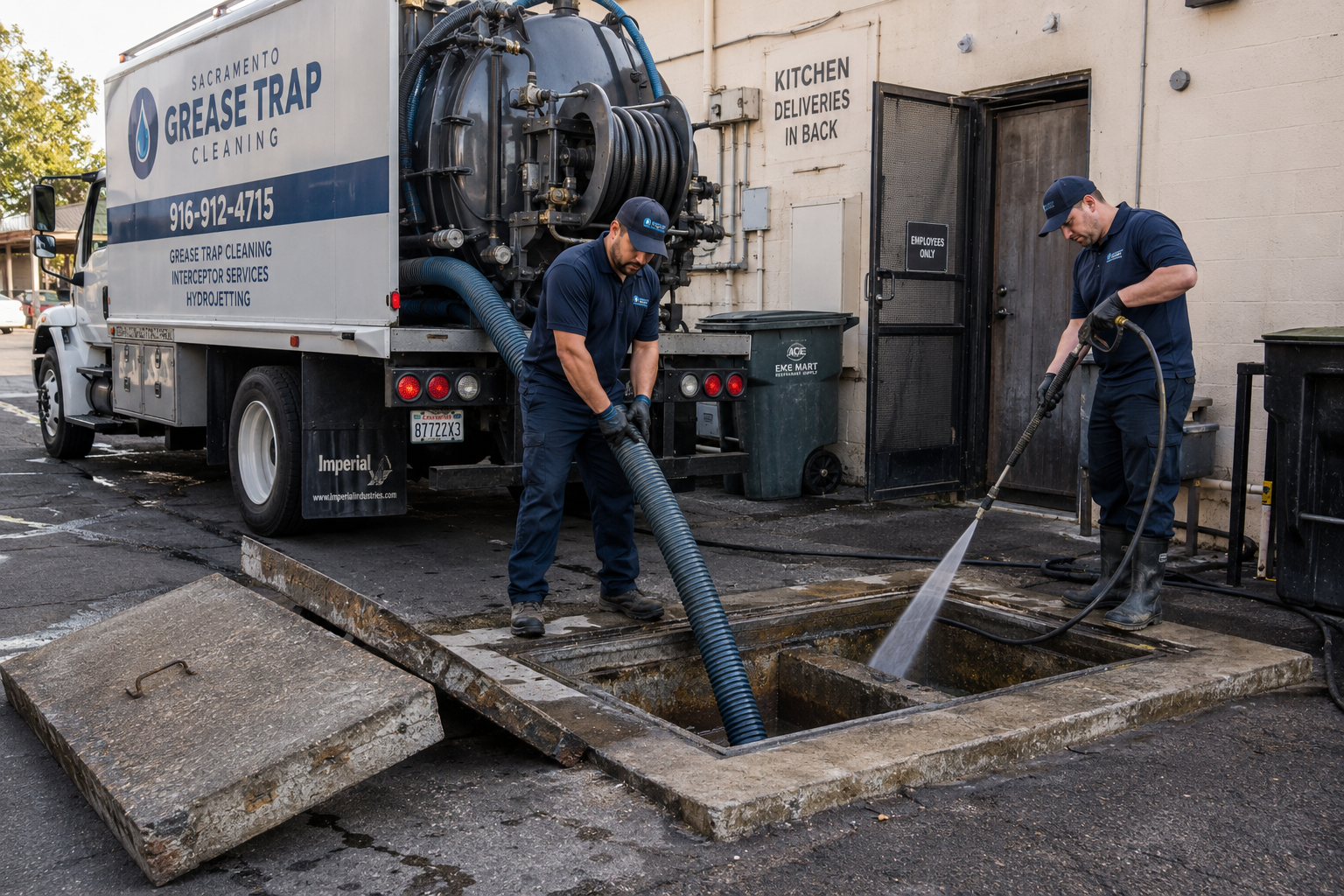
Technicians connect heavy-duty, high-vacuum suction hoses directly from our specialized fleet truck to the top layer of the tank. The pump draws out the floating scum blanket, which is composed of solidified animal fats and congealed cooking oils that float above the water line.
Removing this top layer immediately relieves internal structural pressure, giving the team a clear view of the deep internal baffle configurations.
Step 3: Evacuate the Liquid and Compacted Base Sludge
With the floating fat blanket successfully removed, the vacuum line drops down to pull out the middle wastewater layer and the dense, packed food solids lying along the bottom floor. Complete evacuation is essential because leaving behind old, rotting organic sediment rapidly triggers toxic sulfur gases and eats up valuable storage volume.
Our non-commissioned specialists pull every gallon out of the vault, ensuring the container is entirely empty before starting the physical washing process.
Step 4: Scrape the Internal Walls and Direct Baffles
Once the tank is completely empty of liquids, technicians use specialized scrapers to manual-clean thick grease scaling off the interior concrete walls and internal baffle pieces.
Leaving this hardened residue behind creates immediate blockages and releases a foul stench that can quickly migrate into customer dining areas. Thorough scraping ensures that every square inch of your system is restored to its raw, original layout state.
Step 5: Execute Intensive Restaurant Grease Trap Cleaning
The team uses high-pressure water streams to thoroughly scour the tank interior, clearing away any remaining fine grease films or stubborn organic film layers. This intensive restaurant grease trap cleaning phase checks that the inlet and outlet tracks are completely clear of hard blockages.
Regular cleaning prevents long-term pipe scaling and keeps your ongoing maintenance schedules short, efficient, and running smoothly.
Step 6: Test Fluid Flow Dynamics and Reseal the Vault
Finally, the technician runs fresh water through the kitchen’s connected lines to verify that the plumbing flow rate has returned to peak speed. The team monitors the newly cleaned baffles to ensure the water flows along the correct drop pattern without bottlenecking.
After passing this operational test, the airtight gasket covers are bolted down securely using corrosion-resistant hardware to trap bad smells inside, providing complete compliance documentation for your health inspectors.
Balancing the Frequency of System Upkeep
Determining how often should grease traps be cleaned depends on your facility's daily wastewater output, seating capacity, and menu design. High-volume kitchens utilizing heavy deep-fryer lines or serving greasy proteins typically require a professional pump-out every 4 to 6 weeks to stay safe from code violations.
Conversely, smaller boutique bakeries or low-volume coffee bars can often manage with an expanded 8 to 12-week maintenance rotation.
The universal benchmark for commercial facilities is the standard plumbing industry "one-quarter rule," which mandates that a tank must be fully pumped out before the combined fat and sludge layers take up more than twenty-five percent of the total liquid depth.
Exceeding this critical limit causes the system to experience immediate separation failure, allowing grease to slip right into city lines and exposing your business to massive municipal fines.
Analyzing the Real Financial Commitment
Calculating your actual grease trap cleaning cost requires looking past generic baseline quotes and examining your specific facility setup. Total service fees are determined by the physical volume capacity of your interceptor tank, the ease of physical access for vacuum lines, and how much compacted solid waste has accumulated inside the unit.
- Indoor Under-Sink Units: Generally involve a faster turnaround time and lower overall material fees, making them highly economical for small coffee shops or quick-service delis.
- Large Buried Outdoor Interceptors: Require heavy-duty vacuum trucks and extended rinsing cycles, representing a higher upfront service investment but drastically reducing the required frequency of maintenance visits.
Securing a transparent, fixed-price estimate from non-commissioned specialists ensures your business stays on budget without any hidden upcharges or unnecessary parts additions. Taking the time to properly track your kitchen's true flow demands protects your business from system failure and builds an efficient operational foundation for years to come.
Real-World Applications: Overcoming Stalls with Restaurant Grease Trap Pumping
Reviewing how active kitchen operations apply systematic waste extraction in real life proves that targeted plumbing care completely changes a business's daily trajectory. When commercial property owners move past temporary drain fixes and invest in professional care, they eliminate unexpected kitchen downtime.
- Resolving Backup Crises at a Seafood Grill: A high-volume seafood restaurant was experiencing frequent floor drain slowdowns during peak Saturday dinner rushes, threatening to halt their entire kitchen line. By assessing their system, a certified technician determined their interceptor was well past its maximum volume limit, allowing fats to spill into the main sewer pipe.
Scheduling immediate restaurant grease trap pumping evacuated the compacted sludge, dropping emergency plumbing calls to zero and allowing the kitchen line to run smoothly.
- Protecting a Shared Multi-Tenant Food Court Line: A commercial property manager was facing constant tenant disputes due to recurring mainline sewage blockages traced back to a shared food court layout. Instead of forcing individual, uncoordinated cleaning steps, the manager arranged an intensive grease interceptor cleaning schedule for the shared system.
This structural investment consolidated their liquid waste filtering, reduced the overall frequency of costly line washouts, and saved the property owner thousands in recurring pipe repairs.
These real-world transformations prove that understanding your specific waste hurdles makes an immediate, practical difference for your business. Taking control of your drainage timeline ensures your property receives the precise protection required to operate confidently.
Proactive Maintenance Standards for Commercial Kitchen Operations
Moving from basic plumbing awareness to high-impact facility management requires changing how you maintain your wastewater infrastructure. Applying these experience-based strategies ensures you can accurately manage fats, oils, and grease before they cause structural line damage.
- Adhere to the Industry One-Quarter Rule: Track your waste levels carefully to ensure your tank is fully pumped out before the accumulated grease layer occupies twenty-five percent of the total liquid volume. Scheduling timely restaurant grease trap pumping protects your business from sudden line bypasses and heavy city code violations.
- Enforce Kitchen Plate Scraping Protocols: Train your culinary staff to dry-wipe plates and cookware into organic waste bins before rinsing them in the sink. This direct action prevents heavy food solids and animal fats from overwhelming your system, keeping your recurring grease trap maintenance quick and affordable.
- Partner with a Reputable Grease Trap Cleaning Company: Choose a service partner that utilizes certified, non-commissioned specialists rather than commission-driven sales crews. This guarantees an honest assessment of your facility's exact pipeline demands while securing competitive, transparent pricing for your ongoing commercial grease trap cleaning near me schedules.
- Maintain Detailed Waste Disposal Manifests: Always keep physical copies of your service manifests on-site for immediate inspection. Local health department inspectors regularly require these logs to verify that your business handles and disposes of liquid kitchen waste with complete environmental responsibility.
Integrating these highly structured, practical habits into your standard workflow removes the frustration from navigating local sewage regulations. Taking control of your maintenance timeline ensures your commercial facility receives the precise protection required to run confidently.
Securing Uninterrupted Flow: Finalizing Your Kitchen Maintenance Strategy
Mastering the distinct nuances of professional grease trap upkeep allows you to turn everyday commercial kitchen plumbing anxieties into a highly structured, successful business operational plan. You now understand how to track your wastewater flow rates, maintain the structural integrity of your tank's internal baffles, and accurately schedule your required service cycles using the industry standard one-quarter rule.
Armed with this technical overview and field-tested operational habits, you can confidently steer your facility's mechanical upkeep and permanently dismantle hidden drainage bottlenecks before they impact your guests.
Taking a proactive approach to your kitchen's grease management infrastructure right now protects your business from unnecessary downtime and ensures your facility maintains an immaculate regulatory record.
If you are ready to stop guessing about your system's actual capacities and want to secure an honest, non-commissioned restaurant grease trap pumping service backed by over 30 years of local technical expertise, reach out to Sacramento Grease Trap Service to protect your pipeline infrastructure and book your certified restaurant grease trap pumping appointment today.
Frequently Asked Questions: Navigating Restaurant Grease Trap Pumping
How does a grease trap work to protect a kitchen's plumbing system?
Understanding how does a grease trap work centers entirely on natural gravity separation within the vault. Warm kitchen wastewater contains heavy food scraps and liquefied animal fats that enter the tank through an inlet line.
As the fluid cools, the lighter oils float to the surface to form a thick scum layer, while heavy solid debris drops to the bottom floor. This layout lets clean, grease-free water exit through the outlet line into public utility sewer tracks.
What happens if a business delays scheduling restaurant grease trap pumping?
Postponing your required restaurant grease trap pumping directly compromises the internal separation capacity of the interceptor vault. When accumulated fat layers fill more than twenty-five percent of the tank's space, grease escapes past the baffles into downstream plumbing.
This structural error creates massive blockages, toxic floor drain backups, and expensive emergency plumbing fees. It also triggers sudden city health code violations that can completely shut down your kitchen.
Is specialized kitchen staff training required to maintain the grease system?
Yes, teaching your staff comprehensive F.O.G. best practices directly reduces your overall service requirements and safeguards your pipeline infrastructure. Kitchen employees must dry-wipe grease, sauces, and raw meat scraps from plates into organic waste bins before rinsing them in the sink. Preventing these dense solids from entering the drainage grid ensures your intermediate pumping schedules remain highly effective and completely affordable.
Can chemicals be used as an alternative to professional grease trap maintenance?
No, pouring harsh chemical emulsifiers or enzymes down your kitchen line is never a safe alternative to systematic grease trap maintenance. These chemicals simply break down the floating fat layer temporarily, allowing it to move deeper into municipal utility mains.
Once the chemical compounds dissolve farther down the line, the grease solidifies into rock-like blockages. This can block public infrastructure and result in massive environmental fines for your commercial property.

Let Us Simplify Your Grease Trap Maintenance.
Proper grease trap maintenance will reduce costly repairs in the future.
.avif)