What to Do If Your Grease Trap Overflows in Sacramento
Immediate Steps, Long-Term Fixes, and How to Prevent It From Happening Again
An overflowing grease trap is not just an inconvenience. For restaurants, cafés, food trucks, and commercial kitchens, it can quickly become a serious health, safety, and compliance issue. When you are dealing with an overflowing grease trap in Sacramento, the situation demands fast, informed action. Left untreated, grease trap overflow can shut down operations, create slip hazards, contaminate drains, and attract unwanted attention from health and wastewater authorities.
Sacramento enforces strict regulations around fats, oils, and grease, often referred to as FOG. These rules exist to protect the public sewer system and prevent environmental damage. When a grease trap overflows, it is often seen as a sign of inadequate maintenance, even if the incident was sudden or unexpected. That is why knowing exactly what to do, and what not to do, is essential.
This guide walks you through immediate response steps, explains why grease trap overflows happen, and shows how to prevent repeat incidents. You will also learn when to call for emergency grease trap service and how ongoing grease trap maintenance protects your business long term.
Why Grease Trap Overflows Are a Serious Issue in Sacramento
Sacramento’s wastewater system is closely monitored due to the high risk of sewer blockages caused by grease. When a grease trap overflow occurs, FOG can escape into floor drains, sinks, and in some cases, the public sewer system. This creates several risks at once.
First, there is a health risk. Overflowing grease traps release contaminated wastewater that can contain food particles, bacteria, and grease residue. This creates unsafe working conditions for staff and can expose customers to hazards if not contained quickly.
Second, there is a regulatory risk. An overflow may lead to inspections that review your grease trap cleaning schedule, service records, and compliance with local ordinances. Even a single incident can result in warnings or fines if documentation is incomplete.
Third, there is an operational risk. A clogged grease trap or grease trap backup often leads to sinks stopped up with grease, dishwashers offline, and food prep delays. In busy Sacramento kitchens, downtime can mean lost revenue and unhappy customers.
Understanding the seriousness of the issue helps explain why fast, professional response is always the best option.
Common Causes of an Overflowing Grease Trap
Before addressing what to do, it helps to understand why grease traps overflow in the first place. In most Sacramento kitchens, the causes fall into a few predictable categories.
Infrequent Grease Trap Cleaning
The most common cause of overflow is skipped or delayed service. Grease traps are designed to hold a limited amount of FOG. When grease trap cleaning does not happen on schedule, the trap reaches capacity and grease has nowhere to go.
Many businesses underestimate how quickly grease builds up, especially during peak seasons or busy weekends. Coffee shops, for example, often overlook grease traps even though dairy products and food waste contribute heavily to buildup. A properly sized grease trap for coffee shop operations still needs consistent service.
Undersized Grease Traps
Some kitchens simply produce more grease than their system was designed to handle. An undersized trap fills faster, even with regular cleaning. When usage increases due to menu changes, catering events, or higher customer volume, the risk of overflow increases.
Sudden Surges in FOG
Special events, holidays, or promotions can dramatically increase dishwashing and food prep. These surges push large volumes of grease into the trap in a short time. Without adjusting service frequency, a grease trap backup can happen unexpectedly.
Poor Staff Practices
Improper disposal of food scraps, oil poured down drains, and lack of FOG awareness among staff all contribute to faster buildup. When sinks are already stopped up with grease, overflow is often not far behind.
Immediate Steps To Take When a Grease Trap Overflows
When an overflow happens, your response matters. The steps below help minimize damage, protect safety, and reduce regulatory risk.
Step One: Stop Water Usage Immediately
The first and most critical step is to stop all water flow into the grease trap. This includes sinks, dishwashers, mop sinks, and any equipment connected to the system.
Continuing to use water will worsen the overflow and spread grease further into the kitchen or nearby drains.
Why this matters: Limiting water flow prevents additional contamination and makes cleanup faster.
Practical tip: Communicate clearly with all kitchen staff. One person turning on a sink can undo containment efforts.
Step Two: Secure the Area for Safety
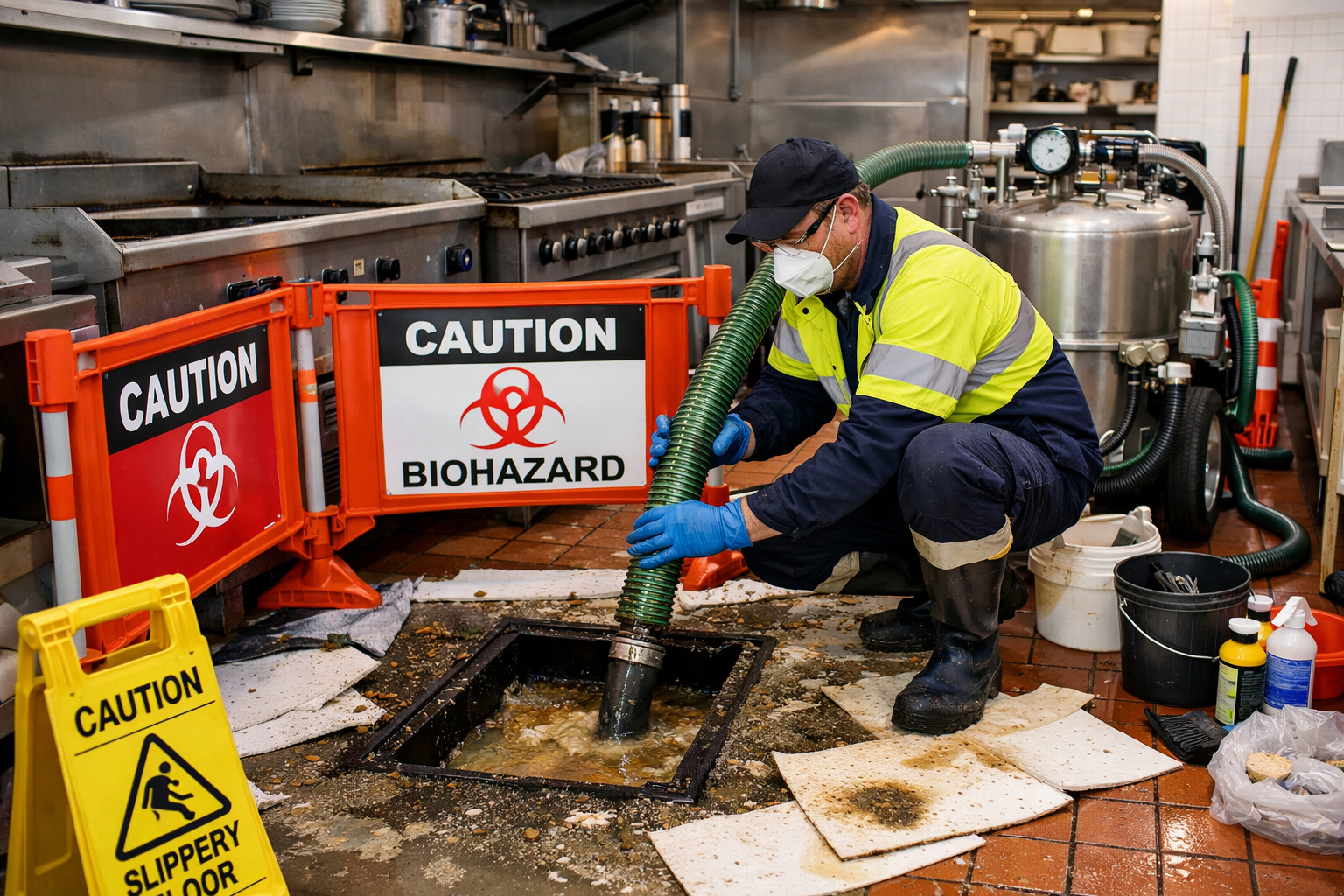
Grease-covered floors are extremely slippery. Block off the affected area immediately using cones, signage, or barriers. Keep staff and customers away from contaminated zones.
Why this matters: Slip-and-fall injuries can occur quickly during a grease trap overflow.
Practical tip: If possible, place absorbent mats or materials around the spill to limit spread until professionals arrive.
Step Three: Do Not Attempt DIY Fixes
It may be tempting to scoop grease out, flush drains, or attempt to fix a grease trap yourself. This often makes the situation worse and can violate disposal regulations.
Improper handling of grease waste is a common reason businesses face fines after an overflow incident.
Why this matters: Only licensed providers are authorized to pump, transport, and dispose of grease legally.
Practical tip: Leave pumping and disposal to professionals with proper equipment and permits.
Step Four: Call Emergency Grease Trap Service
This is where fast professional response makes a difference. An experienced provider can pump the trap, clean affected lines, and restore functionality quickly.
For Sacramento businesses, emergency grease trap service ensures the overflow is handled safely and in compliance with local requirements.
Why this matters: Professional service minimizes downtime and reduces inspection risk.
Practical tip: Keep emergency contact numbers accessible so staff can act quickly if management is not onsite.
Step Five: Document the Incident
Record when the overflow occurred, what areas were affected, and what steps were taken. Keep invoices and service reports from the emergency response.
Why this matters: Documentation demonstrates responsible action if inspectors follow up.
Practical tip: Store incident notes alongside your routine service records.
What a Grease Trap Overflow Looks Like in Real Sacramento Kitchens
In real-world Sacramento kitchens, grease trap overflows rarely happen at convenient times. They often occur during peak service, when water usage is highest and staff are busiest.
One common scenario involves a restaurant during a dinner rush. Dishwashers are running nonstop, sinks are full, and grease output spikes. If the trap is already near capacity, it can overflow within minutes.
Food trucks and cafés face different challenges. Smaller traps fill faster, and operators may not realize how quickly dairy, oils, and food waste accumulate. A grease trap for coffee shop operations can overflow just as easily as one in a full-service restaurant.
Another frequent trigger is special events. Catering orders, holiday weekends, and promotions increase kitchen load. Businesses that do not adjust their grease trap maintenance schedule often experience backups during these periods.
In nearly every case, the overflow is preventable with proper planning and service frequency.
How to Fix a Grease Trap After an Overflow
Once the immediate crisis is handled, fixing the underlying problem becomes the priority. This involves more than just pumping out the trap.
Professional Grease Trap Cleaning
After an overflow, thorough grease trap cleaning is essential. This removes accumulated FOG and restores the trap’s ability to separate grease from wastewater.
Cleaning also allows technicians to inspect for damage, corrosion, or blockages that may have contributed to the overflow.
Line and Drain Inspection
In many cases, grease does not stop at the trap. It can coat downstream lines, increasing the risk of future backups. Professional service includes checking for partial blockages that could cause recurring issues.
Review of Cleaning Schedule
An overflow is often a sign that the current schedule is no longer sufficient. High-volume kitchens may need more frequent service, especially during busy seasons.
Evaluation of Trap Size and Capacity
If overflows happen repeatedly, the trap may be undersized. A professional assessment can determine whether upgrades are needed to match your kitchen’s output.
Preventing Future Grease Trap Overflows
Prevention is always less expensive and less disruptive than emergency response. These strategies help Sacramento businesses avoid repeat incidents.
Increase Cleaning Frequency During High-Volume Periods
Cleaning schedules should reflect actual usage, not just minimum requirements. Busy periods often demand more frequent service.
Train Staff on FOG Best Practices
Staff play a major role in grease management. Simple habits like scraping plates, wiping pans, and disposing of oil properly reduce the load on your system.
Resources like FOG best practices help businesses implement effective staff training.
Monitor Early Warning Signs
Slow drains, gurgling sounds, and strong odors are early indicators of trouble. Addressing these signs early can prevent a full grease trap backup.
Keep Accurate Service Records
Documentation protects your business during inspections and helps track trends. It also shows inspectors that you take compliance seriously.
Why Professional Support Matters in Sacramento
Grease trap overflows involve more than plumbing. They intersect with health codes, wastewater regulations, and environmental responsibility. Professional providers understand Sacramento’s enforcement standards and proper disposal requirements.
Businesses dealing with an overflowing grease trap in Sacramento benefit from working with experienced specialists like Sacramento Grease Trap. Their team provides compliant emergency response, routine grease trap pumping, and guidance to prevent future issues.
For deeper insight into recurring issues, reviewing common grease trap problems in Sacramento can help operators recognize risks before they escalate.
Frequently Asked Questions About Grease Trap Overflows
Is a grease trap overflow a health code violation?
Yes. Overflows can trigger health and wastewater violations, especially if they impact public systems or food prep areas.
Can I clean an overflowed grease trap myself?
No. Regulations typically require licensed professionals to handle pumping and disposal.
Will an overflow trigger an inspection?
It can, particularly if the incident affects public drains or is reported.
How long does emergency grease trap service take?
Response times vary, but prompt service minimizes downtime and helps prevent further damage.
How can I tell if an overflow is about to happen?
Slow drains, strong odors, and sinks stopped up with grease are common warning signs.
Final Thoughts on Managing an Overflowing Grease Trap in Sacramento
An overflowing grease trap is stressful, but it does not have to become a long-term problem. Quick action, professional support, and proactive maintenance protect your business from shutdowns, fines, and repeat incidents.
By understanding what causes overflows, knowing what to do when one happens, and investing in regular grease trap maintenance, Sacramento businesses can stay compliant and operational year-round.
If you would like, I can also create a preventive maintenance checklist, a compliance-ready cleaning schedule, or a training guide for kitchen staff tailored to Sacramento regulations.

Let Us Simplify Your Grease Trap Maintenance.
Proper grease trap maintenance will reduce costly repairs in the future.
.avif)