What are the common signs that you need grease trap repair?
Have you ever walked into your kitchen at the start of a shift only to be hit by a scent that definitely isn't on the menu? It’s a moment of dread every Sacramento restaurant owner knows: the realization that your drainage system might be reaching a breaking point.
When your kitchen is firing on all cylinders, it’s easy to overlook the silent work of your interceptor—until a grease trap backup brings your entire operation to a grinding halt. Ignoring the early warning signs doesn't just lead to foul odors; it risks a full-blown grease trap overflow that can result in health code violations, costly emergency fees, and lost revenue from an unplanned closure.
In this guide, we will help you identify the red flags of a failing system and provide practical grease trap troubleshooting tips to keep your drains flowing. By recognizing these symptoms early, you can stay ahead of major grease trap problems and ensure your business stays compliant and clean.
Let’s look at the specific signs that it’s time for a professional inspection.
Understanding the Importance of Timely Grease Trap Repair
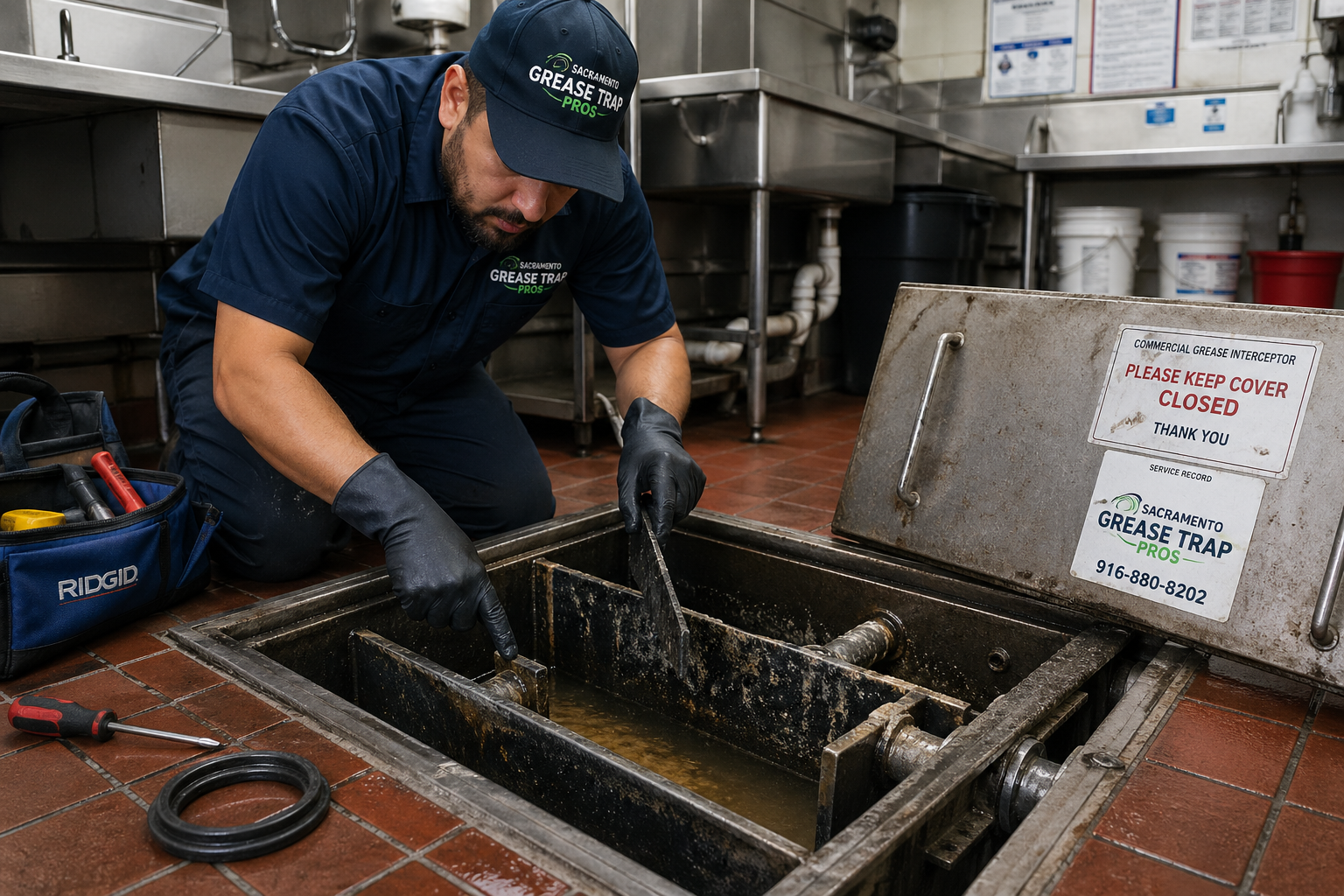
At its core, grease trap repair refers to the professional restoration of your kitchen’s interceptor system when its physical components fail or its internal balance is disrupted. While cleaning removes the accumulated fats, oils, and grease (FOG), repair addresses structural issues like corroded baffles, cracked seals, or damaged flow control devices that prevent the unit from functioning correctly.
Think of it as the difference between changing the oil in a car and fixing a broken transmission; both are necessary, but repairs ensure the mechanical integrity of the system.
Understanding when your system needs professional attention is critical for any Sacramento food service provider. If a component like a baffle wall fails, grease bypasses the trap and enters the city sewer line, leading to a massive grease trap clog or environmental fines. Addressing these issues early shifts your kitchen from a "reactive" state of constant emergencies to a "proactive" state of smooth operation.
By staying vigilant and opting for early grease trap solutions, you can achieve:
- Financial Protection: Avoid expensive emergency plumbing calls and municipal fines.
- Health and Safety: Eliminate the bacteria and pests attracted by a grease trap backup.
- Operational Longevity: Extend the lifespan of your plumbing infrastructure and interceptor.
- Compliance: Maintain the documentation and functional standards required by Sacramento health inspectors.
A common misconception is that a grease trap clogged with waste simply needs a deeper cleaning. In reality, persistent blockages are often a symptom of underlying mechanical failures that only a professional repair can fix. Identifying these nuances is the key to a stress-free kitchen.
5 Warning Signs You Need Professional Grease Trap Repair
Identifying grease trap problems before they escalate can save your Sacramento business from expensive downtime and health department scrutiny. While some issues can be resolved with a standard grease trap cleaning, others point to mechanical failures that require expert intervention. Here are the primary red flags that your system is in need of professional grease trap repair.
1. Persistent Foul Odors Even After Cleaning
If you are struggling with a lingering grease trap smell despite a recent pumping service, it is a clear sign that something is wrong. Usually, a cleaning should eliminate smells; if it doesn't, you likely have a broken seal or a cracked vent pipe.
These structural issues allow sewer gases to escape into your kitchen environment. Beyond the unpleasant atmosphere for your guests, this can be a health hazard. Effective grease trap odor removal often requires more than just deodorizers; it requires a technician to inspect the physical integrity of the tank and its gaskets to ensure the unit is airtight.
2. Slow Draining Sinks and Frequent Clogs
A grease trap clogged with FOG is common, but if your sinks are draining slowly immediately after a service call, the problem is deeper. This often indicates a "crossover" issue where the baffle—the internal wall that separates grease from water—has collapsed or corroded.
When a baffle fails, grease flows into the discharge pipe, causing a grease trap clog downstream in your main plumbing lines. This requires immediate grease trap troubleshooting to determine if the internal components need replacement. Ignoring slow drains often leads to a complete kitchen shutdown during peak hours.
Pro Tip: If you notice "burping" or gurgling sounds coming from your drains, it’s a sign of air blockage or trap failure. Don't wait for the backup; call for an inspection immediately.
3. Grease in the "Clean" Compartment
During a standard grease trap pumping, your service provider should inspect both sides of the trap. If grease is found in the secondary (outlet) compartment, your trap has "short-circuited."
This happens when the flow control device is missing or damaged, allowing water to move through the tank too quickly for the grease to separate. This is a serious mechanical failure that leads to FOG entering the Sacramento sewer system, which can result in heavy municipal fines. Repairing or replacing the flow control valve is the only way to restore your system's efficiency.
4. Visible Water Level Fluctuations or Overflows
A grease trap overflow is the ultimate red flag. If you see water spilling out from under the lid or pooling on the floor around the unit, the system has experienced a total failure. This is often caused by a severe grease trap backup in the outgoing line or a completely obstructed inlet.
An overflow is a plumbing emergency that requires professional grease trap solutions. It requires not just clearing the mess, but diagnosing why the unit failed to process the waste. Often, this is the result of years of "pumping only" without checking for pipe scaling or root intrusion in outdoor units.
5. Physical Corrosion and Visible Wear
For older Sacramento establishments, the material of the trap itself can become a liability. Metal traps are prone to rust, while plastic ones can warp or crack over time due to high-temperature dishwater.
If you notice thin walls, rust spots, or a lid that no longer fits securely, your system’s structural integrity is compromised. This can lead to groundwater contamination or a sinkhole if the trap is located outside. Regular F.O.G. best practices include checking for these physical signs of aging during every service visit.
Understanding these signs is the first step in maintaining a healthy kitchen. Next, let’s see how these problems look in real-world scenarios and how they were solved.
Real-World Grease Trap Solutions in Action
Identifying the warning signs is the first step, but seeing how professional intervention resolves these issues can help you visualize the process for your own kitchen. Let’s look at how targeted repairs have saved Sacramento businesses from potential disaster.
- The Persistent Odor at a Midtown Cafe: A popular local cafe struggled with recurring grease trap smells that began affecting their indoor dining experience. Despite weekly cleanings, the odor persisted until a technician identified a rotted gasket and a cracked vent line during a grease trap troubleshooting session.
Once the hardware was replaced and the seal restored, the odors were 100% eliminated, restoring the cafe's welcoming atmosphere and avoiding a potential health department citation.
- The Recurring Backup at a High-Volume Grill: A busy grill in North Sacramento suffered from a monthly grease trap backup that forced them to close early on three separate occasions. Our team discovered that a collapsed internal baffle was allowing grease to bypass the tank and harden in the main sewer line.
By performing a structural grease trap repair and hydro-jetting the discharge pipes, we stopped the cycle of overflows and reduced their emergency plumbing costs by 60% over the following year.
These examples highlight that while cleaning is routine, professional repairs address the root cause of systemic failures. Whether you are dealing with a minor scent or a major overflow, the right technical fix keeps your kitchen running smoothly and safely.
Expert Strategies for Managing Grease Trap Problems
Once you have identified the need for grease trap repair, adopting a few expert maintenance habits can prevent these issues from returning. These proactive steps will help you optimize your kitchen's drainage and avoid the stress of a sudden grease trap backup.
- Perform Visual Checks Weekly: Don't wait for a professional service to look inside your unit. A quick weekly visual inspection can help you spot early grease trap problems like floating debris in the clean water compartment or a shifting baffle.
For example, catching a small crack in a seal early can save you from a major grease trap overflow later.
- Avoid Chemical "Quick Fixes": Many owners try to use caustic chemicals for grease trap odor removal, but these can actually damage the tank's lining and emulsify grease.
Emulsified grease flows into the city sewer, leading to fines. Instead, stick to enzyme-based treatments or professional F.O.G. best practices to maintain your system safely.
- Coordinate Pumping with Inspections: Ensure that your grease trap pumping provider is also checking for structural wear. A thorough technician should check for corrosion and baffle stability every time the tank is empty.
This dual-purpose approach ensures that a standard cleaning doesn't mask a developing mechanical failure.
By applying these expert tips, you will not only stay compliant with Sacramento codes but also ensure your kitchen's plumbing remains a silent, reliable partner in your business success.
Protect Your Kitchen with Professional Grease Trap Repair
You now have a clear understanding of the red flags that signal a failing system, from persistent grease trap smells to the danger of a full grease trap overflow. By staying vigilant and using these grease trap troubleshooting tips, you can catch mechanical failures before they turn into expensive, business-halting disasters.
Remember, a healthy interceptor is the backbone of a compliant and efficient Sacramento commercial kitchen.
Don't ignore the warning signs—taking action today can save you from a major grease trap backup and costly municipal fines tomorrow. The sooner you address these issues with professional grease trap solutions, the more secure and productive your kitchen environment will be.
Ready to resolve your drainage issues for good? Contact us today for a comprehensive inspection and expert grease trap repair, or explore our full range of maintenance options on our services page.
Frequently Asked Questions About Grease Trap Repair
How do I know if my grease trap problem is a clog or a broken part?
If your sinks are still slow immediately after a professional cleaning, you likely have a mechanical issue rather than a standard grease trap clog. A broken or corroded baffle allows grease to escape into the outlet pipe, causing recurring blockages. In these cases, a structural grease trap repair is necessary to fix the root cause and prevent future backups in your main lines.
Can I fix a grease trap overflow on my own?
It is not recommended to handle a grease trap overflow without professional equipment. An overflow often indicates a deep blockage or a total system failure that requires specialized tools to resolve safely. Professional grease trap solutions ensure that the overflow is cleaned up according to health codes and that the underlying mechanical failure is repaired to prevent it from happening again during your next shift.
Why does my kitchen have persistent grease trap smells?
Lingering grease trap smells usually point to a breached seal, a cracked lid, or a failing vent pipe. While regular cleaning removes the source of the odor, structural damage allows sewer gases to leak into your workspace. Professional grease trap troubleshooting can pinpoint the exact location of the leak, allowing for a quick repair that restores a fresh, professional environment for your staff and customers.
What are the consequences of ignoring grease trap problems?
Ignoring signs like slow drains or minor leaks can lead to a massive grease trap backup, property damage, and severe municipal fines. In Sacramento, a malfunctioning trap that leaks FOG into the public sewer system can result in forced business closures until the grease trap repair is completed and inspected. Addressing small issues now is the most cost-effective way to protect your restaurant's reputation and bottom line.

Let Us Simplify Your Grease Trap Maintenance.
Proper grease trap maintenance will reduce costly repairs in the future.
.avif)