What should I expect during grease trap installation near me in Sacramento?
Ever wonder if your bustling Sacramento kitchen is one plumbing mishap away from a code violation or a literal backup in the middle of a dinner rush? Whether you are opening a new restaurant in Midtown or upgrading an older facility, getting a grease trap installation near me right the first time is the only thing standing between you and a massive headache.
Navigating local regulations and technical specifications can feel overwhelming, especially when a single mistake in grease trap system design can lead to costly fines or frequent, messy repairs. Most business owners struggle to balance the city’s strict grease trap permit requirements with the practical needs of a high-volume commercial kitchen.
In this guide, we’ll walk you through exactly what to expect during the process, from choosing the right grease trap capacity to ensuring your grease trap plumbing meets all local standards.
Let’s dive into the essential steps for a successful installation in the Sacramento area.
Navigating Grease Trap Installation Requirements in Sacramento
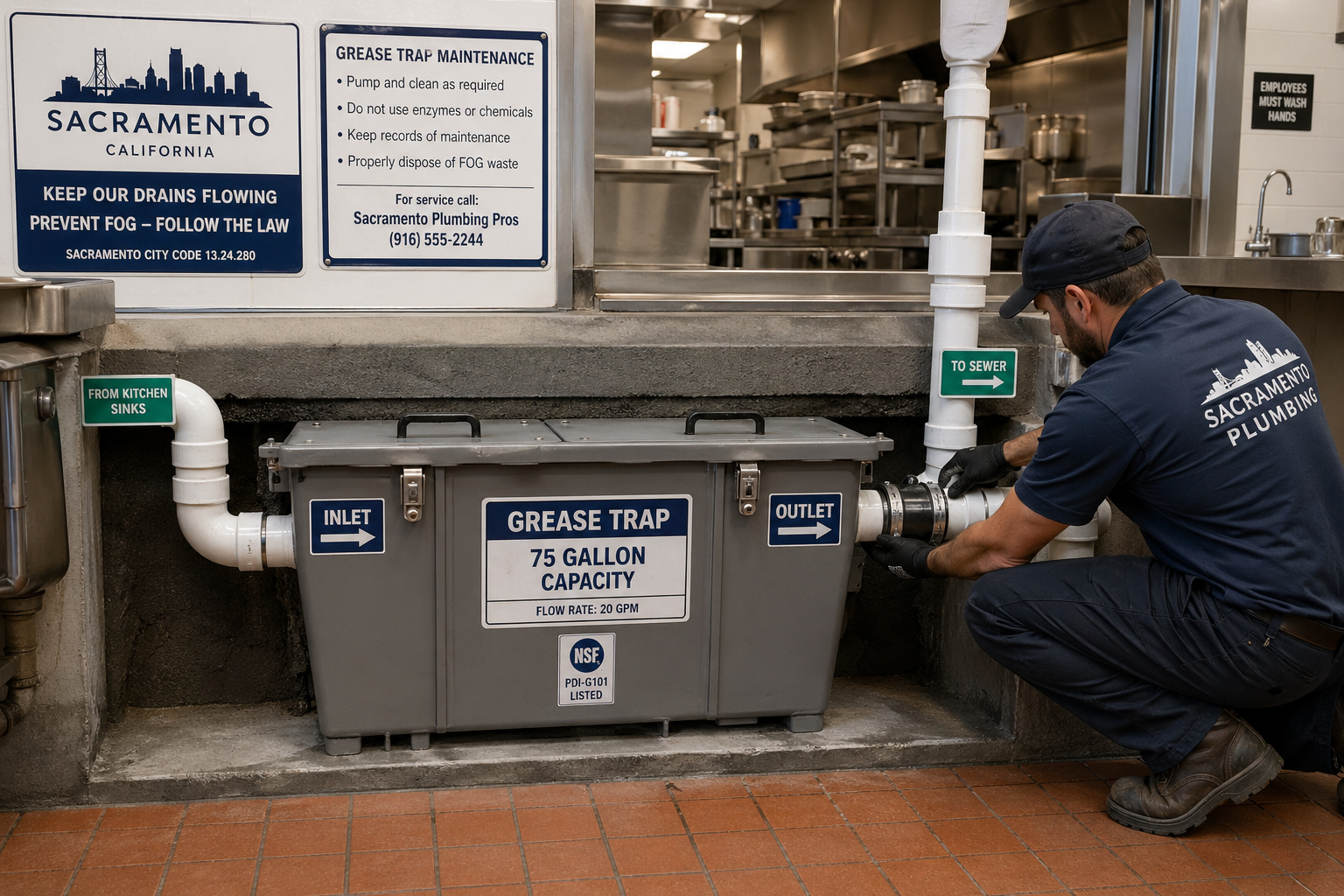
A grease trap for a commercial kitchen is a specialized plumbing device designed to intercept fats, oils, and grease (FOG) before they enter the municipal wastewater system. Think of it as a gatekeeper for your pipes: it slows down the flow of warm, greasy water, allowing it to cool and separate.
As the water cools, the grease floats to the top and solids sink to the bottom, leaving only "clean" water to exit into the Sacramento sewer lines.
Proper grease trap installation is vital because FOG is the leading cause of sanitary sewer overflows. For a business owner, this isn't just about environmental responsibility—it's about protecting your bottom line.
Without an efficiently designed system, your kitchen risks frequent backups, foul odors, and expensive emergency repairs. Furthermore, Sacramento has strict grease trap code standards that must be met to avoid heavy city fines or forced closures.
By investing in a professional grease trap system design, you ensure:
- Legal Compliance: Meets all local health and building department mandates.
- Operational Continuity: Prevents drain blockages that can shut down your kitchen.
- Cost Savings: Reduces the frequency of plumbing emergencies and long-term pipe damage.
- Odors Control: Keeps your dining environment pleasant for customers and staff.
A common misconception is that a "one-size-fits-all" trap will work for any kitchen. In reality, the City of Sacramento requires specific calculations based on your kitchen's fixture units and flow rates. Understanding these nuances is the first step toward a seamless installation.
Your Guide to Grease Trap Installation: A Step-by-Step Breakdown
Installing a grease trap is a multi-phase process that involves more than just digging a hole or connecting a few pipes. In Sacramento, the process is heavily regulated to ensure the city’s sewer infrastructure remains clear of FOG. Here is the logical progression you can expect when scheduling a grease trap installation near me.
Step 1: Professional System Design and Sizing
The first step is determining exactly what your kitchen needs through a detailed grease trap sizing guide analysis. We don't just guess at the size; we calculate the "flow rate" by looking at the number and size of your sinks, dishwashers, and floor drains.
A professional will evaluate your grease trap system design to ensure the unit can handle your peak discharge. In Sacramento, this step is non-negotiable because an undersized trap will lead to immediate code violations.
Pro Tip: Always size for your "peak hour," not your average day. It is much cheaper to install a slightly larger unit now than to pay for extra pumping services later because of a small grease trap capacity.
Step 2: Navigating the Sacramento Permit Process
Before a single shovel hits the dirt, we must secure a grease trap permit. This involves submitting your design plans to the Sacramento Area Sewer District (SASD) or the City of Sacramento’s building department.
The permit ensures your installation plan adheres to the specific grease trap code for our region. This phase can take some time, as officials must review the plumbing schematics to ensure the trap is accessible for future maintenance. Once the plans are approved and the permit is in hand, the physical work can begin.
Step 3: Site Preparation and Excavation
Once permits are finalized, we prepare the site. For large outdoor interceptors, this involves excavation and shoring to ensure a stable foundation. For smaller indoor units (often used in cafes or delis), this might involve clearing space under a 3-compartment sink or cutting into the floor.
During this stage, we prioritize safety and minimal disruption to your business operations. We coordinate the "dig" to ensure that existing utility lines are marked and protected.
Step 4: The Core Grease Trap Plumbing Installation
Now, the heavy lifting happens. The unit is set in place, and the grease trap plumbing is connected to your kitchen's waste lines. This requires precision; the "inlet" and "outlet" must be at the correct elevations to allow gravity to do its work.
After the trap is connected, we install the necessary venting. Proper venting is a critical part of the grease trap installation requirements, as it prevents air pressure issues that could cause odors or slow-draining sinks. We also ensure that "gray water" (like from restrooms) is strictly separated from the grease-bearing lines, as mixing them is a major code violation.
Step 5: Backfilling and Surface Finishing
After the plumbing is connected, we fill the area around the trap with stable material (like sand or pea gravel) to prevent shifting. If the trap is in a parking lot or high-traffic area, we install traffic-rated covers and finish the surface with concrete or asphalt.
For indoor units, this involves sealing the floor and ensuring the unit is easy to access for grease trap cleaning.
Step 6: Final Inspection and Documentation
The final step is the city inspection. A Sacramento inspector will visit the site to verify that everything matches the permitted plans and meets the local grease trap code.
Once the inspector signs off, your system is officially "live." We then provide you with the necessary documentation to show you are in compliance, which you’ll need to keep on file for future health department visits.
Pro Tip: Immediately set up a grease trap pumping schedule after installation. Staying ahead of the waste buildup is the best way to protect your new investment.
By following this structured path, we ensure your installation is efficient, legal, and built to last. Next, let’s look at how to ensure your system stays in top shape long after the installers leave.
Real-World Applications of Professional Grease Trap System Design
Understanding the technical steps is one thing, but seeing how a grease trap for a commercial kitchen functions in the wild helps illustrate why custom sizing is so critical. Every food service establishment in Sacramento has unique needs based on their menu and volume.
- The High-Volume BBQ Joint: A busy smokehouse in Downtown Sacramento faced constant backups due to high animal fat runoff. By implementing a high-capacity grease trap system design featuring an external 1,000-gallon interceptor, they eliminated mid-shift drain slow-downs.
This allowed them to move from monthly emergency snaking to a predictable, compliant grease trap pumping schedule, saving thousands in plumbing repairs.
- The Small-Scale Neighborhood Bakery: A local pastry shop with limited floor space needed to meet grease trap installation requirements without a massive renovation. We installed a compact, under-sink automatic grease removal device (GRD).
This specialized grease trap plumbing solution allowed them to remain code-compliant while fitting within their existing footprint, ensuring their sourdough production never skipped a beat.
These examples prove that whether you are managing a massive smokehouse or a boutique cafe, the right installation approach ensures your kitchen stays open and your records stay clean. For more ways to optimize your kitchen's efficiency, check out our F.O.G. best practices.
Best Practices for Maintaining Your Grease Trap Installation
Once your grease trap installation is complete, your focus should shift from construction to optimization. Following these industry best practices will extend the life of your equipment and ensure you never fall out of favor with Sacramento health inspectors.
- Implement a "Scrape First" Policy: The best way to manage your grease trap capacity is to keep solids out of the drains entirely. Encourage staff to scrape plates and cookware into the trash before they hit the sink. For instance, removing heavy sauces or lard manually can reduce the load on your interceptor by up to 30%, leading to fewer odors and less frequent cleanings.
- Monitor Temperature Controls: Be mindful of the water temperature in your grease trap plumbing. While hot water helps clean dishes, water over 60°C can cause grease to emulsify and flow right through the trap and into the city sewer. Keeping your water at a consistent, effective temperature ensures the separation process works as intended.
- Keep a Detailed Maintenance Log: Sacramento grease trap code requires businesses to maintain records of their service history. We recommend keeping a digital or physical log of every grease trap cleaning and inspection. This not only proves compliance during a surprise audit but also helps you spot trends, such as a trap filling up faster than usual.
By applying these professional habits, you’ll protect your investment and make your daily kitchen operations more sustainable and stress-free. For a full list of our maintenance solutions, visit our services page.
Finalizing Your Grease Trap Installation in Sacramento
Successfully navigating a grease trap installation near me ensures that your commercial kitchen remains compliant, efficient, and free from the nightmare of sewer backups. From understanding the initial grease trap system design and securing a grease trap permit to the final plumbing connections, you now have a roadmap for a professional, code-compliant installation.
Don't let the technicalities of grease trap installation requirements slow down your business goals. By following the right steps and maintenance practices, you are protecting both your kitchen's infrastructure and Sacramento's local environment. The sooner you establish a reliable system, the faster you can get back to what you do best—running a successful food service operation.
Ready to get started or have questions about your specific kitchen layout? Contact us today for expert guidance, or visit our services page to learn how we can support your business from installation to long-term maintenance.
Common Questions About Grease Trap Installation in Sacramento
What is the average grease trap capacity needed for a restaurant?
The required grease trap capacity depends on your kitchen's specific flow rate and the number of connected fixtures. For small cafes, a 20 to 50-gallon indoor unit may suffice. However, full-service Sacramento restaurants often require large outdoor interceptors ranging from 750 to 1,500 gallons to meet grease trap code and prevent frequent backups.
How do I obtain a grease trap permit in Sacramento?
To get a grease trap permit, you must submit a detailed grease trap system design to the Sacramento Area Sewer District (SASD) or the City’s building department. The plan must show the trap’s location, plumbing connections, and sizing calculations. Working with a professional ensures your application meets all grease trap installation requirements the first time.
Can I perform my own grease trap plumbing installation?
While minor repairs might seem manageable, a full grease trap installation should be handled by licensed professionals. Sacramento regulations are strict regarding venting, pipe materials, and accessibility. Improper grease trap plumbing can lead to failed inspections, expensive code violations, and potential damage to the municipal sewer system, costing you more in the long run.
Why is professional grease trap system design important?
A professional grease trap system design ensures the unit is placed for easy maintenance and sized correctly for your menu's grease output. Without proper design, you might face persistent odors or a "failing" trap that lets grease escape. A well-engineered system protects your pipes and ensures your business remains in good standing with local health inspectors.

Let Us Simplify Your Grease Trap Maintenance.
Proper grease trap maintenance will reduce costly repairs in the future.
.avif)