Engineering Success: Professional Grease Trap Installation for Long-Term Flow
A flawless, code-compliant grease trap installation is the single most critical asset for keeping your commercial kitchen operational and completely safe from catastrophic drainage backups. Skimping on this vital plumbing layout or attempting a rushed setup risks immediate municipal code citations, foul-smelling dining areas, and sewer line overflows that can shut your business down instantly.
For local restaurant owners and commercial property managers, a failed system means facing thousands of dollars in lost revenue, health department fines, and ruined plumbing infrastructure. Investing in a heavy-duty layout is not just about meeting regulatory codes; it is about protecting your daily operations from sudden, costly interruptions.
By exploring this comprehensive guide, you will understand the exact mechanics behind an industrial-grade grease trap installation, learn how to select the correct unit size, and discover how to minimize your upfront setup expenses. Let's look at how Sacramento Grease Trap Service engineers reliable, long-term wastewater flow for your local kitchen.
The Foundation of Kitchen Flow: Demystifying Grease Trap Installation
A professional grease trap installation is the process of integrating a specialized mechanical filtration tank into a commercial kitchen’s wastewater pipeline to separate and capture solidified animal fats, vegetable oils, and heavy food debris before they reach the public sewer line.
This system operates entirely on the physical principle that fats, oils, and grease (F.O.G.) are significantly lighter than water, allowing them to rise and float on a series of internal baffles while clean water escapes from the bottom of the tank.
Whether you are executing a heavy-duty grease interceptor installation outdoors or a compact layout under your dishwashing area, this mechanical barrier acts as your facility's primary defense against plumbing infrastructure failures.
Failing to establish a properly sized system directly threatens your kitchen's daily operational health, financial bottom line, and local environmental compliance standing. Municipal health inspectors across Northern California strictly enforce grease discharge limits, meaning an incorrect configuration can lead to immediate closures, costly sanitation fines, and toxic city line backups.
To ensure your kitchen remains fully compliant and safe from unexpected drainage crises, exploring our full suite of grease trap installation services connects you with certified professionals who engineer layouts specifically tailored to your peak-hour wastewater volume. Securing an expert installation allows property owners to eliminate toxic sewer gas backdrafts and protect expensive downstream lines from thick grease scaling.
Proactive plumbing design means sizing for maximum flow, not average usage. A trap that overflows during a busy Friday dinner service is just as costly as having no trap at all.
Investing in an expert installation delivers immediate operational advantages:
- Guarantees Municipal Compliance: Meets all local city health department codes, ensuring your business easily passes routine structural inspections.
- Prevents Catastrophic Backups: Keeps wastewater moving freely, completely eliminating the primary cause of floor drain overflows and kitchen downtime.
- Reduces Long-Term Maintenance Costs: Well-engineered layouts ensure that your routine grease trap cleaning schedules can be kept perfectly predictable and highly efficient.
A dangerous misconception among new operators is assuming that an off-the-shelf, under sink grease trap installation is a generic setup that anyone can drop into place without complex calculations. In reality, an incorrectly piped unit will rapidly fail under heavy use, bypassing the internal baffles entirely and clogging your mainline within weeks—setting up the need for a precise, step-by-step engineering approach.
Executing a Code-Compliant System: The Steps of a Professional Grease Trap Installation
Executing an industrial-grade grease trap installation requires precise mathematical calculations, rigorous plumbing alignment, and strict adherence to local building codes. By breaking down the layout process from the initial volumetric calculations to the final physical fitting, facility managers can confidently verify that their wastewater infrastructure is built to survive high-volume kitchen traffic.
Our master team follows a highly structured protocol for every commercial grease trap installation to guarantee optimal flow dynamics and permanent compliance with local sanitation rules.
To ensure your system remains fully compliant and safe from unexpected drainage crises, exploring our full suite of grease trap installation services connects you with certified professionals who engineer layouts specifically tailored to your peak-hour wastewater volume.
Step 1: Calculate Peak Flow and Sizing Metrics
Before purchasing any tank hardware, a certified technician must determine your kitchen's exact fixture capacities. This involves calculating the total cubic volume of all connected sinks by multiplying length, width, and depth, and then converting that figure into a Gallons Per Minute (GPM) rating.
This precise mathematical calculation ensures that the installed tank size can easily handle peak dishwashing surges without overflowing, slowing down your plumbing line, or bypassing internal filtration walls.
Step 2: Position the Unit for Rapid Maintenance Access
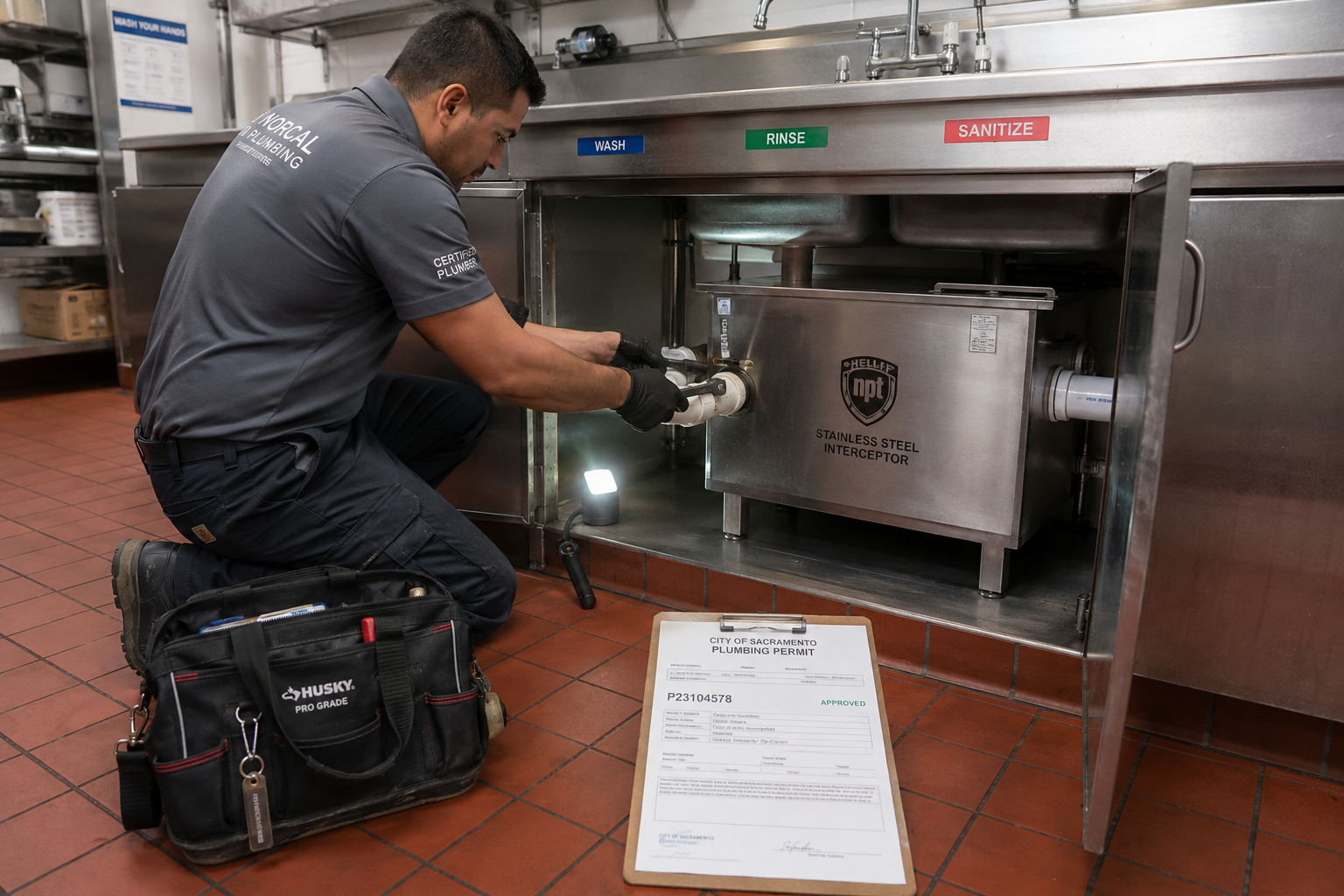
During the physical site setup, technicians locate the optimal position for either an internal under sink grease trap installation or an external sub-surface interceptor box. The unit must sit on a completely level concrete pad as close to the grease-producing fixtures as possible.
It is absolutely critical to leave a minimum of 18 to 24 inches of clear overhead space directly above the main access vaults, ensuring that future grease trap pumping crews can cleanly pull out sludge without structural interference or spatial delays.
Step 3: Configure Internal Baffles and Flow Controls
Next, the core hardware assembly takes place, which involves configuring the internal baffles and installing a critical external flow-control vented fitting directly upstream from the trap’s inlet pipe. This vented component is essential because it regulates incoming water pressure and prevents heavy wastewater surges from washing out the floating grease blanket.
Inside the tank, technicians align the mechanical inlet and outlet baffles perfectly to ensure that wastewater is forced into a slow, dropping directional flow pattern.
Step 4: Pipe the Plumbing Lines and Vent Tracks
Once the hardware is positioned, the technician hooks up the final pipe connections, linking the kitchen's main graywater discharge line directly to the inlet socket using heavy-duty, heat-resistant PVC or cast-iron lines. The outlet pipe must drop cleanly down into the facility’s sanitary sewer main, completely isolated from any domestic restroom lines.
A dedicated vent line must also be installed on both the upstream and downstream tracks to regulate internal tank pressure, prevent toxic siphoning effects, and trap putrid sulfur gases within the sealed vault system.
Step 5: Execute Hydrostatic Testing and Secure the Seals
Finally, system commissioning wraps up the physical process. Technicians fill the entire interceptor vault completely with fresh, clean water to establish the initial fluid seal line, checking every single physical joint, compression sleeve, and cleanout plug for fine pinhole leaks or structural sweat lines under pressure.
Secure, airtight gasket lids are then bolted down using corrosion-resistant hardware to seal off all localized food odors, preparing the unit for a flawless, code-passed municipal inspection.
Analyzing Hardware Variations: Indoor vs. Outdoor Layouts
Choosing between different architectural configurations depends heavily on your available physical footprint, menu style, and budget constraints. Small indoor under-sink units are designed primarily for low-volume facilities like small cafes, espresso bars, and boutique bakeries with limited square footage.
These compact designs usually handle flow capacities ranging from 20 to 50 gallons per minute and require regular maintenance to prevent localized kitchen odors from bothering guests.
Conversely, a full-scale grease interceptor installation outdoors is engineered for high-volume full-service restaurants, schools, and heavy catering kitchens. These extensive outdoor systems are buried beneath the parking lot or alley, handling immense flow ranges from 100 to over 500 gallons per minute while keeping food odors completely isolated from the main building.
Regardless of the specific model size your site configuration dictates, your kitchen team must implement consistent F.O.G. best practices right from day one, such as training employees to scrape thick grease, sauces, and solid food debris directly into waste bins prior to washing.
Evaluating the Real Financial Commitment
Understanding the total grease trap installation cost means looking past the initial price of the tank itself. A complete installation estimate must factor in heavy excavation equipment needs, structural concrete boring, specialized flow-control plumbing valves, and local municipal health department permit fees.
A compact indoor install generally involves lower material fees and takes less time, making it an excellent fit for small operations with tight square footage. On the other hand, a large outdoor interceptor setup requires significant earthmoving and structural adjustments, but it saves high-volume facilities thousands of dollars over time by drastically reducing maintenance visits and protecting your long-term plumbing infrastructure.
Securing a transparent, fixed-price estimate from non-commissioned specialists ensures your project stays on budget without any hidden upcharges or unnecessary parts additions. Taking the time to properly calculate your kitchen's actual flow demands protects your business from system failure and builds an efficient foundation for years to come.
Real-World Applications: Maximizing a Commercial Grease Trap Installation
Reviewing how local commercial kitchen operators apply specialized drainage layouts in real life proves that targeted plumbing design completely transforms a kitchen's operational health. When business owners move past reactive emergency plumbing calls and invest in proper equipment parameters, they eliminate unexpected facility downtime entirely.
- Upgrading an Overwhelmed Downtown Diner: A high-volume breakfast diner was experiencing frequent drain slowdowns during peak weekend rushes, threatening to halt their entire commercial kitchen line. By assessing their workflow, a certified grease trap installer determined their old under-sink unit was significantly undersized for their high-temperature dishwashing volume.
Upgrading the diner to an optimized, code-compliant grease trap installation completely eliminated their plumbing friction, dropping emergency service calls to zero and allowing their kitchen line to run smoothly.
- Managing a Multi-Tenant Commercial Strip Mall: A local property owner was facing constant tenant disputes due to recurring mainline sewage blockages traced back to a shared food court area. Instead of forcing individual, unmonitored fixes, the landlord scheduled a master restaurant grease trap installation outside the facility building.
This structural investment consolidated their liquid waste filtering, reduced the overall frequency of structural pipe hydro jetting line cleanouts, and saved the landlord thousands in recurring plumbing repair bills.
These real-world transformations show that understanding specific wastewater flow hurdles makes an immediate, practical difference for your business. Taking control of your facility's drainage layout ensures your commercial property receives the precise protection required to run cleanly.
Proactive Operational Habits After Your Grease Trap Installation
Moving from basic plumbing awareness to high-impact facility management requires changing how you maintain your grease collection infrastructure. Applying these refined, experience-based strategies ensures you can accurately manage fats, oils, and grease before they create structural damage.
- Enforce Strict Pre-Scraping Protocols: Train your kitchen staff to dry-wipe plates and cookware into organic waste bins before washing. This simple task keeps heavy food debris and thick sauces from overwhelming the internal baffles of your new grease trap installation, drastically extending the time between cleanings.
- Never Pour Harsh Chemicals Down the Drains: Avoid using chemical emulsifiers, enzymes, or boiling water to clear a slow mainline. These chemicals do not destroy grease; they simply melt it temporarily, pushing the blockage further down into the public utility lines where it re-solidifies and triggers heavy environmental fines.
- Establish a Verified Maintenance Routine: Adhere closely to the standard plumbing industry "one-quarter rule," which states that a trap must be pumped out before the accumulated grease layer occupies twenty-five percent of the tank's liquid depth. Scheduling a regular grease trap pumping service provides documented proof of compliance for local health inspectors.
- Request Upfront Itemized Sizing Estimates: Always calculate exact cost to install a grease trap variables before committing to a project. A thorough physical site inspection should account for permitting, trenching, and sizing metrics to protect your small business from unexpected upcharges.
Integrating these highly structured, practical habits into your commercial workflow removes the confusion from navigating municipal sewer regulations. Taking control of your data collection ensures your business gets the long-term protection required to operate confidently.
Securing Long-Term Flow: Finalizing Your Grease Trap Installation Plan
Mastering the distinct nuances of professional grease trap setup allows you to turn everyday commercial kitchen plumbing anxieties into a highly structured, successful business operational plan.
You now understand how to track volumetric requirements, choose between indoor under-sink devices and massive outdoor interceptors, and accurately plan for your true grease trap installation cost without falling victim to high-pressure sales pitches.
Equipped with this precise engineering overview and field-tested operational habits, you can confidently steer your facility's mechanical design and permanently dismantle hidden wastewater obstacles.
Taking a proactive approach to your kitchen's grease management infrastructure right now protects your business from unnecessary downtime and ensures your business maintains an immaculate regulatory record.
If you are ready to stop guessing about your facility's plumbing capacities and want to secure a transparent, code-compliant grease trap installation backed by non-commissioned technical expertise, reach out to Sacramento Grease Trap Service to protect your pipeline infrastructure and book your certified grease trap installation services today.
Frequently Asked Questions: Navigating Grease Trap Installation
What is the average cost to install a grease trap in a commercial kitchen?
The overall cost to install a grease trap varies significantly based on whether you require a small indoor unit or a large buried vault. A standard indoor under-sink layout is less labor-intensive, while a massive outdoor unit requires deep excavation, heavy structural concrete pouring, and specialized municipal plumbing permits. Getting a transparent, upfront site evaluation from a professional team ensures your project stays on budget without any unexpected parts charges.
How do I know if my kitchen requires an under sink grease trap installation?
Your specific plumbing fixture count and local city sanitation codes dictate whether a compact under sink grease trap installation is acceptable. Small cafes, bakeries, and espresso bars utilizing limited dishwashing equipment often qualify for these smaller units. However, full-service restaurants with multiple heavy-duty pot sinks, high-volume commercial dishwashers, and pre-rinse lines will generally need a much larger outdoor interceptor layout to safely process grease flows.
Can an amateur plumber handle a commercial grease trap installation?
No, attempting a complex commercial grease trap installation without specialized industrial experience typically results in immediate municipal code violations and severe drainage failures. Certified grease trap installers understand the exact mathematical flow formulas, venting parameters, and precise baffle orientations required to pass city health department inspections. Cutting corners on this critical infrastructure step risks catastrophic wastewater backups into your food prep zones.
How often does a new system need to be cleaned?
Your mandatory maintenance schedule depends entirely on your total grease volume and the local plumbing industry one-quarter rule. This code-compliant standard dictates that your system must be professionally cleaned before the floating grease and solid sludge occupy twenty-five percent of the tank's liquid depth. Scheduling automated, predictable grease trap cleaning services ensures your facility stays in compliance and completely odor-free.

Let Us Simplify Your Grease Trap Maintenance.
Proper grease trap maintenance will reduce costly repairs in the future.
.avif)