Grease Trap Cleaning Tools Sacramento
Grease Trap Cleaning Tools Sacramento: Equipment Used in Professional Grease Trap Maintenance
Why Professional Grease Trap Cleaning Tools Matter in Sacramento
If you operate a restaurant, commercial kitchen, or food service facility in Sacramento, your grease trap is not optional. It protects your plumbing, prevents sewer blockages, and keeps your business compliant with local wastewater regulations.
What many operators underestimate is how much the tools used during service matter.
Using professional-grade grease trap cleaning tools Sacramento technicians rely on makes the difference between surface-level grease removal and complete, code-compliant grease trap maintenance.
Without proper equipment, grease (FOG – fats, oils, and grease) remains stuck to walls, settles in corners, and quickly builds back up. Over time, that leads to:
- Foul odors
- Slow drains
- Sewer backups
- Health code violations
- Expensive emergency plumbing repairs
In this guide, we will break down the exact grease trap cleaning equipment professionals use, explain why DIY approaches fall short, and help you understand how proper commercial grease trap maintenance protects your business.
What Professional Grease Trap Cleaning Really Involves
A proper grease trap clean out is not just scooping visible grease from the surface. It is a structured process that includes:
- Full removal of grease, wastewater, and solids
- Scraping interior walls and baffles
- High-pressure washing
- Inspection for damage or missing components
- Documentation and compliant disposal
Professional services such as grease trap cleaning and grease trap pumping require specialized equipment to ensure every step is completed thoroughly.
If you are wondering how often should grease traps be cleaned, the answer depends on volume and local guidelines, but most Sacramento kitchens require service every 1–3 months.
Essential Grease Trap Cleaning Equipment Used in Sacramento
1. Vacuum Pump Trucks
Purpose: Complete removal of grease and wastewater.
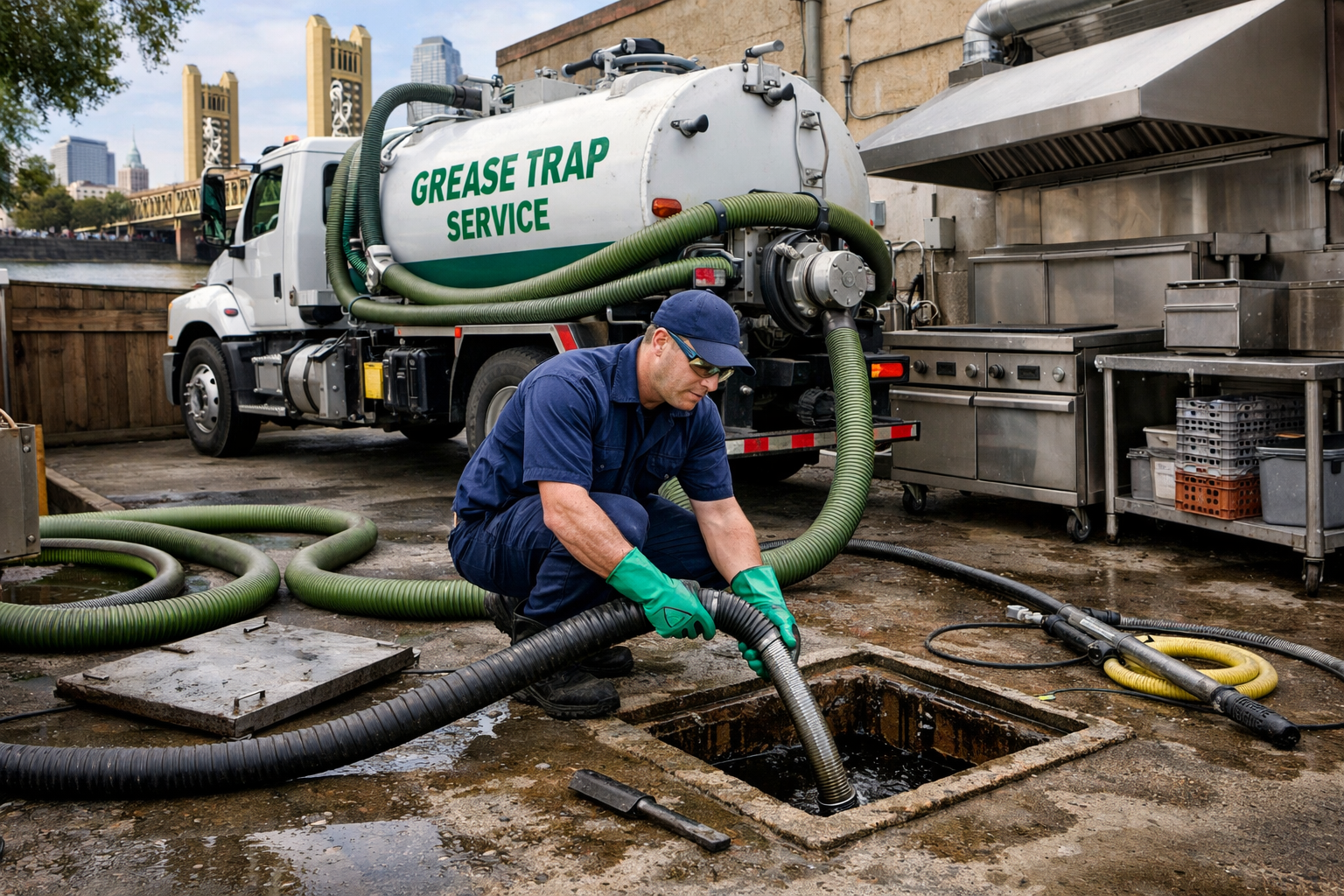
Vacuum pump trucks are the foundation of professional grease trap maintenance. These trucks use industrial suction systems to extract 100% of the trap contents, including:
- Liquids
- Floating grease
- Settled solids
Manual removal alone cannot achieve this level of thoroughness.
Vacuum pumping ensures:
- No spills inside the kitchen
- Proper containment of waste
- Transport to approved disposal facilities
This step is critical for full compliance in Sacramento.
2. Manual Scrapers and Heavy-Duty Removal Tools
Purpose: Remove hardened grease buildup.
After pumping, technicians use reinforced scrapers and grease removal tools to clean the trap walls, lids, and internal baffles.
Grease hardens over time and sticks to surfaces. If not removed, it:
- Reduces trap capacity
- Causes faster re-accumulation
- Creates persistent odor issues
Proper scraping ensures the trap is fully cleaned, not just partially emptied.
3. High-Pressure Hot Water Systems
Purpose: Break down residual grease.
High-pressure washers combined with heated water help liquefy remaining fats that scrapers cannot fully remove.
This is especially important in high-volume kitchens with:
- Fryers
- Grills
- Heavy oil usage
Hot water systems are carefully calibrated to avoid damaging trap components while ensuring deep cleaning.
4. Inspection and Measuring Tools
Purpose: Ensure compliance and detect damage.
Professional grease trap maintenance includes inspection. Technicians use:
- Grease depth measuring devices
- Flashlights and inspection mirrors
- Documentation tools for reporting
These tools confirm that grease levels meet regulatory standards and help detect:
- Cracks
- Corrosion
- Missing baffles
- Structural damage
Proper inspection supports long-term reliability and reduces unexpected failures.
5. Personal Protective Equipment (PPE)
Purpose: Protect technicians and maintain sanitation.
Grease traps contain bacteria, gases, and hazardous waste materials. PPE includes:
- Heavy-duty gloves
- Protective suits
- Eye protection
- Respirators when necessary
While not directly part of the trap, PPE is essential for safe and hygienic grease trap cleaning.
6. Waste Containment and Disposal Systems
Purpose: Ensure legal and environmental compliance.
Professional service providers use sealed containment systems to prevent leaks during transport.
Improper disposal can result in:
- Environmental violations
- Significant fines
- Liability issues for the business
Reputable companies follow FOG regulations and best practices outlined in resources like FOG best practices.
Why DIY Grease Trap Cleaning Falls Short
Many operators attempt to clean grease trap systems using:
- Buckets
- Shop vacuums
- Household degreasers
- Chemical additives
While this may remove surface grease, it does not fully clean grease trap systems.
DIY methods often:
- Miss hardened grease on walls
- Leave solids at the bottom
- Push grease into plumbing lines
- Fail compliance standards
If you are searching how to clean grease trap at home or how to clean grease trap yourself, understand that partial cleaning does not replace professional service.
Chemical treatments can temporarily emulsify grease, but once cooled, it re-solidifies further down the sewer line, increasing risk of blockages.
True commercial grease trap maintenance requires industrial-grade grease trap cleaning equipment.
Real-World Sacramento Kitchen Scenarios
High-Volume Restaurant
A downtown Sacramento restaurant using multiple fryers requires frequent grease trap pumping. Without vacuum trucks and pressure washing, buildup would exceed safe levels quickly.
School or Institutional Kitchen
Facilities that must document compliance during inspections rely on detailed reporting and consistent grease trap clean schedules.
Multi-Location Restaurant Group
Operators managing several locations benefit from scheduled maintenance plans to prevent emergencies and standardize service across properties.
Businesses can also explore responsible grease disposal strategies in resources like restaurant grease disposal service Sacramento.
How Often Should Grease Traps Be Cleaned?
The answer depends on:
- Kitchen volume
- Type of food prepared
- Local Sacramento regulations
- Trap size
General guideline:
- Light-use kitchens: every 2–3 months
- Moderate-use kitchens: every 1–2 months
- High-volume kitchens: monthly or more
Waiting too long increases risk of:
- Plumbing damage
- Health inspection failures
- Emergency service calls
Consistent maintenance protects long-term operations.
Best Practices When Choosing a Service Provider
When selecting a grease trap service in Sacramento, ask:
What Equipment Do You Use?
Professional-grade tools indicate thorough service.
Do You Provide Documentation?
Inspection reports protect your business during audits.
How Is Waste Disposed Of?
Ensure environmentally compliant disposal.
Do You Offer Scheduled Maintenance?
Routine service prevents costly surprises.
Working with a trusted local provider ensures you receive both the right equipment and regulatory knowledge.
Final Thoughts
Grease trap cleaning tools Sacramento professionals use are designed for one purpose: complete, compliant grease removal.
From vacuum pump trucks to inspection devices, each piece of grease trap cleaning equipment plays a critical role in protecting your plumbing, preventing violations, and maintaining safe kitchen operations.
Trying to clean grease trap systems without professional tools often leads to recurring issues and hidden risks.
If you want reliable, odor-free, and compliant kitchen operations, professional grease trap maintenance is not an expense. It is preventive protection for your business.
Frequently Asked Questions
What tools are used to clean grease traps professionally?
Professionals use vacuum pump trucks, heavy-duty scrapers, hot water pressure washers, inspection tools, and sealed disposal systems.
How often should grease traps be cleaned in Sacramento?
Most commercial kitchens require cleaning every 1–3 months depending on usage.
Can I clean grease trap systems myself?
Basic cleaning may remove surface grease, but it does not meet commercial standards or fully remove hardened buildup.
What is included in a grease trap clean out?
Full pumping, scraping, washing, inspection, and proper disposal.
Why is professional grease trap maintenance important?
It prevents plumbing damage, avoids fines, ensures compliance, and extends the life of your grease trap system.

Let Us Simplify Your Grease Trap Maintenance.
Proper grease trap maintenance will reduce costly repairs in the future.
.avif)