Grease Trap Cleaning: Technician-Approved Methods for Tough Build-Up
Grease trap cleaning is one of the most important and most neglected maintenance tasks in commercial kitchens. When grease traps are ignored, the result is slow drains, foul odors, pest issues, and costly plumbing emergencies. In Sacramento, where restaurants and food service facilities must follow strict wastewater regulations, proper grease trap maintenance is not optional.
Restaurant owners and kitchen managers often ask:
- How often should a grease trap be cleaned?
- What is the best way to remove hardened grease build-up?
- Can staff handle grease trap cleaning, or is professional service required?
- What does grease trap cleaning cost in Sacramento?
This guide breaks down technician-approved grease trap cleaning methods used by professionals who handle heavy commercial build-up every day. You will learn how grease traps work, how professionals clean them step by step, how to prevent recurring problems, and when to schedule service.
If you are looking for professional service, start with grease trap cleaning services in Sacramento to understand what a full-service cleaning includes.
What Grease Trap Cleaning Is and Why It Matters
Grease trap cleaning is the removal of fats, oils, grease, and food solids from a grease trap or grease interceptor before those materials enter the sewer system. These devices protect plumbing lines and city infrastructure from FOG-related blockages.
When grease traps are not cleaned regularly:
- Drains slow or back up into sinks and floor drains
- Odors spread through kitchens and dining areas
- Health inspectors issue violations
- Emergency plumbing repairs become likely
Routine grease trap maintenance keeps kitchens compliant and operating smoothly. Businesses that schedule regular service experience fewer shutdowns and lower long-term repair costs.
How Grease Traps Work in Commercial Kitchens
Grease traps slow wastewater flow so grease can float to the top while solids sink to the bottom. Cleaner water exits the trap and flows to the sewer system.
Once grease reaches about 25 percent of the trap’s capacity, it begins escaping downstream. This is why understanding how often should a grease trap be cleaned is critical for compliance and performance.
For high-volume kitchens, combining routine cleaning with grease trap pumping services ensures all accumulated waste is fully removed.
Technician-Approved Grease Trap Cleaning Methods
Inspection and Access
Technicians begin by locating the grease trap and measuring grease and solid levels. This inspection determines the level of build-up and the equipment required.
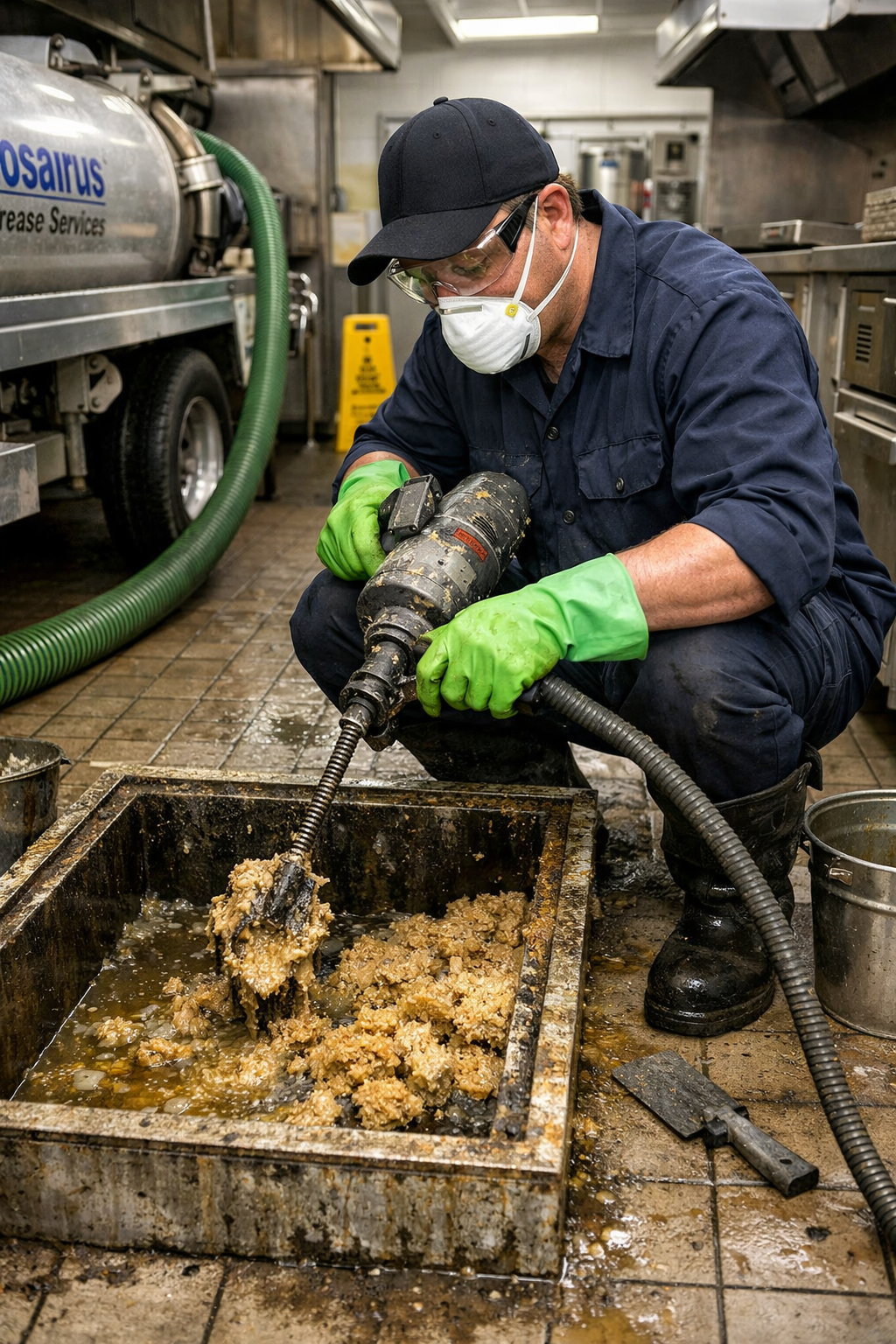
Safety gear is essential. Grease traps contain bacteria and harmful gases, so trained technicians always use proper protective equipment.
Removing Grease and Solid Waste
Grease and solids are physically removed using scrapers and industrial vacuums. Hardened FOG is broken apart and extracted into sealed containers.
Proper disposal is mandatory. Sacramento regulations require grease waste to be handled responsibly, which is why professional service is strongly recommended.
Scrubbing Interior Surfaces
After waste removal, technicians scrub the interior walls and baffles using brushes and biodegradable degreasers. This prevents grease residue from hardening again too quickly.
Harsh chemicals are avoided because they can damage plumbing and violate wastewater regulations.
Flushing and Flow Testing
Warm water is flushed through the system to remove remaining residue. Technicians verify proper flow and ensure baffles are positioned correctly.
This step confirms the grease trap is fully operational before being sealed.
Reassembly and Documentation
Lids are secured, seals checked, and drains tested. Many providers document grease levels before and after cleaning, which helps businesses plan future service intervals.
To reduce build-up between cleanings, technicians often recommend following FOG best practices for commercial kitchens.
Preventing Future Grease Trap Build-Up
Prevention is the most cost-effective strategy. Best practices include:
- Training staff to scrape plates before washing
- Never pouring grease down drains
- Installing drain screens
- Scheduling routine professional service
For deeper insights, this guide on cleaning of grease traps in Sacramento explains how maintenance frequency affects compliance and cost.
How Often Should a Grease Trap Be Cleaned?
Most Sacramento commercial kitchens require grease trap cleaning every 1 to 3 months. High-volume restaurants may need monthly service, while smaller operations may qualify for longer intervals based on measured grease levels.
Waiting too long leads to hardened build-up, higher costs, and increased inspection risk.
Grease Trap Cleaning Cost in Sacramento
Grease trap cleaning cost depends on:
- Trap size and location
- Severity of grease build-up
- Service frequency
- Accessibility
Routine service plans are typically more affordable than emergency cleanings. Businesses that maintain consistent schedules save money over time.
Common Grease Trap Maintenance Mistakes
- Waiting until the trap is full
- Relying on chemicals instead of physical removal
- Skipping staff training
- Not tracking service records
Avoiding these mistakes protects plumbing systems and reduces emergency calls.
Conclusion: Grease Trap Cleaning Done Right
Grease trap cleaning is not just about avoiding odors or slow drains. It protects your plumbing, keeps your business compliant, and prevents costly shutdowns.
By following technician-approved methods and scheduling regular service, Sacramento food service businesses can stay ahead of grease build-up and inspection issues.
If you want consistent results and full compliance, professional grease trap cleaning is the safest and most effective solution.
FAQs About Grease Trap Cleaning in Sacramento
How often should my grease trap be cleaned?
Most commercial kitchens need service every 1 to 3 months, depending on usage.
Can I clean a grease trap myself?
Light maintenance may help, but full cleaning should be handled by professionals.
What happens if grease traps are not cleaned?
You risk sewer backups, odors, fines, and expensive plumbing repairs.
How much does grease trap cleaning cost?
Costs vary by trap size and condition. Routine service plans are usually more cost-effective.
Are grease trap regulations enforced in Sacramento?
Yes. Local wastewater and FOG regulations are actively enforced.

Let Us Simplify Your Grease Trap Maintenance.
Proper grease trap maintenance will reduce costly repairs in the future.
.avif)