5 Common Failures: Why Your Sacramento Kitchen Needs a Grease Trap Clean Out
Is your kitchen experiencing slow drains, foul odors, or water backing up into your floor sinks? If so, you are likely overdue for a professional grease trap clean out. Failing to maintain your system is the fastest way to trigger a plumbing emergency that halts your daily operations and threatens your health department standing. A grease trap clean out isn't just about routine maintenance; it is a critical safeguard for your business’s infrastructure. When F.O.G. (Fats, Oils, and Grease) levels exceed the industry-standard 1/4 rule, you face high-stakes consequences like pipe corrosion, structural damage, and costly emergency service calls. By understanding these common failures, you will be able to make informed decisions about your commercial grease trap cleaning schedule, ensuring your kitchen stays compliant, odor-free, and fully operational. Let’s look at the five most common failures that signal your system needs immediate attention.
Understanding the Critical Role of Your Grease Interceptor
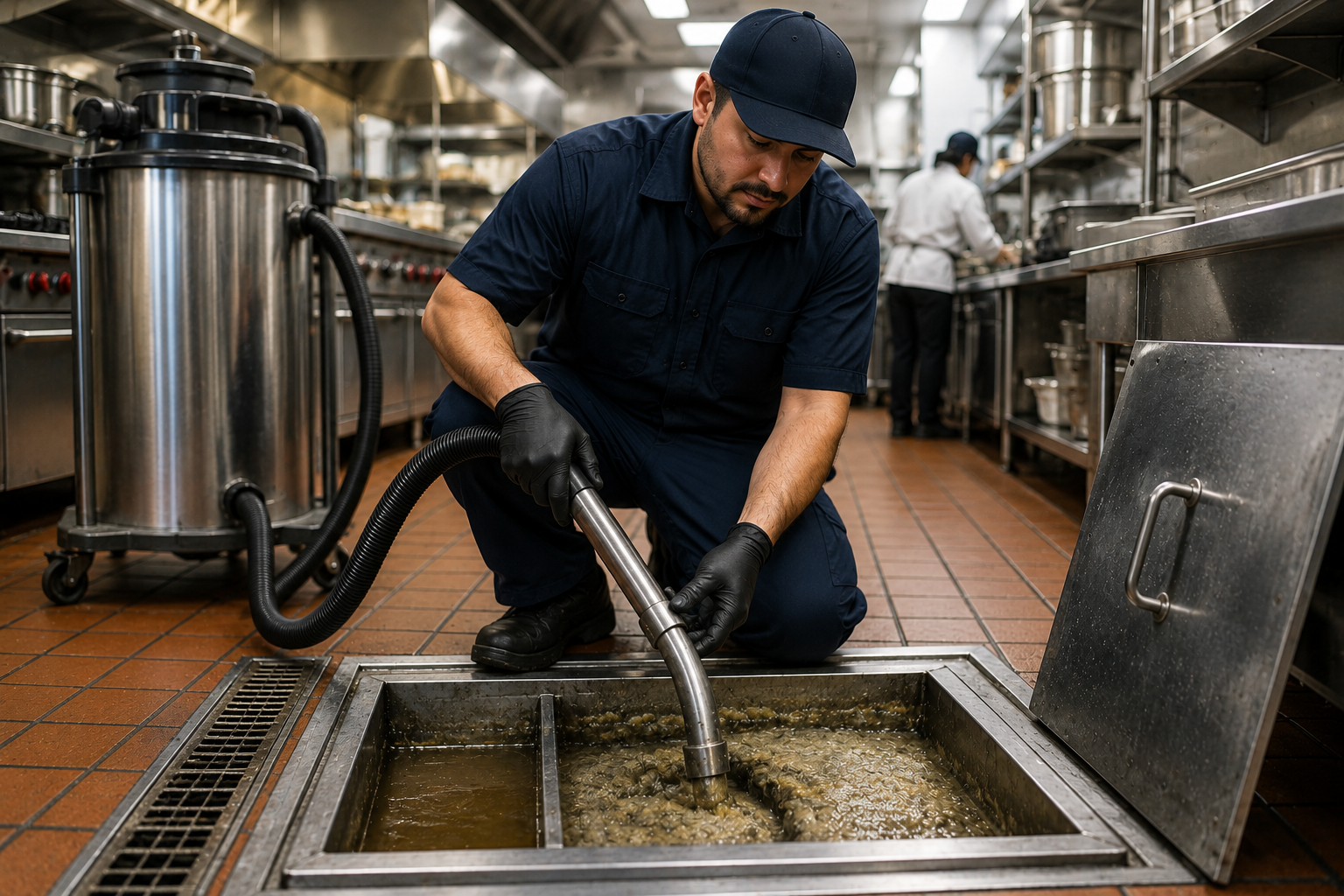
At its core, a grease trap is an engineered plumbing device designed to intercept fats, oils, and grease (F.O.G.) before they enter your kitchen’s sewer lines. As wastewater from sinks and floor drains flows through the trap, the system cools the liquid, allowing grease to float to the top and solids to settle at the bottom. The clearer water then exits into the municipal sewer, while the trapped waste stays behind. Regular grease trap clean out procedures are necessary because these traps have a finite capacity; once that space is filled, the system ceases to function, turning your plumbing into a ticking time bomb.
Neglecting this maintenance has immediate, tangible consequences for your restaurant. When a trap reaches capacity, grease begins to bypass the system, coating your downstream pipes and causing severe blockages. This leads to foul smells that drive away customers, unsanitary overflows, and potential health code violations. Proactive grease trap cleaning commercial schedules are not just a regulatory box to check—they are essential to avoiding expensive emergency repairs and ensuring your business doesn't face unexpected closures.
Beyond preventing backups, consistent maintenance keeps your facility operating at peak efficiency. By utilizing professional grease interceptor cleaning services, you ensure the internal components, such as baffles and seals, remain intact and functional. A common misconception is that chemical treatments or enzymes can replace the need for physical pumping. In reality, these products often liquefy grease temporarily, only for it to re-solidify further down the line, potentially causing even worse damage. A proper grease trap clean out remains the only reliable method to remove these materials permanently from your facility.
5 Critical Failures That Put Your Kitchen at Risk
When your grease interceptor fails, it doesn’t just cause a minor inconvenience; it disrupts your entire kitchen workflow and exposes you to regulatory scrutiny. Understanding these failures is the first step toward effective grease trap clean out management. By recognizing the warning signs early, you can avoid the catastrophic downtime that often follows a system breakdown.
1. Excessive Solid and Grease Accumulation
The most common failure is allowing the "F.O.G. cap"—the layer of fats, oils, and grease—to exceed 25% of the trap's total capacity. According to the 1/4 rule, once this threshold is crossed, the trap loses its ability to separate waste effectively. When the trap is overloaded, grease flows directly into your pipes, where it cools and hardens. This creates a narrowing effect that inevitably leads to a complete blockage, requiring expensive emergency grease trap cleanout services to restore flow.
2. Deterioration of Internal Baffles and T-Pipe Connections
The internal components of your trap, such as the baffles and T-pipes, are essential for directing water flow and retaining solids. Over time, these components can rust, crack, or become dislodged due to heavy usage or corrosive wastewater. A failed baffle allows grease to pass directly into your sewer lines, bypassing the filtration process entirely. Regular grease trap maintenance allows our technicians to inspect these critical parts, ensuring they remain secure before they fail and require a full interceptor replacement.
3. Ignoring the Signs of Foul Odors
If your kitchen staff or customers notice a persistent, rancid smell, your trap is likely failing to seal properly or is severely backed up. Odors usually indicate that the water seal is compromised or that accumulated organic matter has begun to decompose in the trap. This is often the first visible symptom of a deeper problem. Ignoring these smells usually results in health department citations and a significant drop in customer satisfaction, which can damage your brand's reputation faster than any plumbing bill.
4. Poor Drainage and Recurrent Backups
If you notice that your three-compartment sinks are draining slower than usual, the issue likely resides in the grease trap rather than the individual pipe. When the trap is full or the outlet line is partially blocked by grease, water has nowhere to go but back up into your floor sinks. This creates an unsanitary environment that can force you to close your kitchen during peak hours. Promptly scheduling professional grease trap cleaning for restaurants helps you identify if the issue is a simple surface clog or a systemic failure within the trap itself.
5. Inadequate Sizing for Current Kitchen Volume
Many commercial kitchens fall into the trap of using a system that was installed years ago and no longer matches their current output. If your menu has expanded or your daily customer count has surged, your original trap may be undersized for your current volume of F.O.G. Even with a routine grease trap clean out schedule, an undersized unit will fail because it cannot provide the necessary retention time for the water to cool and separate. If your team finds they need to pump the trap more frequently than once every few months, it may be time to consult with experts about a system upgrade or commercial grease trap cleaning frequency adjustment.
Proactive management of these five failure points is the most cost-effective way to ensure your kitchen remains operational. By partnering with experienced specialists, you can move from reactive, emergency-based repairs to a sustainable, compliant, and odor-free kitchen environment.
Real-World Applications of Proactive Grease Management
Understanding how these issues manifest is vital, but seeing how other local businesses handle them reveals the true value of a consistent grease trap clean out. By applying these strategies, kitchens turn potential crises into routine maintenance, ensuring their operations remain smooth and compliant.
- The High-Volume Restaurant: A popular downtown bistro noticed water pooling in their dish pit during dinner service. Recognizing the signs of a failing trap, they scheduled a professional grease trap cleanout immediately. The technician cleared the blockage and identified a worn-out baffle that had been allowing grease to escape. By addressing the root cause, they avoided a full-scale pipe replacement and kept their doors open through the busy weekend.
- The School District Facility: A local school manager needed to ensure their cafeteria kitchen met strict environmental regulations. They moved from a reactive "call when it smells" approach to a scheduled preventative maintenance plan. By pumping the trap based on the 1/4 rule, they eliminated foul odors, improved drainage speed, and gained the documented compliance records necessary for annual health inspections.
- The Boutique Café: A small cafe experienced frequent sink backups caused by a grease buildup from their expanded frying menu. They opted for a deep-clean service to clear out hardened waste that their regular staff couldn't reach. This simple adjustment restored flow and reduced their daily stress, proving that timely maintenance is the best investment for any commercial kitchen.
These examples prove that even the most difficult drainage problems are manageable with the right expertise. You can apply these same strategies to your own kitchen, ensuring long-term success and peace of mind.
Expert Tips for Maximizing Your System’s Performance
Applying these professional insights is what separates a kitchen plagued by constant plumbing headaches from one that runs seamlessly for years. These best practices will help you extend the life of your equipment and simplify your approach to long-term grease trap clean out efficiency.
- Implement a Strict "Dry Wiping" Routine: Before washing any pots or pans, require your staff to scrape excess food and grease into the trash. This simple habit keeps massive amounts of solid waste out of your drains, allowing you to optimize your grease trap clean out frequency. It is the single most effective way to reduce the organic load on your interceptor.
- Master the 1/4 Rule: Don't wait for a backup to happen before calling for service. By keeping a log of how quickly your grease levels accumulate, you can schedule F.O.G. best practices sessions before the trap reaches 25% capacity. This ensures your system stays in full compliance with local codes and prevents the most common causes of drainage failure.
- Prioritize Regular Visual Inspections: Have your team perform a quick check of the floor sinks and drains during closing time every day. If you notice standing water or a noticeable change in the smell of the grease, catch it early. Catching a minor issue today is always more affordable than addressing a full-scale emergency during the height of your dinner rush.
By consistently integrating these habits into your daily operations, you protect your infrastructure and ensure your facility remains safe, sanitary, and ready for any inspection.
Secure Your Kitchen’s Future with Professional Maintenance
You now have a clear understanding of why a consistent grease trap clean out is the foundation of a sanitary and compliant commercial kitchen. By identifying early warning signs—like slow drainage or persistent odors—and adhering to the 1/4 rule, you can prevent costly emergencies and keep your business running smoothly without the stress of unexpected downtime.
Taking proactive steps toward professional grease trap clean out maintenance isn't just about plumbing; it’s about protecting your hard-earned reputation and ensuring your kitchen remains a safe, efficient environment for your team and customers. Don't wait for a total system failure to discover how vital reliable, honest service can be for your operations.
If you are ready to partner with experienced, non-commissioned experts who prioritize your long-term success, contact us today for professional grease trap cleaning.
Frequently Asked Questions About Grease Trap Care
How often does my kitchen need a grease trap clean out?
Most commercial kitchens require a professional grease trap clean out every 1 to 3 months, depending on volume and trap size. We recommend following the 1/4 rule: if 25% of the trap’s capacity is filled with F.O.G. and solids, it is time for service. Waiting longer can lead to blockages, foul odors, and potential non-compliance with local health and environmental regulations.
What is the best way to maintain a grease trap between cleanings?
The best way to ensure effective grease trap maintenance is to prevent F.O.G. from entering your drains in the first place. Encourage staff to dry-wipe plates and pans, use sink strainers to catch food solids, and avoid pouring hot grease down the drain. These habits reduce the burden on your trap, keeping your commercial kitchen grease trap cleaning specialists visits efficient and focused on necessary deep cleaning rather than clearing preventable, massive clogs.
Can I clean my grease trap myself?
While you might handle basic skimming, thorough commercial grease trap cleaning is a complex job that requires specialized equipment and proper waste disposal methods. Attempting to do this yourself often leads to incomplete removal of hardened sludge and risks messy, unsanitary spills. Furthermore, professional services provide the documentation necessary to prove regulatory compliance to health inspectors, which DIY efforts cannot provide.
What are the signs that my grease interceptor is failing?
Common red flags include slow-draining sinks, persistent gurgling noises in your plumbing, and strong, unpleasant odors coming from your floor drains. If you notice these symptoms, your system is likely overwhelmed or damaged. Ignoring these signs can lead to total backups that halt kitchen production entirely. If you experience these issues, it is essential to consult with an expert to diagnose if your interceptor requires repair or a full system service.

Let Us Simplify Your Grease Trap Maintenance.
Proper grease trap maintenance will reduce costly repairs in the future.
.avif)