Grease Trap Backup in Sacramento
Causes, Risks, and Proven Prevention Strategies for Commercial Kitchens
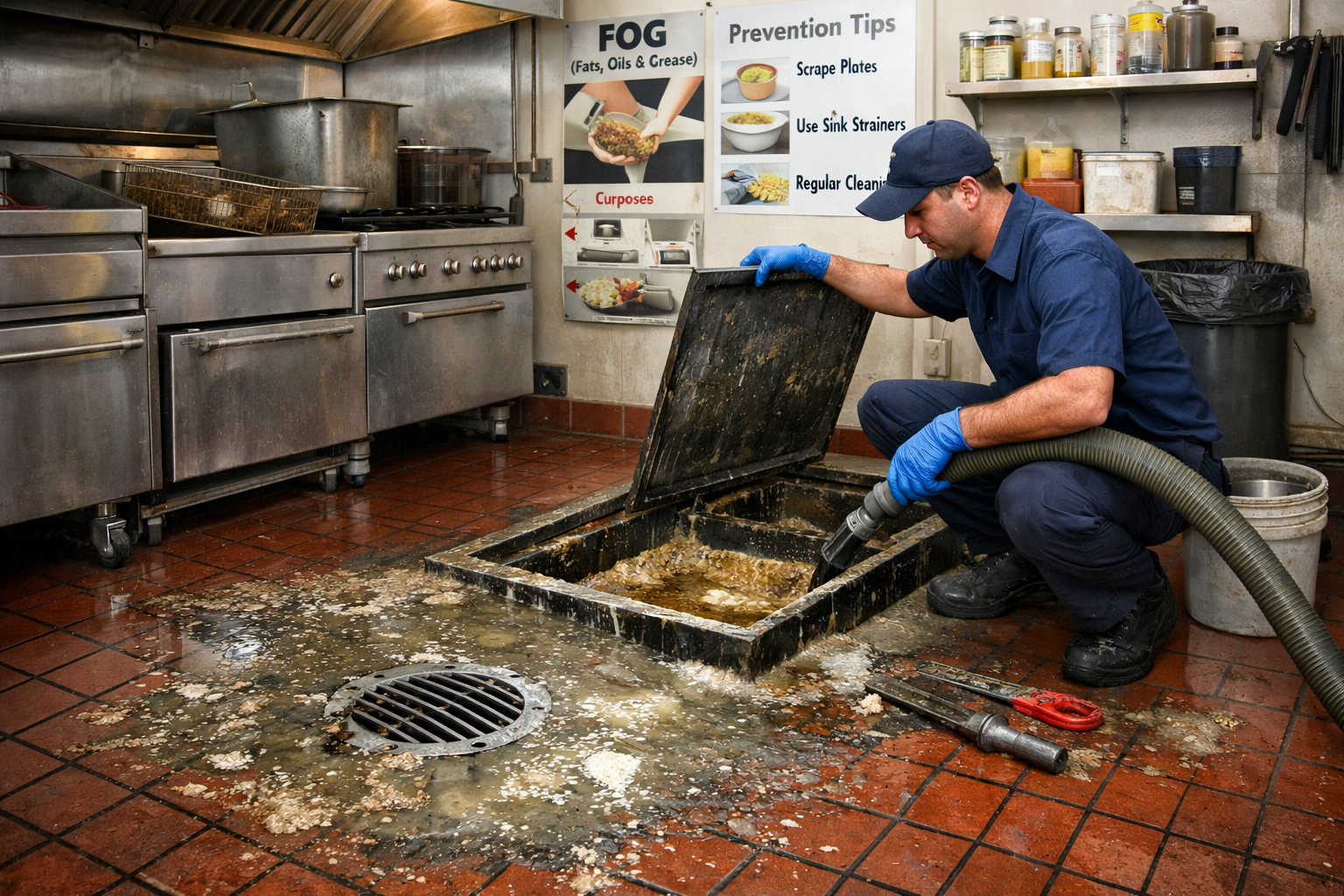
A grease trap backup in Sacramento is not just an unpleasant surprise in the kitchen. It is a serious operational, financial, and regulatory risk for restaurants and commercial food facilities. When a grease trap backs up, it can halt service, create health hazards, trigger failed inspections, and expose your business to fines or even temporary closure.
Grease traps exist to protect Sacramento’s sewer system by capturing fats, oils, and grease, commonly referred to as FOG, before they enter municipal sewer lines. When these systems are not properly maintained, grease accumulates, hardens, and restricts flow. Eventually, wastewater has nowhere to go and backs up into sinks, floor drains, or food prep areas.
Sacramento enforces strict FOG regulations due to the damage grease causes to city infrastructure. That means grease trap backups are not only messy and disruptive but also costly from a compliance standpoint. The good news is that grease trap backups are rarely random events. In most cases, they are predictable and preventable.
This guide explains the most common causes of grease trap backups in Sacramento, how to recognize early warning signs, and the best long-term prevention strategies to keep your business operating smoothly and compliantly.
What Is a Grease Trap Backup and Why It Happens
A grease trap backup occurs when grease, food solids, and wastewater exceed the system’s capacity or block the flow through the trap and connected plumbing. Grease traps are designed to slow wastewater flow, allowing grease to float to the top while solids settle at the bottom. Clean water then exits to the sewer system.
Over time, if grease trap maintenance is neglected, grease layers thicken and solids build up. Once capacity is exceeded, separation stops working. Wastewater begins to move too slowly or not at all, causing backups into the building.
In Sacramento, grease trap backups are often accelerated by:
- High-volume food preparation
- Infrequent or skipped grease trap cleaning
- Improper disposal of oils and food waste
- Undersized or outdated grease traps
- Lack of routine inspections and documentation
Because grease traps are usually hidden under sinks or underground, backups often appear suddenly, even though the problem has been developing for weeks or months.
Common Causes of Grease Trap Backups
Understanding grease trap causes is the first step toward prevention. Below are the most common reasons grease trap backups occur in Sacramento commercial kitchens.
Excessive FOG Buildup
Fats, oils, and grease accumulate faster than many operators realize. Even small amounts poured down drains daily can overwhelm a grease trap quickly. Once grease reaches a critical level, the trap can no longer separate wastewater effectively.
Why this matters:
Grease hardens as it cools. Hardened grease reduces internal volume and restricts flow, increasing the likelihood of a backup.
Prevention strategy:
Schedule routine grease trap cleaning based on actual kitchen volume, not guesswork.
Infrequent or Skipped Maintenance
One of the leading causes of grease trap backup in Sacramento is delayed or skipped service. Some operators wait until a problem occurs, but by then the damage is already done.
Why this matters:
Infrequent cleaning allows grease to solidify and cling to trap walls and plumbing lines, making removal more difficult and increasing backup risk.
Prevention strategy:
Follow a consistent maintenance schedule and keep records readily available for inspections.
Improper Kitchen Disposal Practices
Improper disposal habits dramatically increase grease trap backups. Pouring oils, grease, or food scraps down drains overwhelms traps far faster than intended.
Why this matters:
Grease traps are not designed to handle bulk grease disposal. Staff habits directly affect system performance.
Prevention strategy:
Train staff to scrape plates, wipe cookware, and dispose of grease in approved containers. Implement kitchen signage and routine reminders. Guidance like FOG best practices can help standardize procedures.
Undersized or Aging Grease Traps
Many older Sacramento kitchens operate with grease traps that no longer meet current demand or code requirements. Menu changes, increased volume, or equipment upgrades can all outgrow an existing trap.
Why this matters:
Undersized traps fill too quickly, even with good maintenance, making backups more likely.
Prevention strategy:
Have a grease trap specialist assess whether your system is properly sized for your operation.
Plumbing or Installation Issues
Improper slope, damaged pipes, or incorrect installation can restrict wastewater flow and contribute to grease trap backups, even when cleaning schedules are followed.
Why this matters:
Hidden plumbing issues can create recurring backups that appear to be grease-related but are actually structural.
Prevention strategy:
Schedule professional inspections to identify installation or pipe issues before they escalate.
Early Warning Signs of a Grease Trap Backup
Knowing how to spot early symptoms helps prevent emergencies. Common warning signs include:
- Slow-draining sinks or floor drains
- Gurgling sounds from plumbing
- Strong grease or sewage odors
- Water backing up during peak service hours
- Repeated minor clogs
If these symptoms appear, delaying service often turns a manageable issue into a full backup.
Real-World Scenarios Where Grease Trap Backups Occur
Busy Restaurants During Peak Hours
High-volume kitchens generate large amounts of grease and wastewater in short periods. Traps that are overdue for cleaning often fail during lunch or dinner rush, causing immediate disruption and lost revenue.
New Owners Taking Over Existing Kitchens
Restaurants that inherit grease traps without clear maintenance records face higher risk. Unknown service history often means grease buildup is already near capacity.
Facilities With Inconsistent Cleaning Schedules
Inconsistent maintenance leads to unpredictable failures. Many backups occur right before inspections or during seasonal demand spikes, compounding stress and cost.
These scenarios highlight an important reality: grease trap backups are rarely accidents. They are the result of preventable conditions.
How to Prevent Grease Trap Backups Long Term
Preventing grease trap backups requires a combination of professional service, staff training, and proactive planning.
Maintain a Regular Cleaning Schedule
Service frequency should match kitchen volume and Sacramento regulations. Many commercial kitchens require service every 30 to 90 days. High-volume operations may need more frequent commercial grease trap pumping.
Train Kitchen Staff
Staff behavior directly impacts grease trap performance. Proper scraping, wiping, and disposal habits reduce grease entering the system and extend time between cleanings.
Keep Detailed Maintenance Records
Documentation is critical for inspections and compliance. Service records demonstrate due diligence and protect your business during audits.
Upgrade When Necessary
If your grease trap is undersized or outdated, no amount of cleaning will fully solve the problem. Proactive upgrades prevent chronic backups and compliance issues.
Schedule Professional Inspections
Routine inspections identify developing problems early, including plumbing issues, improper sizing, or excessive buildup.
Why Professional Grease Trap Service Matters
Professional grease trap specialists do more than remove waste. They help prevent repeat issues by identifying root causes and ensuring compliance with local regulations.
Local providers understand Sacramento’s FOG enforcement standards, inspection requirements, and service expectations. Companies like Sacramento Grease Trap focus on preventative maintenance, compliance documentation, and reliable service that keeps kitchens operational.
Professional service reduces emergency downtime, protects your reputation, and lowers long-term costs by addressing issues before they become crises.
Stop Grease Trap Backups Before They Start
A grease trap backup in Sacramento can disrupt operations, damage your reputation, and result in fines or closures. The encouraging reality is that most backups are avoidable with the right approach.
By understanding grease trap causes, maintaining a consistent service schedule, training staff, and working with experienced professionals, your grease trap can function exactly as intended. Prevention is always cheaper, cleaner, and less stressful than emergency response.
If it has been a while since your last service or you are noticing early warning signs, scheduling professional maintenance now is the smartest move.
For more guidance on scheduling and compliance, explore this resource on grease trap cleaning and maintenance in Sacramento.
Frequently Asked Questions About Grease Trap Backups
What causes grease trap backups most often?
Infrequent cleaning combined with excessive grease buildup is the most common cause.
How can I tell if a grease trap backup is about to happen?
Slow drains, gurgling sounds, and strong odors are early warning signs.
How often should grease traps be cleaned in Sacramento?
Many kitchens require service every 30 to 90 days, depending on usage and local regulations.
Can grease trap backups lead to fines or closures?
Yes. Backups and overflows can result in health code violations, fines, and temporary shutdowns.
Who should handle grease trap maintenance?
Only licensed, experienced grease trap specialists familiar with Sacramento regulations should perform service and maintenance.

Let Us Simplify Your Grease Trap Maintenance.
Proper grease trap maintenance will reduce costly repairs in the future.
.avif)