Grease Separator vs Grease Interceptor: Choosing the Right System for Your Kitchen
If you operate a commercial kitchen, grease problems are not a question of if but when. Slow drains, foul odors, emergency plumbing calls, and failed inspections often trace back to one issue: improper grease control. One of the most common sources of confusion is understanding the difference between a grease separator vs grease interceptor. Choosing the wrong system can lead to frequent cleanings, compliance violations, and unnecessary expenses.
At a glance, these systems seem similar. Both are designed to capture fats, oils, and grease (FOG) before they enter the sewer system. In practice, however, they serve very different purposes and are regulated differently, especially for restaurants and commercial kitchens in Sacramento.
This guide breaks down the differences clearly and practically. You will learn how each system works, which kitchens they are best suited for, and how making the right choice protects your plumbing, your budget, and your compliance status.
Understanding Grease Control in Commercial Kitchens
Grease control systems exist to stop FOG from entering municipal sewer lines. When grease cools, it hardens and sticks to pipes, eventually causing blockages, sewer backups, and environmental damage. Because of this, most commercial kitchens are required to install and maintain an approved grease control device.
Two terms are commonly used:
- Grease traps, also called grease separators
- Grease interceptors, sometimes called restaurant grease interceptors
Although they are often confused or used interchangeably, they are not the same.
What Is a Grease Trap or Grease Separator?
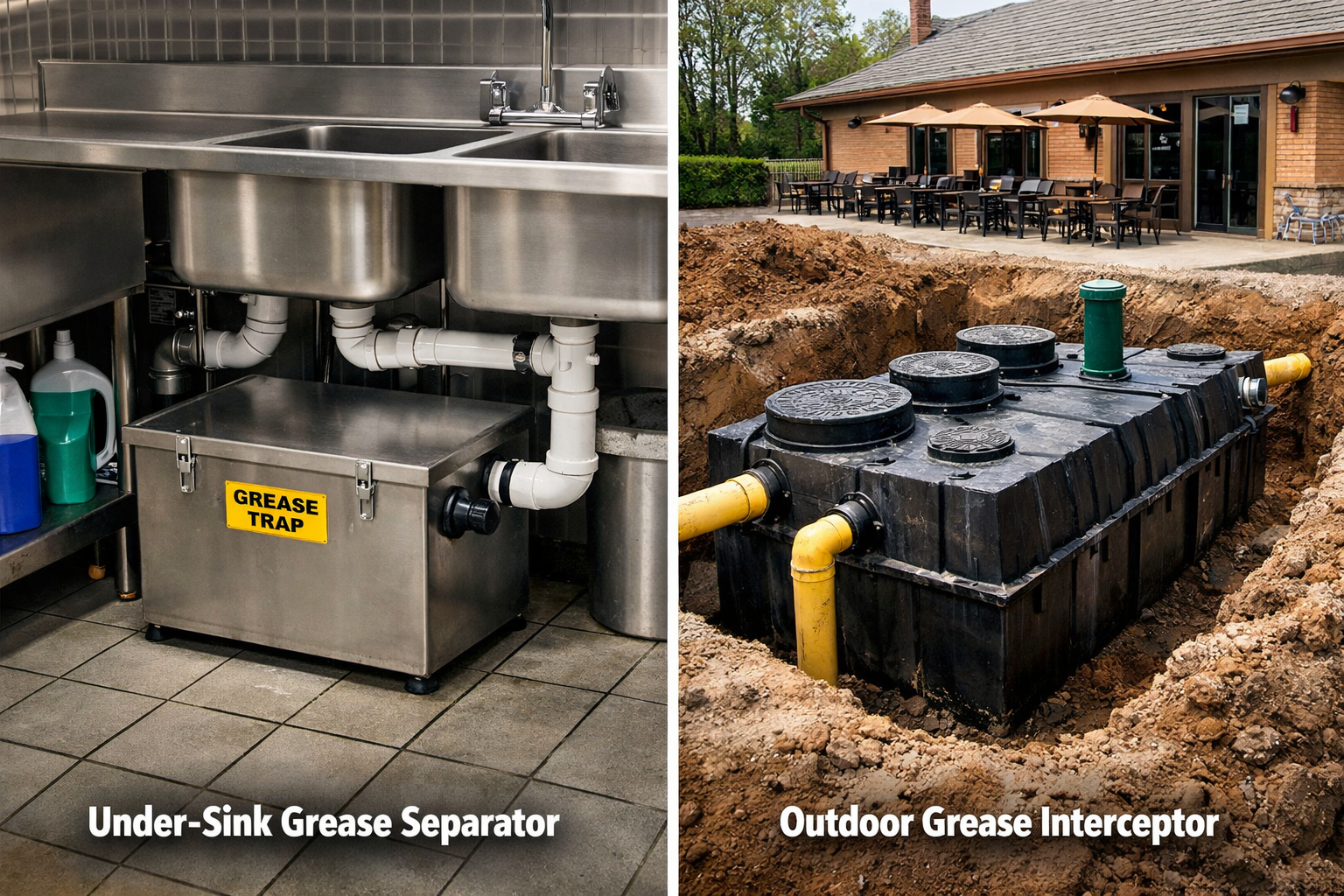
A grease trap, also known as a grease separator, is a small, point-of-use device installed close to individual fixtures. It is typically placed under a sink, near a dishwasher, or inside a prep area.
Grease separators work by slowing wastewater flow. As water cools, grease floats to the top, solids sink to the bottom, and relatively clear water exits the unit.
Key characteristics of grease traps:
- Small capacity
- Indoor installation
- Serves one or two fixtures
- Requires frequent cleaning
- Best for low grease output
Grease traps for restaurants are usually appropriate only for small operations with limited cooking and minimal grease production.
What Is a Grease Interceptor?
A grease interceptor is a large-capacity grease control system designed for high-volume commercial kitchens. These units are typically installed underground or outdoors and collect grease from multiple fixtures throughout the kitchen.
Restaurant grease interceptors allow wastewater to remain in the system longer, giving grease time to separate effectively before discharge.
Key characteristics of grease interceptors:
- Large capacity
- Outdoor or underground installation
- Handles multiple fixtures
- Longer retention time
- Less frequent service compared to traps
Grease interceptors are the standard solution for most full-service restaurants and large commercial kitchens.
Grease Separator vs Grease Interceptor: Key Differences
Capacity and Volume Handling
This is the most important difference. Grease separators are designed for low-flow situations and fill quickly. Grease interceptors handle large volumes of wastewater without losing efficiency.
If your kitchen has fryers, grills, or high dishwashing volume, a separator will likely overflow or require constant cleaning.
Installation Location
Grease separators are installed indoors, often under sinks. This makes them easier to access but limits their size. Grease interceptors require excavation and outdoor placement, which takes more planning but provides far greater capacity and reliability.
Maintenance Frequency
Grease traps often need weekly or biweekly clean-outs to stay compliant. Grease interceptors may only need service every 30 to 90 days when properly sized and maintained.
Professional grease trap cleaning and grease trap pumping schedules vary significantly depending on which system you use.
Compliance and Inspections
In Sacramento, inspectors evaluate grease control systems based on kitchen output, not just whether a device exists. Many full-service restaurants are required to use grease interceptors. Installing a separator where an interceptor is expected can lead to failed inspections and costly retrofits.
Long-Term Cost Impact
Separators cost less upfront but often cost more over time due to frequent service, labor, and downtime. Interceptors require a larger initial investment but typically offer lower long-term operating costs and fewer emergencies.
Grease Trap vs Grease Interceptor: Which One Does Your Kitchen Need?
Small Cafés and Coffee Shops
Low-volume kitchens with minimal hot food preparation may function well with a grease separator. These operations usually have fewer grease-producing fixtures and can manage frequent clean-outs.
Full-Service Restaurants
Restaurants with grills, fryers, woks, and high customer volume almost always need a grease interceptor. These kitchens generate significant FOG, and separators are rarely sufficient.
Commercial Kitchens and Institutions
Schools, hospitals, food courts, and commissaries typically require large grease interceptors. Centralized grease control supports continuous operation and predictable maintenance.
Multi-Tenant Buildings
Shared kitchens or buildings with multiple food tenants almost always require interceptors to manage combined wastewater flow and prevent cross-tenant issues.
Common Mistakes When Choosing Between Systems
Many kitchens run into trouble by:
- Choosing based on price instead of output
- Assuming grease trap vs grease interceptor differences are minor
- Ignoring future growth or menu changes
- Skipping professional sizing and assessment
- Relying on DIY cleaning instead of professional service
Understanding system design and capacity prevents these costly errors.
Supporting Proper Grease Control Long Term
Regardless of which system you use, proper maintenance and kitchen habits matter. Following F.O.G. best practices reduces grease entering the system and extends service intervals.
Planning for installation costs also helps operators budget appropriately. This breakdown of grease trap installation costs in Sacramento explains what affects pricing and long-term expenses.
Final Thoughts: Making the Right Choice
When comparing grease separator vs grease interceptor, the right decision depends on grease output, kitchen size, and regulatory expectations, not convenience or upfront savings. Grease separators can work for small, low-output kitchens, but grease interceptors are the reliable standard for busy restaurants and commercial kitchens.
Choosing the correct system protects your plumbing, keeps inspections smooth, and prevents costly emergencies. If you are unsure which option fits your operation, a professional assessment can provide clarity and save thousands in avoidable repairs and violations.
Frequently Asked Questions
Is a grease separator the same as a grease trap?
Yes. The terms are commonly used interchangeably to describe small, point-of-use grease control devices.
What is the main difference between a grease trap and grease interceptor?
The main difference is capacity. Traps are small and local, while interceptors are large and handle whole-kitchen flow.
Do restaurants in Sacramento need grease interceptors?
Many full-service restaurants do. Requirements depend on kitchen size, equipment, and grease output.
How often should grease interceptors be cleaned?
Most are serviced every one to three months, depending on volume and compliance thresholds.
Can I replace an interceptor with a separator?
In most cases, no. Downgrading systems often violates local codes and leads to frequent failures.

Let Us Simplify Your Grease Trap Maintenance.
Proper grease trap maintenance will reduce costly repairs in the future.
.avif)