Preventing Peak-Hour Backups: A Grease Trap Pumping Guide for Sacramento Chefs
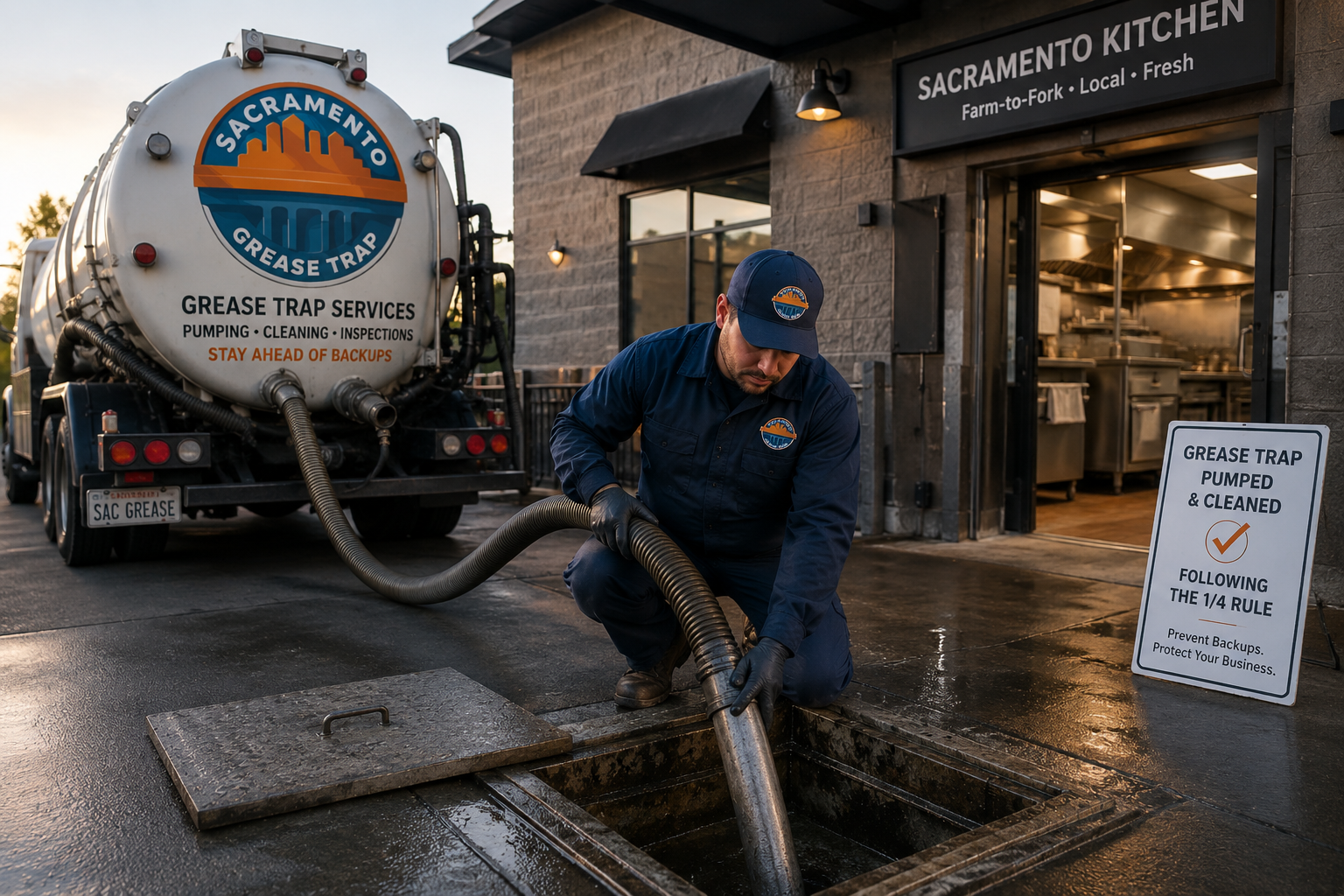
The most effective way to prevent a mid-shift kitchen disaster is to schedule professional grease trap pumping before your interceptor reaches the "1/4 Rule" threshold. Waiting until you smell foul odors or notice slow drains often means a backup is already imminent, putting your restaurant at risk of costly downtime and health code violations. In the high-pressure environment of a Sacramento commercial kitchen, staying ahead of grease interceptor maintenance isn't just about cleaning; it’s about ensuring your drainage system can handle peak-hour volume without failing when you’re at your busiest.
This guide will help you understand the technical "why" behind regular maintenance and how to implement F.O.G. compliance strategies that protect your plumbing infrastructure. By the end of this article, you’ll know exactly how to evaluate your current service needs and choose non-commissioned grease trap technicians who prioritize your kitchen's health over a sales quota.
Let’s dive into the essential practices that keep your drains clear and your business compliant.
Why Professional Grease Trap Pumping is Vital for Sacramento Kitchens
At its core, grease trap pumping is the mechanical removal of accumulated Fats, Oils, Grease, and Solids (F.O.G.) from your kitchen’s interceptor system. These units act as a filtration basin, slowing down wastewater so that lighter grease floats to the top and heavier food particles sink to the bottom. Without regular grease trap pumping, these layers eventually thicken and escape into the city sewer lines, leading to catastrophic blockages and environmental contamination.
For Sacramento restaurant owners and facility managers, this process is the frontline defense against business-halting emergencies. A neglected trap doesn't just cause slow drains; it creates a breeding ground for bacteria and foul odors that can permeate your dining area, instantly damaging your reputation. Furthermore, failing to maintain your system can result in heavy municipal fines. By investing in routine grease trap cleaning, you ensure that your kitchen remains a safe, sanitary, and compliant environment for both your staff and your guests.
Prioritizing consistent grease interceptor maintenance offers several practical advantages:
- Avoid Emergency Costs: Preventative service is significantly more affordable than emergency hydro-jetting or repairs after a total backup.
- Regulatory Peace of Mind: Documented pumping ensures you meet Sacramento F.O.G. compliance standards during surprise health inspections.
- System Longevity: Removing acidic food waste prevents the corrosion of metal baffles and concrete walls within your interceptor.
A common misconception is that "skimming" the top layer of grease is enough to keep a system running. In reality, the heavy solids at the bottom are often what trigger the most severe drainage failures, making a full pump-out the only reliable solution.
Master Your Maintenance: The Professional Process of Grease Trap Pumping
Maintaining a high-volume kitchen requires more than just culinary skill; it requires a deep understanding of your facility's infrastructure. To keep your drains flowing during the dinner rush, you must adhere to a strict schedule of grease trap pumping. This process ensures that every gallon of wastewater is properly treated before it leaves your property, protecting both your business and the local Sacramento environment. Following F.O.G. best practices is the most reliable way to extend the life of your plumbing and stay in the good graces of municipal inspectors.
Step 1: Evaluating the "1/4 Rule"
The first step in any maintenance plan is knowing when to call for service. We utilize the industry-standard "1/4 Rule," which dictates that a trap must be pumped once the accumulation of floating grease and settled solids reaches 25% of the tank's total capacity. Once you surpass this limit, the device loses its ability to separate waste effectively, leading to downstream clogs. Our non-commissioned grease trap technicians provide honest assessments of your levels to help you determine the ideal frequency—whether that is monthly, quarterly, or semi-annually.
Step 2: Complete System Pump-Out
When our team arrives, we don't just skim the surface. A professional local grease pumping service involves inserting a high-powered vacuum hose to remove the entire volume of the tank. This includes the "grease cap" at the top, the gray water in the middle, and the heavy food solids at the bottom. Removing the solids is critical because they often ferment, producing sulfuric acid that eats away at concrete and metal components over time.
Step 3: Thorough Cleaning and Inspection
After the tank is emptied, we perform a detailed grease trap cleaning by scraping the side walls and baffles to remove hardened deposits. This is also when we conduct a visual inspection of the system's internal health. We check for:
- Worn Baffles: These plates redirect water flow; if they are corroded or missing, grease will bypass the trap entirely.
- Gasket Integrity: Faulty seals are the primary cause of the "rotten egg" smell in commercial kitchens.
- Flow Issues: We ensure the inlet and outlet pipes are clear of obstructions.
Step 4: Line Maintenance and Hydro Jetting
In many cases, the trap itself is clear, but the lines leading from the sinks are restricted by years of buildup. If we detect slow drainage during the pumping process, we may recommend commercial kitchen drainage solutions like hydro jetting. This uses high-pressure water to scrub the interior of your pipes, restoring them to "like-new" flow capacity. This preventative measure is far more cost-effective than calling for an emergency grease trap repair in the middle of a Friday night service.
Step 5: Compliance Documentation and Waste Disposal
The job isn't finished until the paperwork is done. Sacramento city regulations require meticulous record-keeping of your grease trap waste disposal. We provide a detailed manifest for every service, documenting the date, the volume removed, and the certified disposal site. This paperwork is your shield during health inspections, proving that you are a responsible operator who takes environmental compliance seriously.
Why This Matters for Your Kitchen
By following this structured approach, you move from a "reactive" mindset—fixing things only when they break—to a "proactive" one. This shift significantly reduces the risk of back-ups, keeps your kitchen smelling fresh, and ensures you never pay for unnecessary repairs. When you work with a partner who understands Sacramento F.O.G. compliance, you gain the freedom to focus on your food, knowing your infrastructure is handled.
Practical Applications: Grease Trap Maintenance in Action
Understanding the theory of wastewater management is one thing, but seeing how it preserves a business during high-pressure situations shows its true value. Here is how professional grease trap pumping solves real-world challenges for Sacramento area operators.
- The High-Volume Local Diner: A popular breakfast spot in Roseville was experiencing slow drains every Sunday morning. By implementing a monthly schedule for commercial grease trap cleaning, they cleared the heavy solids that were causing "burping" in their floor sinks. The outcome was a total elimination of foul odors and a 20% improvement in drainage speed, allowing them to flip tables faster without plumbing interruptions.
- The School District Compliance Check: A facility manager for a large Sacramento school district needed to ensure they met strict Sacramento F.O.G. compliance standards across multiple campuses. We performed a comprehensive audit and set up a quarterly grease interceptor maintenance plan. This proactive action provided the documented proof required for their annual health department inspection, resulting in a perfect compliance score and zero municipal fines.
- The Boutique Café Emergency: A small coffee shop in Loomis faced a potential closure when their undersink trap overflowed on a Saturday. Our rapid-response team performed an emergency pump-out and identified a broken baffle that was causing the issue. By replacing the part on-site, we saved the business from a weekend of lost revenue and restored sanitary conditions within two hours.
These examples demonstrate that consistent maintenance isn't just a chore—it’s a strategic decision that protects your bottom line and ensures your kitchen remains operational.
Proactive Strategies for Superior Grease Management
Moving beyond the basics of grease trap pumping allows you to optimize your kitchen’s efficiency and extend the lifespan of your plumbing infrastructure. These expert strategies represent the difference between simply reacting to problems and maintaining a high-performance commercial kitchen.
- Implement a "Dry Scrape" Policy: Train your staff to scrape food solids and solidified fats directly into the trash before dishes ever hit the three-compartment sink. This simple habit drastically reduces the load on your system, ensuring your local grease pumping service remains focused on liquid waste rather than heavy debris that causes fast-acting clogs.
- Monitor Your Water Temperatures: While hot water is necessary for sanitation, excessively high temperatures can liquefy grease and push it past the trap into the main sewer line. Ensure your water heaters are set correctly to balance cleaning power with Sacramento F.O.G. compliance standards, keeping grease trapped exactly where it belongs for removal.
- Maintain Clear Service Records: Keep a dedicated log of every service visit and inspection. Having your commercial kitchen drainage solutions documented not only satisfies health inspectors but also helps you identify patterns—such as a sudden increase in buildup—that might signal a need for staff retraining or equipment repairs.
- Verify Your Baffle Health: During every cleaning, have your technician check the internal baffles for corrosion or displacement. A missing baffle allows wastewater to "short-circuit" the trap, meaning you are paying for pumping while the grease continues to flow into the city lines, leading to potential fines.
Applying these best practices ensures that your drainage system operates at peak capacity, providing you with a safer, more profitable kitchen environment.
Secure Your Kitchen’s Future with Expert Grease Management
Effective grease trap pumping is the most reliable way to protect your business from the costly disruptions of a sewage backup or a failed health inspection. You now understand how the 1/4 Rule, thorough cleaning, and documented grease interceptor maintenance work together to keep your Sacramento kitchen compliant and your drains flowing freely. By choosing a partner who provides non-commissioned grease trap technicians, you ensure that your maintenance plan is built on your actual needs rather than an aggressive sales quota.
Taking a proactive approach today prevents the high-stakes stress of an emergency closure tomorrow, giving you total confidence in your facility's sanitation and safety. Whether you need a one-time pump-out or a structured preventative schedule, our team is ready to provide the honest, expert service your business deserves.
Ready to clear your drains and simplify your compliance? Contact us today for the most reliable grease trap pumping in Sacramento.
Frequently Asked Questions About Grease Management
How often should my restaurant schedule grease trap pumping?
Most Sacramento kitchens follow the "1/4 Rule," which requires pumping once the trap is 25% full of F.O.G. and solids. For high-volume diners, this usually means a monthly or bi-monthly schedule, while smaller cafes may only need service quarterly. Staying ahead of this limit is the best way to ensure Sacramento F.O.G. compliance and prevent sudden, foul-smelling backups during peak hours.
Can I use chemicals or enzymes instead of pumping?
While some products claim to "dissolve" grease, they often just liquefy it, allowing it to move deeper into the city sewer lines where it eventually solidifies and causes major clogs. This can lead to heavy municipal fines. True grease trap pumping is the only method that physically removes the waste from your system, ensuring you remain in compliance with local health and environmental regulations.
What are the signs that I need an emergency grease trap repair?
If you notice water backing up into your floor sinks, slow-draining dish stations, or a persistent "rotten egg" smell that won't go away, you likely have a critical blockage or a damaged internal component. These issues often stem from neglected grease interceptor maintenance or broken baffles. If your drains are gurgling or stopped entirely, it is time to call for emergency backup response to prevent a full kitchen closure.
Why should I choose non-commissioned grease trap technicians?
Choosing a service with non-commissioned specialists ensures that the advice you receive is based on your kitchen's actual needs, not a sales target. Many national franchises pay technicians based on the parts and extra services they sell. By contrast, an honest, local specialist focuses on efficient grease trap pumping and long-term system health, providing you with transparent pricing and the most cost-effective maintenance solutions for your business.

Let Us Simplify Your Grease Trap Maintenance.
Proper grease trap maintenance will reduce costly repairs in the future.
.avif)