Grease Interceptor Installation: What to Expect
Your Guide to Grease Interceptor Installation in Sacramento
If you operate a restaurant, café, food truck commissary, or commercial kitchen in Sacramento, there’s a strong chance you’ll need a grease interceptor installation at some point. Between city permits, plumbing work, and strict FOG (Fats, Oils, and Grease) regulations, the process can feel overwhelming at first. Many business owners worry about downtime, unexpected costs, or failing inspections, which makes installation seem more complicated than it really is.
The reality is this: a properly planned and professionally completed grease interceptor installation protects your business, keeps you compliant with Sacramento regulations, and prevents costly plumbing emergencies. When done correctly, it also improves kitchen efficiency and reduces long-term maintenance issues.
By the end of this guide, you’ll understand exactly what happens before, during, and after installation. You’ll know how the process works, what professionals handle behind the scenes, and what responsibilities fall on you as the business owner, so you can move forward with confidence.
Why proper installation matters:
- Avoid compliance headaches and fines
- Prevent expensive sewer backups and closures
- Protect your plumbing system and city infrastructure
Let’s break down every stage of grease interceptor installation so you know exactly what to expect.
Understanding Grease Interceptor Installation Requirements
A grease interceptor installation is designed to stop fats, oils, and grease from entering municipal sewer systems. The interceptor acts as a physical barrier, separating grease from wastewater before it reaches city pipes.
Sacramento enforces strict requirements because grease-related blockages are one of the most common causes of sewer overflows. According to EPA wastewater infrastructure guidance, unmanaged FOG buildup contributes significantly to sanitary sewer overflows that damage property and the environment. You can review this guidance directly from the Environmental Protection Agency (EPA).
Why Sacramento Takes Grease Interceptors Seriously
Sacramento food service establishments must follow specific rules regarding:
- Interceptor sizing
- Placement location
- Flow rate capacity
- Maintenance accessibility
These rules exist because undersized or poorly placed systems fail quickly. A compliant installation, on the other hand, offers long-term reliability and predictable performance.
Benefits of a correctly installed grease interceptor include:
- Reduced sewer line clogs and emergency plumbing calls
- Compliance with Sacramento FOG regulations
- Improved drainage and wastewater flow
- Lower risk of environmental fines and violations
A common misconception is that grease interceptor installation is a single-day plumbing job. In reality, it’s a coordinated process involving evaluation, permits, excavation, plumbing, inspections, and future maintenance planning.
Grease Interceptor vs. Grease Trap: What’s the Difference?
Before diving into the installation steps, it’s important to clarify terminology, because it affects compliance and cost.
Grease Trap Installation
A grease trap installation typically refers to a smaller, indoor unit installed under sinks. These are often used for:
- Small cafés
- Coffee shops
- Limited food prep operations
While less expensive upfront, indoor traps require frequent grease trap cleaning and are not approved for many Sacramento restaurants.
Grease Interceptor Installation
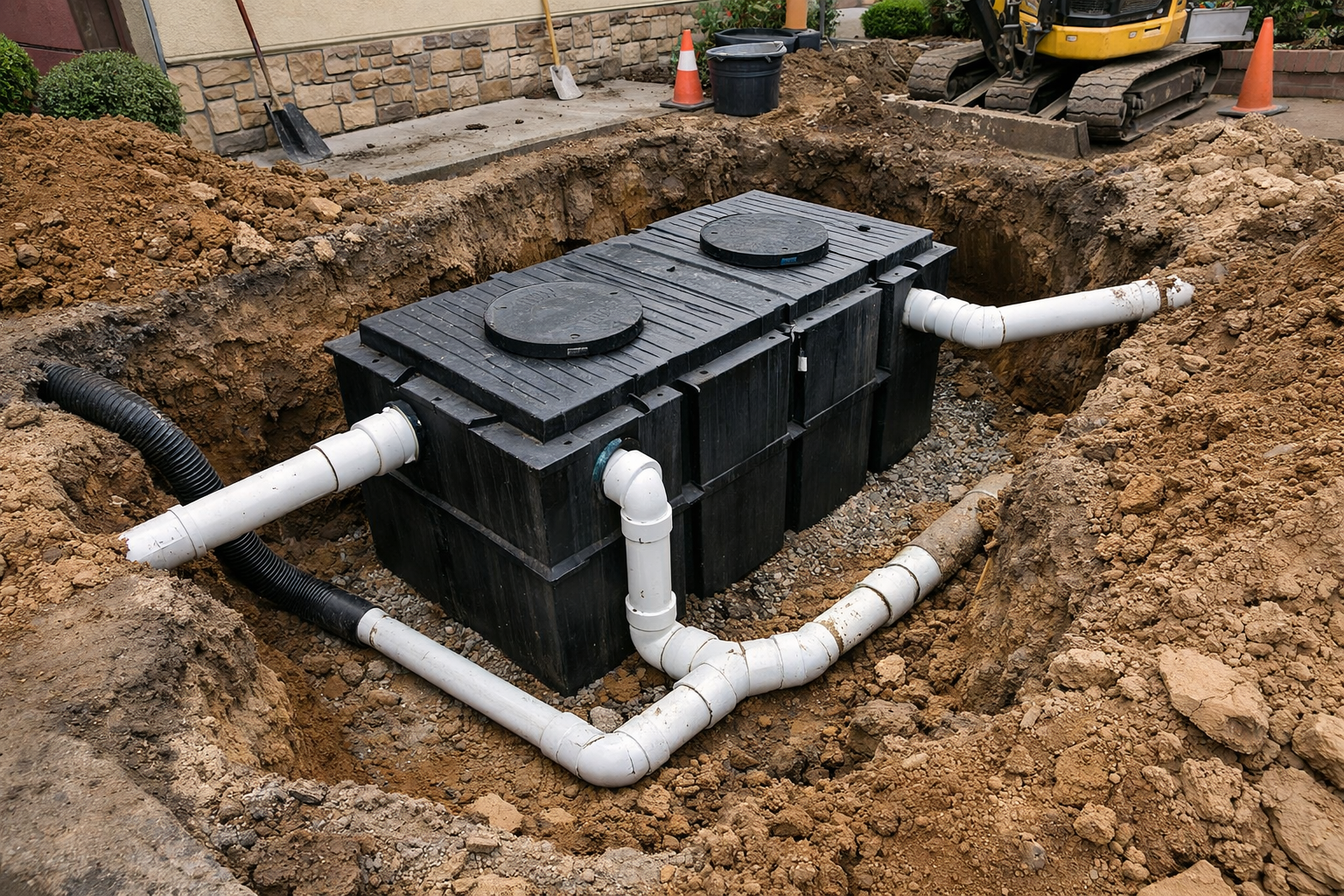
A grease interceptor installation usually involves a larger, underground tank installed outside the building. These systems handle higher volumes and are required for most full-service and high-output kitchens.
If you’re unsure which system your business needs, a professional evaluation will determine whether commercial grease trap installation or a full interceptor is required.
What Happens During a Grease Interceptor Installation
Step 1: Site Evaluation and System Sizing
Every successful grease interceptor installation starts with a detailed site evaluation. This step ensures the system is sized and placed correctly from the beginning.
Professionals assess:
- Kitchen water usage and flow rate
- Number and type of fixtures
- Menu style and grease output
- Available outdoor space
The goal is to prevent undersizing, which is the most common cause of grease interceptor failure.
Pro tip: Having estimates of daily kitchen volume ready can speed up this stage.
Step 2: Permits and City Approval
Once the system design is finalized, permits must be secured. This step ensures the installation complies with Sacramento plumbing and environmental codes.
Contractors submit:
- Engineering drawings
- System specifications
- Installation plans
Permits protect your business from fines, forced rework, or failed inspections. While this stage may take time, it’s a critical safeguard.
Important: Permit timelines vary. Starting early avoids costly delays.
Step 3: Excavation and Site Preparation
For underground systems, excavation is required. Contractors:
- Mark utility lines
- Prepare the installation footprint
- Excavate to the correct depth and dimensions
Soil conditions and interceptor size influence how long this step takes. Proper excavation ensures long-term stability and prevents tank shifting.
Pro tip: Keep the work area clear to minimize equipment downtime.
Step 4: Installing the Grease Interceptor Tank
This is the core of the grease interceptor installation process. The interceptor tank is placed into the excavated area and aligned precisely.
Contractors ensure:
- Correct inlet and outlet alignment
- Proper slope for wastewater flow
- Accurate leveling to prevent pooling
Backfilling is done carefully to protect the tank and surrounding plumbing.
Step 5: Plumbing Connections and Flow Testing
Once the tank is installed, plumbing connections are completed. This step verifies that all wastewater routes correctly through the interceptor.
Technicians:
- Seal all pipe joints
- Test for leaks
- Verify proper flow rates
If issues are detected, they’re corrected immediately before inspection.
Pro tip: Ask to observe the flow test so you understand how your system functions.
Step 6: Final Inspection and Approval
A city inspector reviews:
- Tank placement
- Pipe connections
- Accessibility
- Operational readiness
Once approved, your grease interceptor installation is officially complete. Inspection records should be stored for future maintenance or renovations.
Real-World Benefits of Proper Installation
The impact of a correct installation becomes apparent quickly.
Example 1: High-Volume Restaurant
A Sacramento restaurant experiencing frequent drain backups reduced plumbing emergencies by nearly 40% after upgrading to a properly sized interceptor.
Example 2: Shared Commercial Kitchen
A commissary kitchen serving multiple food vendors struggled with inspections. After installing a compliant system, inspection approvals became faster and simpler.
In both cases, long-term maintenance costs dropped, proving that proper installation protects both operations and profitability.
Grease Interceptor Installation Cost: What to Expect
One of the most common questions is grease interceptor installation cost.
Factors That Affect Cost
- Tank size
- Excavation complexity
- Permit fees
- Plumbing modifications
- Accessibility
So, how much does it cost to install a grease trap or interceptor? Costs can range widely depending on system size and site conditions.
For a detailed breakdown, see this grease trap installation cost guide.
What Happens After Installation: Maintenance Matters
Installation is only the beginning. Without proper care, even the best system will fail.
Grease Interceptor Maintenance Essentials
Regular maintenance prevents backups, odors, and fines.
This includes:
- Scheduled grease trap pumping
- Ongoing grease trap cleaning
- Record keeping for inspections
Most businesses need pumping every 1–3 months, depending on grease output.
Professional services such as grease trap pumping and grease trap cleaning ensure compliance and reliability.
Choosing the Right Grease Trap Service Provider
Not all grease trap pumping companies are the same. Look for providers who:
- Understand Sacramento regulations
- Offer scheduled maintenance plans
- Provide documentation for inspections
A reliable grease trap service partner helps you avoid emergencies and maintain compliance year-round.
Best Practices to Protect Your Investment
To extend system life and reduce costs:
- Train staff on FOG best practices
- Never pour oils or solids down drains
- Maintain consistent pumping schedules
- Keep inspection and service records
These steps dramatically reduce failure risk.
Common Mistakes to Avoid
- Choosing the cheapest installer without local experience
- Undersizing the interceptor
- Skipping maintenance
- Ignoring early warning signs like slow drains
Avoiding these mistakes protects your investment and operations.
Final Thoughts: Is Grease Interceptor Installation Worth It?
A professional grease interceptor installation is one of the smartest investments a Sacramento food service business can make. It ensures compliance, protects plumbing systems, and prevents costly downtime.
With the right planning, experienced contractors, and consistent maintenance, the process becomes straightforward, not stressful. Once installed, your focus can return to running your business instead of dealing with preventable plumbing emergencies.
If you’re ready to move forward, working with a local Sacramento grease trap expert is the best way to ensure fast, compliant installation and long-term peace of mind.
Frequently Asked Questions
Is a grease interceptor required for all Sacramento restaurants?
Most food service establishments producing FOG must install one. Requirements depend on menu type, volume, and plumbing configuration.
How long does grease interceptor installation take?
Typically 1–3 weeks, including permitting and inspections.
How often is maintenance required?
Most systems require pumping every 1–3 months.
Can I install a grease interceptor indoors?
Some small operations can, but many Sacramento kitchens require outdoor systems.
What happens if I don’t maintain it?
Neglect leads to backups, odors, failed inspections, and potential fines.
With the right approach, grease interceptor installation becomes a proactive step toward smoother operations, stronger compliance, and long-term savings for your Sacramento business.

Let Us Simplify Your Grease Trap Maintenance.
Proper grease trap maintenance will reduce costly repairs in the future.
.avif)