Grease Interceptor: What It Is and How It Differs from a Grease Trap
If you run a commercial kitchen, you have probably heard the terms grease interceptor and grease trap used interchangeably. While both are designed to capture fats, oils, and grease (FOG), they are not the same system.
Choosing the wrong setup can lead to clogged pipes, expensive repairs, and compliance issues. Understanding the difference is essential for maintaining a safe and efficient kitchen.
In this guide, you will learn:
- What a grease interceptor is
- How it compares to a grease trap
- Which system is right for your operation
- Best practices for maintenance and compliance
What Is a Grease Interceptor
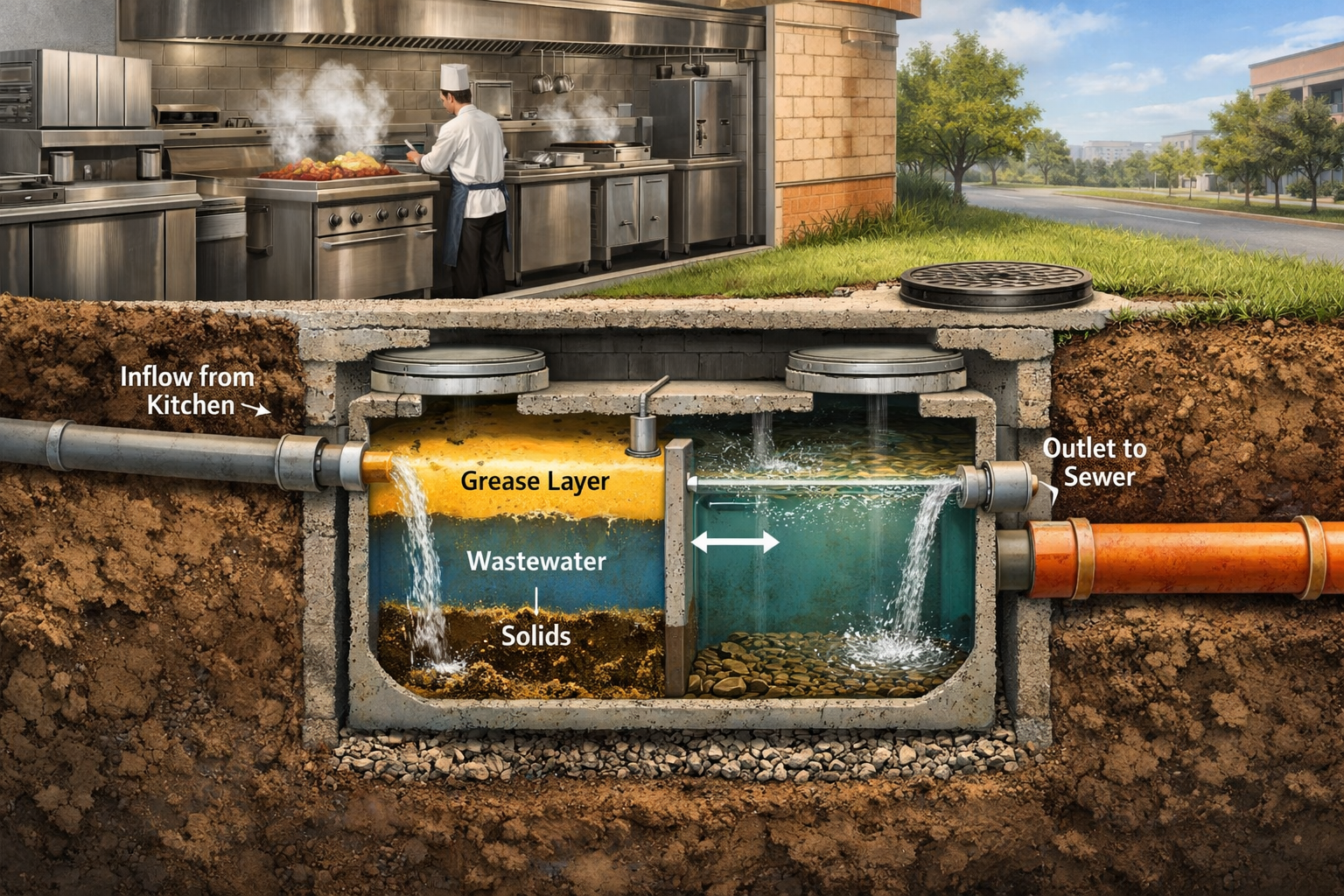
A grease interceptor is a large, typically underground system designed to capture fats, oils, and grease before wastewater enters the sewer system.
It is built for high-capacity use and is commonly installed outside commercial buildings.
Unlike a standard grease trap system, interceptors handle wastewater from the entire facility rather than a single sink or fixture.
Why Grease Interceptors Matter for Commercial Kitchens
In high-volume kitchens, grease buildup can quickly overwhelm plumbing systems.
A properly installed grease interceptor helps:
- Prevent sewer line blockages
- Reduce plumbing repairs
- Maintain compliance with local regulations
- Improve overall kitchen efficiency
For businesses in Sacramento, proper grease management is essential to avoid fines and operational disruptions.
Grease Interceptor vs Grease Trap: Key Differences
Size and Capacity
The biggest difference is capacity.
- A small grease interceptor or grease trap is designed for limited output
- A grease interceptor is built to handle large volumes of wastewater
A large grease trap or interceptor is required for high-output kitchens.
Installation Location
- Grease traps are installed indoors, often under sinks
- Grease interceptors are installed outdoors, usually underground
This difference allows interceptors to handle higher volumes without affecting kitchen space.
Performance and Usage
- Grease traps are ideal for low to moderate usage
- Grease interceptors are designed for high-demand operations
Facilities like restaurants, hospitals, and food processing plants benefit most from interceptors.
Maintenance Requirements
- Grease traps require frequent cleaning
- Grease interceptors need less frequent but more extensive servicing
Regular maintenance is critical for both systems. Services like grease trap cleaning help keep systems functioning properly.
System Types and Variations
Grease Trap Interceptor Systems
Some systems combine features of both designs, often referred to as grease trap interceptor units.
These are used in mid-sized kitchens that require more capacity than a standard trap.
Portable Grease Trap Options
A portable grease trap is a compact solution for temporary or small-scale operations.
These are easy to install but require frequent maintenance.
Grease Trap With Pump
A grease trap with pump is used when gravity flow is not sufficient.
It helps move wastewater through the system efficiently.
Plastic Grease Interceptor
A plastic grease interceptor is lightweight and resistant to corrosion.
These are commonly used for modern installations.
How a Grease Interceptor Works
The process is simple but highly effective.
- Wastewater enters the interceptor
- Grease floats to the top
- Solids settle at the bottom
- Clean water exits into the sewer system
This separation prevents grease from clogging pipes and damaging infrastructure.
Choosing the Right System for Your Kitchen
Selecting the correct system depends on several factors.
Kitchen Size and Output
High-volume kitchens require larger systems.
If your operation produces significant grease, an interceptor is the better choice.
Available Space
Outdoor space is required for interceptor installation.
Indoor setups are better suited for smaller grease traps.
Compliance Requirements
Local regulations often determine which system is required.
Following guidelines ensures your business avoids penalties.
Maintenance Capabilities
Choose a system that aligns with your ability to maintain it regularly.
Professional services like grease trap pumping can help manage upkeep.
Real World Applications of Grease Interceptors
High-Volume Restaurant
A busy restaurant installs a grease interceptor to manage constant wastewater flow and reduce maintenance frequency.
Hospital Kitchen
Hospitals rely on interceptors to maintain hygiene and handle large-scale food preparation.
Food Processing Facility
Industrial kitchens use interceptors to manage heavy grease loads efficiently.
Best Practices for Grease Management
Follow Regular Maintenance Schedules
Routine service prevents buildup and system failure.
Train Staff on Proper Disposal
Minimize grease entering the system whenever possible.
Monitor System Performance
Watch for slow drainage, odors, or overflow.
Stay Compliant with Regulations
Follow local FOG guidelines to avoid fines.
Learn more about compliance through FOG best practices.
Work with Local Professionals
Experienced providers understand local requirements and system needs.
You can also explore local insights in this guide on grease trap services nearby Sacramento.
Common Mistakes to Avoid
- Choosing a system that is too small
- Skipping regular maintenance
- Ignoring early warning signs
- Not following local regulations
Avoiding these mistakes helps extend system life and reduce costs.
Conclusion: Choosing Between a Grease Interceptor and Grease Trap
Understanding the difference between a grease interceptor and a grease trap is essential for any commercial kitchen.
Key takeaways:
- Grease interceptors handle high-volume wastewater
- Grease traps are better for smaller operations
- Proper system selection prevents costly issues
- Regular maintenance ensures long-term performance
Choosing the right system keeps your kitchen running smoothly and compliant with regulations.
Frequently Asked Questions
What is a grease interceptor?
A grease interceptor is a large system designed to capture fats, oils, and grease from high-volume wastewater before it enters the sewer system.
How is a grease interceptor different from a grease trap?
A grease interceptor is larger, installed outdoors, and handles more wastewater, while a grease trap is smaller and installed indoors.
When do you need a grease interceptor?
You need one for high-output kitchens such as restaurants, hospitals, and food processing facilities.
How often should a grease interceptor be cleaned?
Cleaning depends on usage but is typically less frequent than grease traps due to larger capacity.
Are grease interceptors required in Sacramento?
Yes, many large commercial kitchens are required to install them to meet local regulations.

Let Us Simplify Your Grease Trap Maintenance.
Proper grease trap maintenance will reduce costly repairs in the future.
.avif)
