The Fastest Method to Clean a Grease Trap Without Disruption
The Fastest Grease Trap Cleaning Method for Sacramento Commercial Kitchens
A clogged or poorly maintained grease trap can bring an entire commercial kitchen to a standstill. Slow drains, foul odors, surprise inspections, or even forced shutdowns are real risks when grease buildup gets out of control. For busy restaurant owners and food service operators in Sacramento, downtime isn’t just inconvenient, it directly impacts revenue, staff productivity, and customer experience.
The good news is that you can clean a grease trap quickly and efficiently without disrupting daily operations, when the right method is used. The fastest approach isn’t about cutting corners. It’s about using proven processes, professional-grade equipment, and smart scheduling that keeps your kitchen compliant and operational.
In this guide, you’ll learn:
- The fastest professional method to clean a grease trap
- Why speed matters for Sacramento businesses
- How to avoid the mistakes that cause delays and emergency shutdowns
Whether you manage a restaurant, commissary kitchen, cafeteria, or food production facility, this breakdown will help you stay compliant, efficient, and stress-free.
Why Fast Grease Trap Cleaning Matters
Being able to clean a grease trap efficiently isn’t just about convenience. It directly affects compliance, plumbing health, and your ability to stay open during peak service hours.
Grease traps fill faster than many operators expect, especially in high-volume kitchens. When grease trap maintenance is delayed or done incorrectly, several problems follow quickly:
- Increased risk of sewer backups and overflows
- Strong, lingering odors in prep and dining areas
- Health code violations and potential fines
- Emergency grease trap cleaning during peak hours
According to Environmental Protection Agency (EPA) wastewater guidance, fats, oils, and grease are a leading cause of sewer overflows nationwide, creating serious environmental and public health risks.
In Sacramento, where FOG regulations are strictly enforced, fast and consistent grease trap cleaning is essential for staying compliant without scrambling before inspections.
What Is the Fastest Way to Clean a Grease Trap?
The fastest way to clean a grease trap, without disrupting kitchen operations, follows a structured, professional process. This method is designed specifically for commercial grease trap cleaning and restaurant grease trap cleaning environments where time matters.
Below is the step-by-step approach used by professional grease trap cleaning services in Sacramento.
Step-by-Step: How to Clean a Grease Trap Quickly and Safely
Step 1: Prepare the Kitchen in Advance
Preparation is the foundation of fast grease trap service. When access areas are cleared and staff are briefly informed, technicians can begin immediately upon arrival.
This step eliminates delays caused by:
- Blocked access panels
- Equipment obstructions
- Confusion about grease trap location
Pro Tip: Schedule service during slower prep windows to avoid foot traffic and distractions.
Step 2: Safely Access and Isolate the Grease Trap
Once preparation is complete, the grease trap is safely isolated from active drainage. Covers are removed carefully to prevent spills, splashing, or odor spread.
Quick, controlled access allows technicians to:
- Measure grease and solids accurately
- Identify early warning signs of failure
- Prevent contamination in surrounding areas
Efficient access alone can save significant time during a grease trap clean out.
Step 3: Remove Grease, FOG, and Solid Waste (Fastest Step)
This is where speed truly matters.
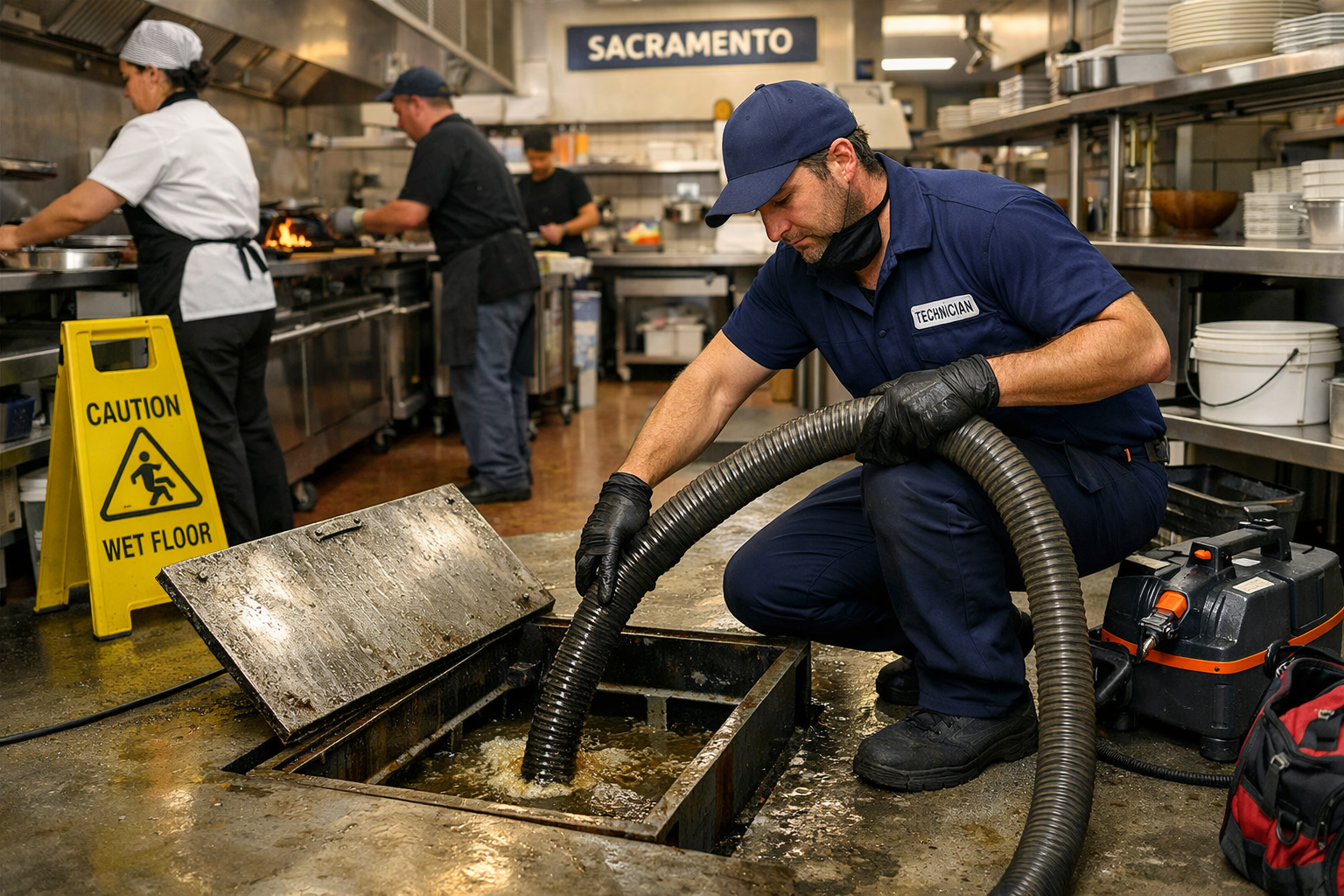
The fastest way to clean out a grease trap is through vacuum-based removal. Professional vacuum equipment extracts:
- Fats, oils, and grease
- Food solids
- Wastewater residue
This method is dramatically faster and cleaner than manual scooping. It also ensures proper containment and disposal, which is critical for compliance.
Pro Tip: Vacuum removal is the gold standard for commercial grease trap cleaning because it reduces service time and eliminates mess.
Step 4: Scrape and Clean Interior Trap Walls
After waste removal, technicians scrape interior walls, baffles, and components to remove residue. This step is essential.
Skipping it leads to:
- Faster grease buildup
- Strong odors returning quickly
- More frequent emergency cleanings
Thorough wall cleaning extends the lifespan of the system and reduces how often the trap needs servicing.
Step 5: Inspect Components Before Reassembly
Before closing the system, technicians inspect:
- Baffles and flow restrictors
- Structural integrity
- Signs of corrosion or damage
Catching small issues early prevents costly emergency grease trap cleaning or repairs later. This inspection adds minimal time but provides major long-term protection.
Step 6: Reseal, Sanitize, and Restore Operations
Once cleaning and inspection are complete, the grease trap is resealed and the surrounding area sanitized.
Odors are neutralized, surfaces are wiped down, and the kitchen can immediately return to full operation, often without customers ever noticing service took place.
Why Professional Grease Trap Cleaning Is Faster Than DIY
Many operators ask whether they can clean a grease trap themselves to save time or money. In reality, DIY cleaning almost always takes longer and creates more risk.
Professional grease interceptor cleaning service providers offer:
- High-powered vacuum equipment
- Proper waste containment and disposal
- Sacramento compliance knowledge
- Faster, cleaner execution
DIY methods often result in:
- Incomplete cleaning
- Improper disposal
- Lingering odors
- Higher risk of violations
When speed and compliance matter, professional service is the fastest and safest option.
Real-World Results in Sacramento Kitchens
In high-volume Sacramento restaurants, fast grease trap cleaning is often scheduled between prep and peak service.
Example 1: Downtown Restaurant
A high-traffic restaurant reduced service interruption to under 30 minutes by switching to scheduled vacuum-based cleaning instead of reactive cleanouts.
Example 2: Catering Facility
A catering kitchen avoided a health violation by completing rapid restaurant grease trap cleaning the same morning as an inspection, without delaying food prep.
In both cases, speed prevented lost revenue and unnecessary stress.
How Often Should You Clean a Grease Trap?
While speed is important, consistency is even more critical.
Most Sacramento commercial kitchens should schedule grease trap maintenance every 1–3 months, depending on:
- Menu type
- Volume of grease produced
- Trap size
Regular service prevents heavy buildup that takes longer to remove and increases downtime.
Professional providers offering grease trap cleaning and grease trap pumping help keep schedules predictable and fast.
Best Practices to Keep Grease Trap Cleaning Fast
Fast cleanings stay fast when paired with smart kitchen habits.
Follow FOG Best Practices
Training staff on FOG best practices dramatically slows grease accumulation.
Keep Access Areas Clear
Blocked grease traps create unnecessary delays during service.
Stick to a Routine Schedule
Routine cleaning prevents heavy buildup that takes longer to remove.
Work With Local Experts
Sacramento-specific knowledge ensures compliance and avoids inspection issues.
When Emergency Grease Trap Cleaning Is Needed
Despite best efforts, emergencies happen.
Signs you may need emergency grease trap cleaning include:
- Slow or backing-up drains
- Strong sewer odors
- Overflow near the trap
- Failed inspections
Emergency service restores operations quickly, but it’s always slower and more expensive than routine maintenance.
Clean a Grease Trap Without Shutting Down Your Kitchen
The fastest way to clean a grease trap without disruption is a structured, professional process built around preparation, vacuum-based removal, and inspection. When done correctly, grease trap cleaning becomes routine, not a business interruption.
By working with experienced Sacramento professionals and maintaining a consistent schedule, you protect your plumbing, avoid fines, and keep your kitchen running smoothly.
If staying open and compliant matters to your business, fast and reliable grease trap cleaning isn’t optional, it’s essential.
Frequently Asked Questions About Grease Trap Cleaning
How often should I clean a grease trap?
Most commercial kitchens require cleaning every 1–3 months, depending on grease output and local regulations.
Can I clean a grease trap during business hours?
Yes. Professional vacuum-based methods allow cleaning during slower hours without shutting down operations.
What happens if I delay grease trap cleaning?
Delays can cause backups, odors, violations, and costly emergency service or shutdowns.
Is professional grease trap cleaning faster than DIY?
Yes. Professionals use specialized equipment that removes grease faster, cleaner, and more completely.
Does grease trap cleaning eliminate odors?
Yes. Thorough cleaning removes decomposing waste that causes persistent kitchen odors.

Let Us Simplify Your Grease Trap Maintenance.
Proper grease trap maintenance will reduce costly repairs in the future.
.avif)