Fast, Professional Service for North Highlands: Commercial Kitchen Grease Trap Cleaning
Securing a scheduled commercial kitchen grease trap cleaning is the single most effective way to eliminate foul plumbing odors and prevent catastrophic drainage backups in your food service facility. Our dedicated regional service framework provides commercial kitchens throughout North Highlands with precise, high-efficiency scraping and vacuum pumping to keep lines flowing smoothly.
For local restaurant managers and commercial property owners, neglecting thick fats, oils, and grease (F.O.G.) accumulation inside interceptor vaults causes serious operational problems. Postponing this vital maintenance leads directly to slow-draining sinks, toxic sewer gas leaks, costly emergency plumbing closures, and severe municipal health department citations.
By reading this guide, you will understand exactly how professional grease management protects your facility’s plumbing infrastructure. You will learn the mechanical differences between routine pumping and a comprehensive technical scraping, how to maintain strict local environmental compliance, and how to choose an honest, non-commissioned specialist.
Let's look at how to optimize your kitchen drainage performance.
The Operational Value of Professional Commercial Kitchen Grease Trap Cleaning
A thorough commercial kitchen grease trap cleaning involves the total extraction of accumulated food solids, floating grease layers, and gray wastewater from a kitchen’s filtering system, followed by a manual scraping of the internal walls and baffles. This essential maintenance service safely removes heavy grease blocks before they can flow past the underground interceptor or under-sink trap.
Instead of simply skimming the top oil layers, a complete technical cleaning ensures that both the heavy sludge settled at the bottom and the hardened scum clinging to the sides are completely removed from the vault.
For busy culinary operators and facility managers, keeping up with this sanitation standard is essential for protecting your property's plumbing infrastructure and ensuring employee safety.
Postponing a detailed commercial kitchen grease trap cleaning allows acidic grease compounds to break down your internal pipes, causing rapid structural erosion and severe mainline clogs. Routine servicing keeps your business running smoothly, safeguards your commercial space from raw sewer backups, and keeps your facility fully compliant with all local environmental regulations.
Investing in regular, comprehensive grease management provides clear advantages for your daily kitchen operations:
- Complete Odor Elimination: Removes sour, decomposing organic materials before rancid sewer gases escape into your customer dining areas.
- Maximum Drainage Velocity: Keeps dishwashing lines and food prep sinks flowing at peak performance during your busiest dinner rushes.
- Prolonged Equipment Lifespan: Prevents heavy solids from escaping into downstream lines, reducing the need for costly line repairs.
A common industry misconception is that a quick grease trap pumping is identical to a full cleaning. Simply pumping out the liquid layer leaves behind a thick coating of hardened grease along the concrete walls and baffle fittings, which quickly breaks loose to cause sudden blocks. True drainage safety requires deep scraping and complete sediment removal to protect your building's lines from early failure.
Comprehensive Process for Thorough Commercial Kitchen Grease Trap Cleaning
Executing a professional commercial kitchen grease trap cleaning requires a highly disciplined, systematic approach to ensure your wastewater infrastructure is completely cleared of decaying organic matter. Restaurant managers must look beyond superficial liquid skimming and implement a deep sanitation protocol that protects sub-surface pipes from blockages.
Ensuring your facility partners with a specialist who conducts deep manual scraping alongside vacuum extractions prevents hidden waste buildup from hardening inside the tank. To help you evaluate the quality of your facility's grease management, let's break down the precise, step-by-step technical process used by certified experts to keep your drainage lines operating flawlessly.
1. Initial Site Assessment and Safety Setup
Before any waste extraction begins, the service team conducts a thorough safety assessment of the immediate workspace and secures the surrounding area. Technicians set up high-visibility safety barriers around indoor floor units or outdoor parking lot manholes to protect kitchen staff and customers from open hatch hazards.
The specialist then carefully removes the access vault cover, checking the condition of the rubber seals and securing the path for the extraction hoses. This initial step ensures the entire cleaning operation proceeds smoothly without disrupting your daily kitchen production or creating dangerous workplace slip hazards.
2. Complete Liquid and Sludge Vacuum Extraction
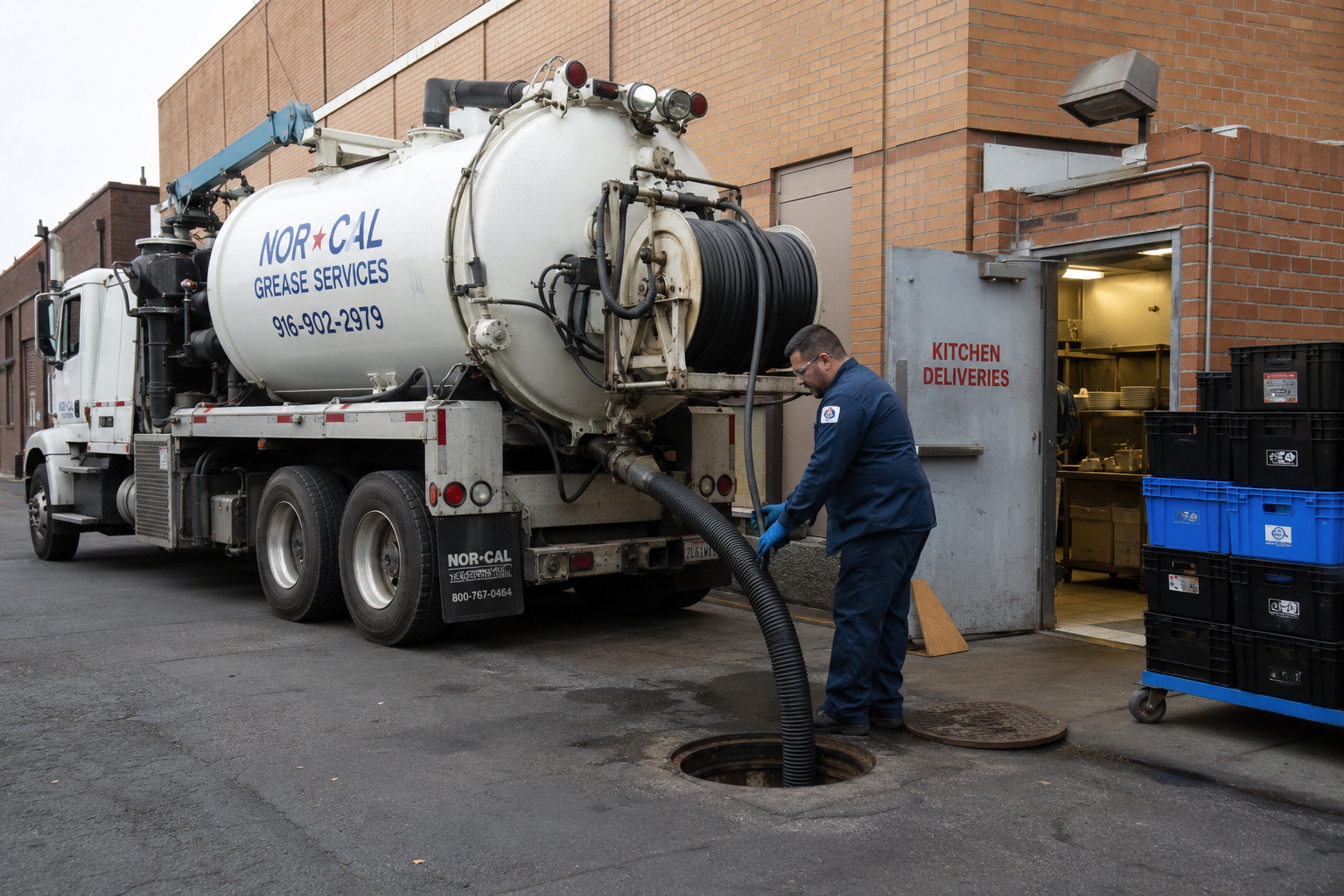
Next, the service technician lowers a heavy-duty, truck-mounted vacuum line directly into the center of the interceptor vault to evacuate the contents. The extraction pump draws out the floating top layer of congealed fats, the center layer of gray wastewater, and the heavy sediment settled along the tank floor.
Removing this mixed waste stream is essential for proper commercial grease trap cleaning, as leaving behind old bottom sludge instantly corrupts fresh incoming wastewater. This powerful vacuum process quickly empties the tank, preparing the empty vault for a detailed physical inspection and deep scraping.
3. Detailed Manual Scraping of Internal Baffles and Walls
With the tank completely emptied of liquid waste, the specialist manually scrapes down all internal concrete or plastic surfaces using specialized, long-reach scraping tools. This crucial stage is what distinguishes a premium service from a basic, rushed pumping job that leaves behind hard grease blocks.
The technician removes thick, hardened scum layers from the side walls, intake ports, and internal baffle fittings to prevent early tank corrosion and foul plumbing odors. Thoroughly scraping these hard-to-reach areas ensures that old, clinging grease cannot break loose to cause sudden blocks in your plumbing lines downstream.
4. Thorough Water Rinse and Structural Component Inspection
Once the physical scraping is complete, the technician uses a high-pressure water rinse to flush down the remaining small debris from the internal walls and fittings. The empty, completely clean vault then undergoes a thorough visual evaluation to verify the mechanical health of your filtration system.
The specialist checks for shifting concrete walls, eroded piping joints, or cracked intake baffles that could let raw F.O.G. leak into the public sewer line. For facility managers looking to build a reliable maintenance schedule based on actual grease accumulation levels, utilizing expert system inspections & troubleshooting helps find hidden infrastructure flaws before they cause a plumbing emergency.
5. Final Re-Sealing and Compliance Documentation
To conclude the cleaning service, the technician cleans the rim seals, safely fastens the heavy access cover back down, and completes the required regulatory paperwork. The service specialist fills out an official waste manifest that details the exact volume of liquid grease extracted and the specific disposal location used.
This certified manifest serves as your official legal proof of regulatory compliance, showing city inspectors that your kitchen is following all local wastewater ordinances. Keeping these records organized protects your business from expensive municipal health department fines and shows you are dedicated to clean, environmentally responsible kitchen operations.
The Hidden Pitfalls of Commission-Driven Maintenance Packages
Maintaining a clean, code-compliant kitchen plumbing system is heavily dependent on the professional integrity of your service provider. Many national commercial service franchises operate on commission-heavy business models, encouraging their field technicians to find hidden system flaws or recommend expensive equipment upgrades during a routine visit.
Partnering with an established, family-owned waste management specialist guarantees that your business receives direct, non-commissioned support focused purely on infrastructure health. Non-commissioned technicians are paid for the actual quality of their labor rather than the total size of their final invoice, ensuring you never face high-pressure sales tactics or surprise upcharges.
This honest, straightforward approach delivers reliable, long-term drainage performance at the best possible price for the local business owner.
Real-World Scenarios: Protecting North Highlands Kitchens with Routine Servicing
Reviewing how consistent waste management operates in active commercial facilities shows how professional care prevents severe plumbing disruptions. Implementing these practical cleaning steps safeguards your drainage lines and ensures your regional business stays fully operational.
- Reversing Severe Mainline Slowdowns at a Local North Highlands Diner: A busy neighborhood breakfast spot was facing persistent sink backups and a foul, sulfurous odor near its food prep stations.
Their under-sink unit was completely choked with hardened cooking fats, creating an immediate health code risk during the morning rush. The owner scheduled a thorough commercial kitchen grease trap cleaning to clear out the solid accumulation and wash down the interior baffles.
To help train their staff on keeping heavy waste out of the system moving forward, the manager integrated our proven F.O.G. best practices guide into daily kitchen operations, completely eliminating slow drains and dropping monthly plumbing emergency risks to zero.
- Securing Multi-Site Code Compliance for a Regional Senior Living Facility: A large healthcare kitchen needed to pass its annual municipal wastewater inspection without facing costly delays or operational penalties.
The facility manager set up a strict, automated schedule for comprehensive commercial grease trap cleaning to systematically empty their heavy-duty underground interceptor vault before it reached the legal 25% waste limit.
This proactive approach removed 100% of the thick bottom sludge, resulting in a perfect compliance score from local health inspectors and preventing unexpected drainage emergencies.
- Preventing Major Infrastructure Damage at a Busy Craft Bakery: A local bakery used a professional grease trap service to uncover a cracked, shifting concrete baffle wall during a routine washdown, allowing them to fix the internal part before it caused a total mainline sewer backup.
These real-world examples demonstrate that matching regular technical scraping with routine waste removal eliminates the risk of sudden kitchen plumbing emergencies. You can apply these exact same preventative maintenance habits today to protect your commercial space, maintain a sanitary workplace, and avoid expensive business interruptions.
Expert Methods for Maximizing Your Interceptor Efficiency
Applying professional waste management methods bridges the gap between simply reacting to kitchen drain backups and actively maintaining a highly efficient commercial plumbing network. Integrating these proven techniques ensures that your commercial kitchen grease trap cleaning delivers long-lasting results while protecting your sub-surface plumbing from premature structural wear.
- Enforce a Strict Dry-Scrape Policy Across All Shifts: Mandate that all kitchen staff use rubber spatulas to scrape heavy cooking oils, leftover lard, and food scraps directly into trash bins before stacking plates in the dishwashing station. Restricting solid debris from entering your lines minimizes bottom sludge buildup and cuts the frequency of intensive grease trap cleaning near me visits.
- Avoid Flushing Drains with Harsh Chemical Degreasers: Refrain from pouring industrial solvents or boiling water down slow drains to clear minor blocks.
These products temporarily liquefy grease, forcing it directly past your under-sink or outdoor trap and into municipal mains, where it cools into a massive clogged grease trap block that brings heavy city fines.
- Keep an Accurate, Organized Waste Maintenance Log: Maintain a detailed physical binder containing all your professional service manifests and plumbing extraction records right in your main kitchen office.
Keeping these documents organized makes passing unannounced city health department visits simple; check out our comprehensive compliance tracking and inspection guide to help your facility manage its municipal paperwork effortlessly.
- Install Heavy-Duty Steel Mesh Strainers Over All Sinks: Equip every floor drain, prep basin, and mop sink across your facility with high-density mesh strainers. These inexpensive screens capture loose coffee grounds, rice, and vegetable pieces before they wash down the pipe and create solid blockages in your main vault.
Adopting these straightforward, preventative waste habits removes the constant worry of dealing with unexpected plumbing backups during your peak dinner hours. Consistent daily care of your filtration infrastructure maximizes your operational safety, avoids costly municipal fines, and keeps your kitchen running smoothly.
Partner with North Highlands' Trusted Waste Management Experts
Prioritizing a comprehensive commercial kitchen grease trap cleaning is your most effective defense against sudden plumbing failures and disruptive business downtime. You now understand that combining thorough manual wall scraping with complete sludge extraction keeps your kitchen safe from foul grease odors and unexpected line blockages.
Trusting your facility's infrastructure to our non-commissioned, family-owned specialists gives your business deep compliance, peace of mind and honest, transparent pricing. Taking active control of your F.O.G. Management protects your commercial property from expensive emergency repairs and keeps your kitchen flowing smoothly.
Do not wait for a sluggish drain line or a sudden municipal citation to disrupt your profitable kitchen operations and community reputation. If you need a comprehensive physical inspection or want to set up an automated, worry-free maintenance plan tailored directly to your kitchen's needs, look over our specialized restaurant grease trap cleaning programs.
For immediate support or to receive a straightforward, honest service estimate without any high-pressure upselling, contact our local team today to schedule your specialized commercial kitchen grease trap cleaning.
Frequently Asked Questions Regarding Interceptor Maintenance
How often should my restaurant schedule a commercial kitchen grease trap cleaning?
Your facility should schedule a professional cleaning before the grease and solids accumulation crosses 25% of your tank's total capacity, known as the industry 1/4 Rule. For high-volume kitchens, this typically means arranging a visit every one to three months. Waiting longer allows heavy sludge to escape into public sewer mains, which can lead to expensive municipal compliance fines and sudden floor drain backups.
What is the structural difference between basic grease trap pumping and a complete cleaning?
Basic pumping only draws out the top floating oils and middle liquid layer, often leaving thick, hardened sludge stuck to the walls and bottom. A full commercial kitchen grease trap cleaning includes a complete vacuum extraction followed by an intensive manual scraping of all internal concrete walls, intake ports, and baffle walls.
If you want to check if your facility requires high-pressure line clearing alongside your regular cleaning, explore our specialized hydro jetting and line cleaning options to keep your entire drainage network perfectly clear.
Will a professional grease trap service help my business pass unexpected city health inspections?
Yes, routine maintenance by a certified team ensures your interceptor filters waste efficiently and meets all local environmental standards. After completing the cleaning, our technicians provide an official waste manifest detailing the exact volume extracted and the certified disposal method used. Keeping these compliance records organized in your kitchen office gives you legal proof of proper maintenance, easily resolving municipal inspection audits.
Why are non-commissioned technicians preferred for managing kitchen drainage systems?
Non-commissioned specialists are paid for the actual quality of their technical work rather than the total size of their final invoice. This setup ensures you receive honest service focused purely on your kitchen's actual plumbing needs, completely avoiding high-pressure sales pitches or hidden upcharges. This honest approach provides local business owners with clear, reliable maintenance solutions at the best possible price.

Let Us Simplify Your Grease Trap Maintenance.
Proper grease trap maintenance will reduce costly repairs in the future.
.avif)