When Should a Kitchen Choose an Above-Ground vs. In-Ground Grease Trap?
A commercial kitchen should choose an in-ground grease trap if it operates a high-volume facility with substantial wastewater discharge, whereas smaller kitchens with limited space should opt for a floor-mounted unit. Making the wrong structural plumbing choice during a build-out can result in catastrophic floor excavation costs or unexpected, chronic drain backups that stop your business entirely.
For commercial property owners and restaurant operators, selecting between these systems impacts both your upfront installation budget and your long-term municipal compliance standing. A poorly matched unit will quickly lead to overflowing sinks, foul kitchen odors, and expensive structural line blockages.
This guide breaks down the core mechanical differences, capacity limits, and space requirements of each system to help you make an informed decision for your facility. Let's compare these two primary options to find the ideal layout for your building.
Core Differences Between Above-Ground and In-Ground Grease Traps
An in-ground grease trap, also formally referred to as a gravity-based grease interceptor, is a massive outdoor containment tank buried underground that separates fats, oils, and grease from commercial kitchen wastewater. It relies on a high volume of water and extended retention times to naturally cool hot kitchen effluent, allowing grease to float to the top and heavy food solids to settle at the bottom.
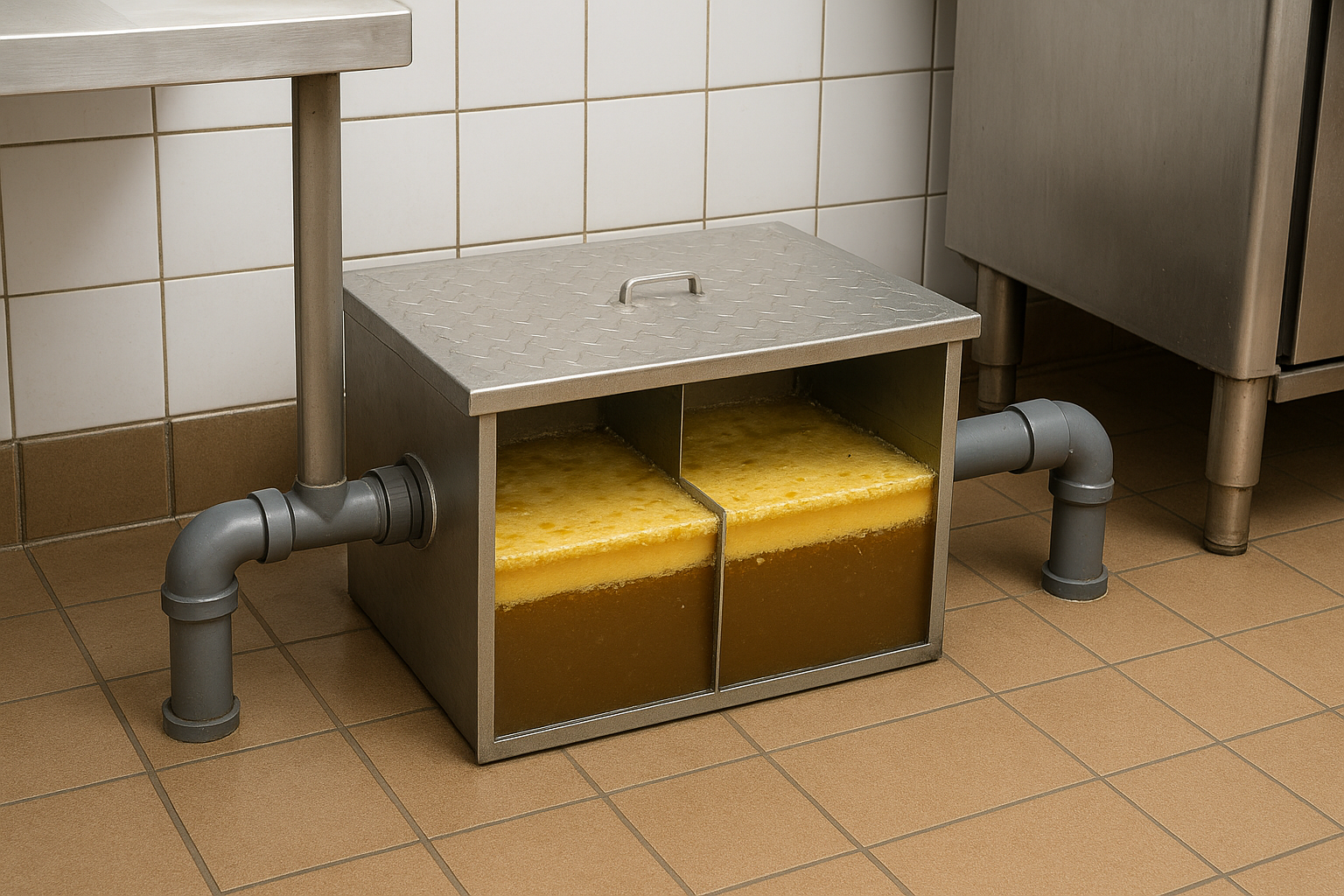
Conversely, an above-ground grease trap is a compact, floor-mounted unit installed indoors directly at the point of use beneath sinks or near dishwashers, utilizing mechanical baffles to slow flow and trap waste within a smaller footprint.
Choosing the right system configuration is critical for safeguarding your building's plumbing infrastructure and ensuring uninterrupted business operations. If your grease management system is undersized or poorly matched to your kitchen's daily output, you risk severe drain line blockages, backing up raw sewage into your prep areas. Partnering with a professional provider for structured grease trap pumping prevents these operational hazards, keeping your business fully aligned with local environmental ordinances. For expanding brands, reviewing standard commercial kitchen grease trap guidelines early in the design phase prevents costly retrofitting mistakes.
Key Operational Trade-offs to Consider
- Retention Volume: Subsurface interceptors hold thousands of gallons, making them ideal for handling continuous, high-temperature dishwasher surges.
- Installation Flexibility: Floor-mounted units sit directly inside the kitchen workspace, avoiding the need for extensive exterior earth excavation or street-level trenching.
- Maintenance Velocity: Smaller indoor units fill rapidly and require frequent cleaning, whereas large underground systems offer longer operational windows between service intervals.
A common industry mistake is using the terms interchangeably without checking local building codes. In reality, city inspectors look closely at your actual flow metrics, and installing a small indoor trap where a large gravity unit is legally required will cause your facility to fail its initial building inspection.
When to Invest in an In-Ground Grease Trap vs. an Above-Ground Unit
Selecting between a floor-mounted model and a heavy-duty subsurface system requires balancing your kitchen’s physical layout against its peak wastewater volume. Choosing the correct configuration protects your business from sudden back-of-house shutdowns while ensuring your property satisfies municipal wastewater standards.
If you are preparing a new commercial space or upgrading an existing facility, booking a professional grease interceptor installation consultation allows you to verify physical space and code constraints before investing in equipment.
1. Wastewater Volume and the 1/4 Rule Capacity
The absolute volume of fats, oils, and grease your kitchen produces daily is the most critical factor in your decision. A small floor-mounted device, often called a hydromechanical grease interceptor, typically manages flow rates between 20 to 50 gallons per minute. These units work perfectly for boutique coffee shops or sandwich cafes with minimal frying equipment.
However, a high-volume restaurant featuring multiple deep fryers, wok lines, and high-temperature commercial dishwashers will easily overwhelm a compact unit within days. For these high-output kitchens, a large in-ground grease trap with a holding capacity ranging from 1,000 to 5,000 gallons is a necessity.
These massive tanks provide the structural retention time required to cool down large surges of boiling, soapy water, giving grease enough time to separate safely without violating the one-quarter capacity rule.
2. Available Space and Building Structural Constraints
Your choice is often dictated by the physical layout of your commercial real estate. Installing a traditional grease trap in ground requires a designated outdoor footprint, typically underneath a parking lot, alleyway, or loading dock area. This setup demands significant earth excavation, street cutting, and structural permitting.
If your kitchen is situated on the upper floor of a high-rise building, inside a protected historical district, or within a leased shopping mall stall with no outdoor access, excavation is out of the question.
In these restrictive environments, an above-ground grease interceptor is the only logical choice. These low-profile units fit neatly inside the kitchen footprint, sitting directly on the floor beneath your three-compartment pot sinks or preparation lines.
3. Upfront Installation Costs vs. Long-Term Maintenance Expenses
The financial comparison between these two systems involves a distinct trade-off between upfront capital and ongoing operational costs. Setting up an indoor, floor-mounted unit is relatively inexpensive and quick, making it highly attractive for startups working with tight build-out budgets. However, because these units feature limited holding capacities, they require frequent care to prevent odors and blockages.
Conversely, installing a massive subsurface system requires a substantial initial investment in excavation, heavy equipment, and municipal permits. The long-term benefit is that these large tanks require professional service much less frequently, saving you from the disruptions of bi-weekly maintenance.
To make an accurate financial choice, look at the official grease trap sizing guide metrics for your specific ZIP code to see how plumbing scale balances out your long-term operational budget.
Ultimately, your choice centers on matching your kitchen's daily waste output to the physical realities of your property. If your menu involves heavy frying and you possess the outdoor real estate, a large subsurface system is the safest way to secure your infrastructure. If spatial constraints force your hand, a carefully managed indoor unit will keep your facility running smoothly.
Real-World Applications of In-Ground and Above-Ground Interceptors
Reviewing how different culinary businesses select their containment systems highlights the practical balance between waste volume and spatial restrictions. These actual business examples show how matching your hardware layout to your menu demands ensures smooth, code-compliant operations.
- The High-Volume Suburban Barbecue Joint: A high-volume barbecue restaurant producing massive quantities of animal fats required a heavy-duty system to satisfy strict county plumbing codes.
Because they possessed a spacious rear loading dock, the owners installed a 2,000-gallon in-ground grease trap beneath the asphalt driveway. This large setup easily manages hot, greasy wastewater and allows the team to practice effective f-o-g best practices while extending their professional pumping windows to three full months.
- The Urban Strip-Mall Juice and Sandwich Bar: A boutique downtown sandwich shop needed to clear city health inspections but operated inside a leased retail stall with no exterior ground access. To bypass the physical impossibility of digging up a shared concrete walkway, they installed a compact above-ground grease interceptor directly beneath their three-compartment rinse sink.
This smart placement completely resolved their immediate regulatory hurdle, keeping their startup costs low while successfully preventing local line clogs.
These practical examples demonstrate that analyzing your facility's physical constraints and menu volume leads to a more dependable plumbing layout. Evaluating these same operational factors will help you choose the right system for your own commercial property.
Industry Best Practices for Managing Your Waste Interceptor System
Applying these proven operational strategies ensures your chosen hardware layout functions efficiently while keeping your facility in perfect regulatory alignment. Implementing these expert management habits prevents premature mechanical breakdowns and shields your business from costly municipal code violations.
- Verify Your Local Grease Interceptor Sizing Requirements: Never guess your plumbing capacity limits when modifying your commercial kitchen menu. Relying on an official regional grease trap sizing guide prevents you from accidentally overloading an existing indoor unit when adding high-output cooking hardware.
- Train Kitchen Staff on Solid Waste Separation: Scraping food scraps completely into the trash before washing dishes protects your in-ground grease trap from fast solids accumulation. Preventing heavy food debris from entering your drain lines keeps your primary containment tank operating within the legal 25% capacity limit.
- Perform Regular Visual Baffle Inspections: Check the internal walls and flow directional baffles inside your in-ground grease trap during every routine service interval. Detecting a cracked baffle early allows you to schedule a quick repair before grease escapes into the city main sewer.
- Maintain Accurate manifest Records: Keep a meticulous digital folder of every pumping receipt and maintenance log on site. Having these verified compliance sheets readily available allows your management team to pass any unannounced municipal health check without administrative delays.
Adhering to these practical operational standards guarantees your sanitation infrastructure runs cleanly, protecting your business reputation and your bottom line.
Get Expert Guidance on Your In-Ground Grease Trap Strategy
Choosing between a compact floor-mounted system and a heavy-duty in-ground grease trap comes down to balancing your daily kitchen waste volume against the physical boundaries of your property.
You now understand how a large, buried gravity unit offers the long-term retention capacity needed for high-volume frying operations, while a low-profile indoor unit solves tough layout challenges in leased or historical buildings. Evaluating these core capacity constraints ensures you pick a compliant, reliable setup that protects your business from sudden back-of-house drainage backups.
Taking active steps to secure your building's plumbing infrastructure shields your brand from unexpected health department fines and keeps your daily kitchen operations running smoothly. Selecting the ideal system configuration provides long-term operational peace of mind, letting you focus entirely on serving your customers.
Whether you are designing a brand-new restaurant concept or upgrading a commercial property to meet local codes, our non-commissioned specialists are ready to provide honest, practical guidance. Contact Sacramento Grease Trap Service today to explore your options or to schedule a professional, code-compliant grease interceptor installation tailored to your facility's exact needs.
Frequently Asked Questions Regarding Subsurface Grease Mitigation
What is a grease interceptor when compared to a standard indoor grease trap?
A gravity-based grease interceptor is a massive outdoor tank buried underground that relies on large volumes of water and long retention times to naturally separate oils. A standard indoor grease trap is a small, point-of-use unit that sits right inside the kitchen and uses internal mechanical baffles to slow down wastewater. Large subsurface units are designed for high-volume commercial production, while indoor traps fit low-volume operations.
How do I know if an in-ground grease trap is required for my menu?
Your local health department or municipal sewer district dictates whether an in-ground grease trap is required based on your total fixture count and menu type. If your kitchen utilizes heavy cooking equipment like deep fryers, charbroilers, or high-temperature commercial dishwashers, local codes will generally mandate a large gravity system. Reviewing local f-o-g best practices can help you understand these specific regional wastewater mandates.
Can a kitchen use multiple indoor traps instead of one in-ground grease trap?
No, you cannot simply substitute multiple smaller indoor units for a required subsurface system if your building layout allows for excavation. Municipal building codes look strictly at total wastewater volume capacity, and small indoor traps cannot properly cool the rapid surges of boiling water produced by heavy commercial dishwashers. Attempting to bypass a mandated in-ground grease trap installation will result in failed building plumbing inspections.
Is an above-ground grease interceptor cheaper to maintain than a subsurface system?
No, indoor units are actually more expensive to maintain over time because their small holding tanks require very frequent cleaning cycles to prevent severe pipe clogs. While a buried tank requires a much larger upfront structural investment, it only needs to be pumped out every few months. Balancing your initial installation budget against these long-term preventative maintenance schedules is key to choosing an efficient system.

Let Us Simplify Your Grease Trap Maintenance.
Proper grease trap maintenance will reduce costly repairs in the future.
.avif)