How Do You Install an Above Ground Grease Trap in a Sacramento Kitchen?
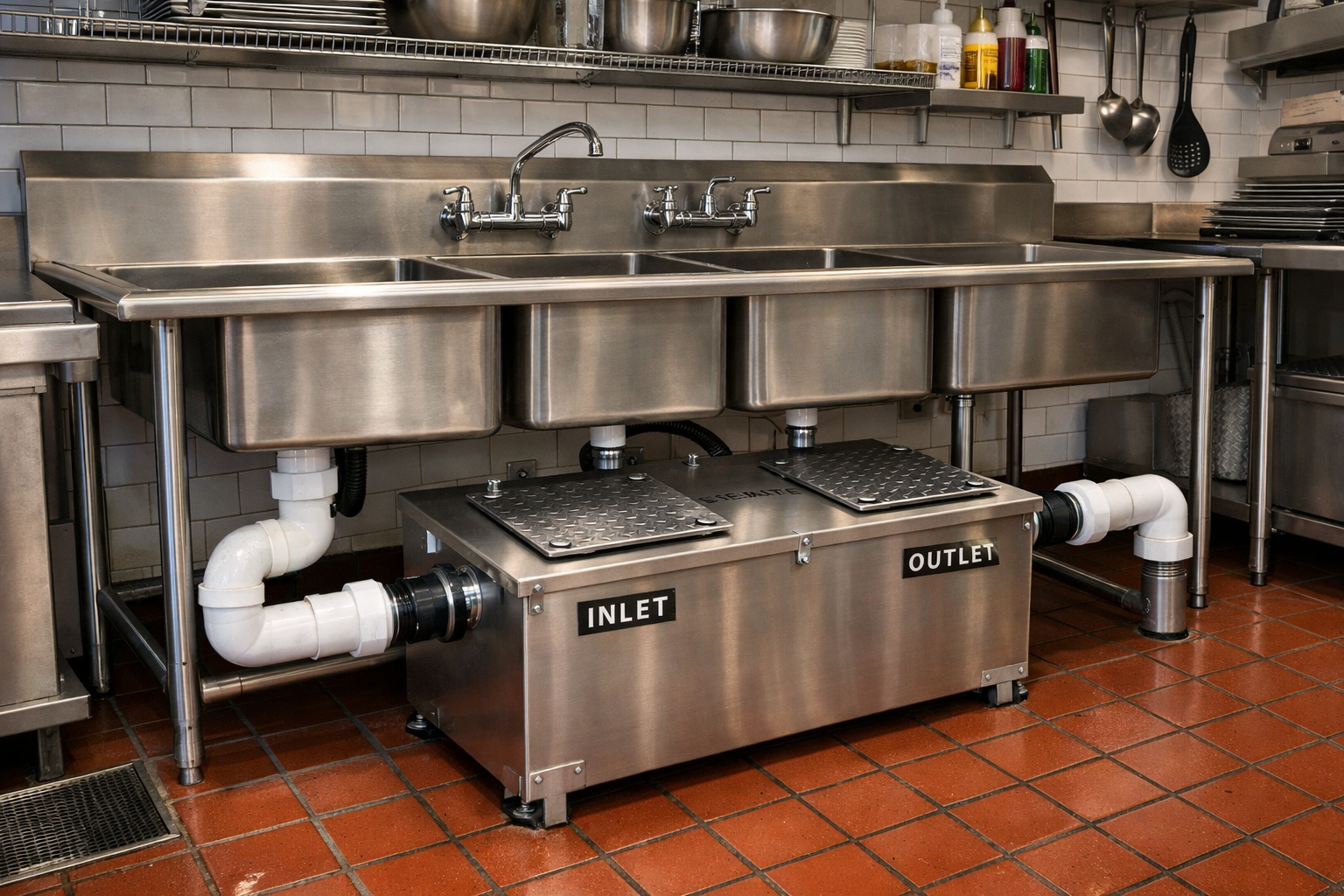
Installing an above ground grease trap requires connecting the unit directly to the drain lines of your multi-compartment sinks or commercial dishwashers, ensuring it sits level on the floor or a dedicated platform. Realizing your commercial kitchen space cannot accommodate massive excavation for traditional infrastructure can stall your grand opening or renovation completely.
For local restaurant owners and commercial property operators, navigating spatial limitations is a constant challenge when trying to satisfy strict building codes. Selecting a compact above ground grease interceptor avoids the high costs of deep floor trenching, but an incorrect installation can still cause foul room odors, slow-draining sinks, and severe city plumbing violations.
This guide provides a straightforward overview of the setup process, structural positioning, and municipal compliance standards required for a successful configuration. Let's look at how to position this vital equipment for long-term operational health.
Understanding the Mechanics and Value of an Above Ground Grease Trap
An above ground grease trap is a specialized, point-of-use plumbing fixture installed directly on a kitchen floor or a raised platform to capture fats, oils, and grease before they reach the main sewer line. Positioned right beneath or adjacent to commercial dishwashing stations and pot sinks, it uses internal baffles to slow down hot, greasy wastewater.
As the water cools inside the unit, the lighter grease separates and rises to the surface, while heavier food solids drop to the bottom, allowing clean water to flow safely out of the exit port.
For business owners and kitchen operators, understanding how an above ground grease interceptor functions is critical for protecting your building’s infrastructure. Choosing floor-mounted models over traditional subsurface systems eliminates the need to cut through concrete foundations, making it an excellent fit for leased spaces or historical properties.
Setting up a predictable schedule for grease trap cleaning ensures that accumulated waste never overwhelms the internal chambers. Failing to properly manage this containment barrier risks major pipe blockages, foul dining room odors, and severe municipal fines.
Key Advantages of Floor-Mounted Grease Capture Systems
- Simplified Inspections: Offers rapid, unhindered access to internal baffles for quick visual level checks and swift physical skimming.
- Structural Safety: Installs completely without structural trenching or costly foundation modifications, lowering your initial facility renovation risks.
- Targeted Grease Control: Traps heavy oils immediately at the source before they can solidify inside long, hard-to-reach branch plumbing lines.
A frequent misconception among new managers is that compact above ground grease traps do not require professional attention because of their visible location. However, smaller holding capacities mean these units fill up much faster than a standard grease trap in ground systems, making disciplined volume tracking and professional oversight absolutely necessary.
Step-by-Step Installation Process for an Above Ground Grease Trap
Setting up a floor-mounted interceptor requires careful physical positioning, accurate pipe alignment, and strict adherence to local commercial plumbing codes. Following a structured installation sequence ensures your kitchen stays fully compliant while preventing unexpected plumbing emergencies down the road.
If you are preparing a new facility or upgrading an old kitchen, consulting an expert on grease interceptor installation can help you confirm the proper sizing and layout requirements before buying equipment.
The following steps outline how to successfully connect and secure a modern, floor-mounted containment unit in your commercial kitchen.
Step 1: Select the Proper Placement Location
The unit must be placed as close as possible to the fixture it serves, such as a three-compartment pot sink or a commercial pre-rinse station. Ensure the chosen spot sits on a completely level, load-bearing floor surface that can easily support the weight of the device when it is completely filled with water and accumulated solids. Leave adequate clearance space directly above the lid so your maintenance team can comfortably remove the top cover during routine service.
Step 2: Install the Flow Control Valve
Every certified above ground grease trap requires an external flow control valve installed on the incoming drain pipe, just ahead of the inlet port. This valve regulates the velocity of incoming wastewater, preventing sudden surges from overwhelming the internal baffles and washing grease out into the sewer.
Technical Note: The flow control valve must be vented to the atmosphere according to local building rules to allow proper air induction, which helps separate fats and oils efficiently.
Step 3: Connect the Inlet and Outlet Drainage Pipes
Align the waste discharge lines from your kitchen sinks with the designated inlet port on the containment unit, maintaining a downward pitch of at least 1/4 inch per foot to ensure proper gravity flow. Next, connect the outlet port to your building's primary sanitary sewer line.
Always use code-approved, heat-resistant PVC or cast iron plumbing pipes, and secure all connections with heavy-duty rubber couplings and stainless steel bands to prevent structural leaks.
Step 4: Configure Proper Venting Lines
To prevent dangerous siphoning and neutralize foul sewer odors, you must connect a dedicated plumbing vent line to the outlet side of the above ground grease interceptor. Run this pipe upward and connect it directly to your facility's primary atmospheric vent stack.
Proper air venting stabilizes internal pressure drops, ensuring wastewater moves smoothly through the internal chambers without creating airlocks inside your kitchen's drainage network.
Step 5: Fill the Unit with Water and Check for Leaks
Before turning on any kitchen appliances, fill the newly installed tank completely with clean water up to the static baseline level. Check every pipe union, valve coupling, and seal gasket closely for any signs of moisture or weeping. Once you confirm the system is watertight, secure the heavy-duty lid down tightly using the factory-provided retaining bolts.
Taking the time to install your above ground grease traps using these correct steps prevents premature pipe wear and keeps your business fully aligned with municipal waste ordinances. Once your plumbing lines are running smoothly, establishing baseline f-o-g best practices with your kitchen team will keep your new hardware operating efficiently for years to come.
Practical Scenarios for Floor-Mounted Interceptor Systems
Observing how these grease capture systems perform in active commercial kitchens demonstrates their versatility and real-world value. These practical scenarios show how different culinary businesses select and utilize compact indoor plumbing configurations to maintain clean drain lines.
- The Historic Downtown Pastry Shop: A family-owned bakery opening in a leased historical building could not cut through the protected concrete floors to place traditional plumbing.
To satisfy local code enforcement without damaging the structural foundation, they mounted a high-density poly above ground grease trap directly beneath their main pot sink. This clever choice completely avoided expensive excavation costs and successfully passed the health department's opening inspection on the very first try.
- The Strip-Mall Espresso Bar: A small boutique cafe faced ongoing drainage issues because their landlord did not provide access to shared subsurface plumbing infrastructure. The owner resolved this by installing a low-profile above ground grease interceptor right next to the commercial dishwasher line, utilizing a structured grease trap pumping schedule to keep it clean.
This immediate change eliminated slow-draining water issues and stopped foul odors from drifting into the customer seating area.
- The Ghost Kitchen Complex: A modern delivery-only kitchen complex utilized multiple floor-mounted units to isolate waste streams from separate cooking stalls. This smart design choice prevented a backup in one chef's station from shutting down the entire facility's shared drainage lines.
These actual examples highlight that using an above ground grease trap solves real-world spatial problems while keeping your business fully compliant. You can easily apply these same spatial solutions to protect your own commercial property.
Expert Management Strategies for Floor-Mounted Interceptors
Applying a few proven maintenance habits helps ensure your compact plumbing hardware operates at peak efficiency. These expert guidelines bridge the gap between basic setup knowledge and long-term operational success for your indoor waste infrastructure.
- Never Pour Boiling Water Down the Drain: Excessive heat from boiling water liquefies trapped grease, causing it to bypass internal baffles. Once the oil travels further down your plumbing, it cools and hardens into dense blockages deep inside your sewer lines.
- Keep Gasket Seals Perfectly Clean: Wipe down the rubber lid gaskets during every cleaning session to prevent wear. A compromised lid seal allows foul odors to escape into your kitchen, ruining the indoor dining atmosphere for your guests.
- Adhere Strictly to the One-Quarter Rule: Clean your above ground grease trap before solid and liquid grease waste fills 25% of the total tank volume. Keeping up with a professional grease trap cleaning schedule prevents automated system failures and keeps your business fully aligned with municipal codes.
- Check the Flow Control Air Intake Weekly: A clogged air intake vent prevents proper air separation within the containment tank. Clear away stray kitchen debris from the vent line regularly to ensure your above ground grease traps maintain optimal fluid dynamics.
Utilizing these straightforward management habits keeps your utility infrastructure perfectly balanced, avoiding costly emergency plumbing repairs.
Secure Professional Support for Your Above Ground Grease Trap Installation
Installing an above ground grease trap requires precise location tracking, proper vented flow control setup, and level plumbing alignments right at the source of your wastewater discharge. You now understand how this compact floor-mounted system uses specialized internal baffles to separate floating oils from heavy food solids without requiring concrete floor trenching.
Managing this compact layout correctly eliminates the threat of slow-draining wash sinks and guarantees that your commercial facility satisfies local environmental codes from day one.
Taking immediate control of your building's grease interception strategy provides lasting peace of mind and keeps your kitchen staff moving efficiently through busy serving hours. Investing in a professional, code-compliant above ground grease interceptor setup shields your property from catastrophic sewage overflows and avoids expensive municipal code citations.
If you are currently mapping out a brand-new kitchen floor plan or need an honest, non-commissioned assessment to find the best plumbing hardware for your space, our certified team is ready to help. Contact Sacramento Grease Trap Service today to secure an accurate estimate or to book your commercial grease interceptor installation with our experienced specialists.
Frequently Asked Questions About Above Ground Grease Traps
Is an above ground grease trap legal to use in a Sacramento kitchen?
Yes, a floor-mounted above ground grease trap is completely legal as long as it features a certified plumbing design and matches the volume demands of your kitchen sinks. Local environmental inspectors look closely at the unit's official rating and flow control setup to verify compliance. Choosing an approved above ground grease interceptor model ensures your business meets all municipal waste management codes.
How often do compact above ground grease traps need to be cleaned?
Because they possess a smaller holding capacity than a massive grease trap in ground system, floor-mounted units fill up much faster. You should have them serviced before the accumulated waste reaches 25% of the total tank volume, which usually means scheduling professional pumping every 2 to 4 weeks depending on kitchen traffic. Keeping up with a routine grease trap cleaning schedule prevents severe line backups.
Can an above ground grease interceptor handle a commercial dishwasher?
Yes, but it requires a specialized installation configuration to operate safely. The rapid, high-temperature discharge from a commercial dishwasher can melt accumulated grease layers if the water isn't allowed to cool down first. Installing an appropriately sized above ground grease arrestor paired with an approved cooling line or automated flow control valve ensures the system separates fats and oils efficiently without overwhelming the internal baffles.
What causes a floor-mounted above ground grease trap to emit foul odors?
Foul kitchen odors are usually caused by a dried-out or damaged rubber lid gasket, or a clogged plumbing vent line. When the tank cover seal degrades, trapped sewer gases leak out directly into your food preparation space. Inspecting the lid fasteners regularly and keeping your atmospheric vents completely free of debris ensures your indoor system remains perfectly airtight and odor-free.

Let Us Simplify Your Grease Trap Maintenance.
Proper grease trap maintenance will reduce costly repairs in the future.
.avif)